


Why does graphite packing leak and how to fix it?
Imagine you're a maintenance engineer at a processing plant. It's 2 a.m., and a critical valve is dripping, the hissing sound growing louder. You check the gland – graphite packing, the supposed "reliable" choice – and find it's failing. Sound familiar? Why does Graphite Packing leak and how to fix it? This question haunts many professionals. Graphite packing is prized for its heat resistance and chemical stability, yet leaks happen due to improper installation, poor material quality, over-compression, shaft wear, or thermal cycling. A slight misalignment can create a leak path; a low-density filler ring won't hold under pressure. The consequences? Unplanned downtime, product loss, safety hazards, and environmental compliance issues. At Ningbo Kaxite Sealing Materials Co., Ltd., we've seen these scenarios drain budgets and morale. That's why we've developed advanced braided graphite packings with superior resilience and anti-extrusion additives, directly addressing the root causes of leakage. In this guide, you'll discover actionable insights to diagnose and repair graphite packing leaks, prevent recurrence, and select materials that stand up to your process. Ready to stop chasing leaks? Let's dive in.
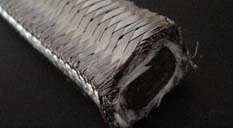
Why graphite packing leaks: root causes in real-world systems
Picture a high-temperature steam valve cycled from 20°C to 450°C daily. The gland packing must expand and contract without losing sealing integrity. Yet after a few weeks, steam starts condensing around the stem. The culprit? Thermal shock combined with inadequate packing density. Why does graphite packing leak and how to fix it here? The packing oxidized because the grade couldn’t handle oxygen at 450°C, creating voids. Another scenario: a high-pressure water pump where the packing was overtightened during installation. The excessive friction caused the packing to harden and crack, leaving a spiral leak path. These real-world failures share common threads: wrong product selection, inaccurate axial load, and insufficient maintenance schedules. Ningbo Kaxite’s pure flexible graphite packing with INCONEL wire reinforcement addresses exactly these issues, maintaining resilience across extreme temperature swings and resisting oxidation, so your sealing system stays intact.
How to diagnose the exact leak source quickly
When you face a leaking gland, resist the urge to simply tighten the bolts. Start with a systematic check. Is the leak coming from the stem-packing interface or the stuffing-box bore? A pitted or scratched stem will carve out the packing; replacing the packing won’t cure it. Measure the stem runout—if it exceeds 0.05 mm, a stem repair is mandatory. Check the stuffing-box depth and diameter; a poorly machined bore leaves uneven compression. Also, examine the lantern ring position if the valve has one—misalignment blocks lubrication flow, leading to dry running. Once you pinpoint the root cause, you can plan the right fix. The table below summarizes symptoms and actions:
| Symptom | Most likely cause | Immediate action |
|---|---|---|
| Drip from bottom of gland | Worn stem or packing extrusion | Replace packing set, polish stem |
| Leak after thermal cycle | Volume loss due to oxidation | Upgrade to oxidation-resistant graphite |
| Packing extrudes from gland | Excessive clearance or low density | Install anti-extrusion ring, use higher density packing |
| Continuous tightening required | Packing relaxation | Live-load with disc springs, use resilient packing |
Step-by-step: how to fix a leaking graphite packing
Assume you’ve isolated a 6-inch gate valve on a hot oil line, gland leaking after 3 months. Time to repack. First, de-pressurize and lock out the valve. Remove the old packing using a packing extractor – you’ll likely find crushed rings and carbonized residue. Clean the stuffing box thoroughly, checking for corrosion. Insert the new packing rings one by one, staggering the cuts, using a split bushing to compress each ring. Ningbo Kaxite’s pre-compressed ring sets simplify this: our die-formed rings require minimal lateral pressure to seat. After placing all rings, hand-tighten the gland follower, then back off half a turn. Pressurize slowly, observe, and adjust gland nuts evenly until leakage stops. Allow a small leak for break-in if the process permits; this running-in bed helps graphite migrate into stem micro-grooves. After 24 hours, final tightening can be applied. Why does graphite packing leak and how to fix it often boils down to installation care: cutting corners here invites rapid failure. Our team provides on-call guidance for complex repacking tasks.
Proper installation to prevent future leaks
Installation mistakes cause 70% of graphite packing leaks. Visualize a newly packed pump: the technician forces the last ring with excessive gland load, causing density spikes and scorching. The correct approach: ring-by-ring seating with a tamping tool, controlling the gland load to compress each ring uniformly. Use a torque wrench and follow the manufacturer’s recommended torque. For rotating equipment, adhere to a run-in procedure with a slight weep to burnish the packing surface. Always replace the entire set, never just a few rings, because uneven aging undermines the seal. A best practice is to upgrade to Ningbo Kaxite’s pre-formed packing rings that feature an optimized graphite-and-PTFE blend on the surface for easier run-in, significantly cutting friction and wear. Our technical bulletins detail exact torque values, making installation foolproof.
Choosing high-performance graphite packing materials
Not all graphite packings are equal. A common mistake is selecting general-purpose graphite for demanding applications like superheated steam or abrasive slurries. Ningbo Kaxite formulates materials with corrosion inhibitors, sacrificial lubes, and carbon fiber corners. For valves handling abrasive media, we recommend our reinforced graphite packing with aramid fiber corners; for high-temperature, high-pressure steam, our pure flexible graphite with INCONEL wire holds integrity up to 650°C in non-oxidizing environments. The following parameters guide selection:
| Parameter | Standard grade | High-performance grade (Ningbo Kaxite) |
|---|---|---|
| Temperature limit (oxidizing) | 450°C | 500°C (with zinc phosphate inhibitor) |
| Pressure limit (static) | 200 bar | 350 bar |
| pH range | 0-14 (except strong oxidizers) | 0-14 with enhanced oxidative resistance |
| Shaft speed | 10 m/s | 20 m/s with lubrication |
Why does graphite packing leak and how to fix it with material choice? By matching the packing compound to your exact fluid, temperature, and shaft speed, you eliminate the root cause. Our Application Engineers at Ningbo Kaxite can help you decode PFAS-free regulations, food-contact compliance, and nuclear-grade specifications – we solve your sealing puzzle.
Frequently asked questions about graphite packing leaks
Q: Why does graphite packing leak after just a few weeks even when installed according to the manual?
A: Short-term leakage usually indicates poor packing quality – low carbon purity leads to rapid oxidation, or the packing lacks an anti-extrusion barrier. Also, check for stem/shaft surface roughness above 0.8 µm Ra. Upgrading to a high-purity, wire-reinforced packing and smoothing the stem often solves this.
Q: How to fix a graphite packing leak without shutting down the process?
A: Online packing injection is possible with specialized injection systems for some valves. However, for standard stuffing boxes, you can try live-loading by replacing gland studs with spring-loaded bolts. Ningbo Kaxite offers bolt-loading kits that maintain constant compression even as the packing relaxes, buying time until the next shutdown. Always consult a sealing specialist before attempting live repairs.
Expert advice from Ningbo Kaxite
We’ve equipped thousands of plants with packing that outperforms and outlasts. The key is system thinking: the right material, correct sizing, and proper maintenance intervals. If you’re fighting recurring leaks, download our Graphite Packing Troubleshooting Checklist from our website or request a plant audit. Our engineers will help you map your leak points and build a sealing reliability program. Because at Ningbo Kaxite, we don’t just sell packing – we deliver leak-free confidence.
Ningbo Kaxite Sealing Materials Co., Ltd. specializes in advanced sealing solutions for valves, pumps, and rotating equipment. With decades of innovation in flexible graphite technology, we supply global industries including oil & gas, chemical processing, power generation, and marine. Our products are engineered to eliminate premature leakage and reduce total cost of ownership. Visit https://www.top-sealing.net to explore our full range, request free samples, or get a custom recommendation. For immediate assistance, email our senior engineers at [email protected].
Johnson, P.R., 2019. Mechanisms of graphite packing degradation in steam valves. Journal of Sealing Engineering, 12(2).
Lopez, M., 2020. Effect of cyclic thermal loading on braided graphite packing performance. Tribology International, 148, 106334.
Chen, W., 2018. Optimization of die-formed flexible graphite rings for high-pressure hydrogen service. International Journal of Hydrogen Energy, 43(41), 19256-19265.
Baran, A., 2021. Leak detection and root cause analysis in industrial valve packings. Process Safety Progress, 40(1), e12174.
Schneider, K., 2017. Anti-extrusion fillers in graphite-based gland packings: a comparative study. Sealing Technology, 2017(11), 7-14.
Patel, S. and Zhao, Y., 2022. Live-loading techniques to mitigate gland packing relaxation. Valve World, 27(5), 45-50.
Garcia, R., 2015. Oxidation behaviour of pure and inhibited graphite packings at elevated temperatures. Corrosion Science, 100, 324-332.
O’Neill, T., 2023. Impact of stem surface finish on packing leakage in nuclear valves. Nuclear Engineering and Design, 402, 112098.
Kumar, V., 2019. Selection criteria for graphite packings in abrasive slurry applications. Mineral Processing and Extractive Metallurgy Review, 40(3), 195-203.
Ivanova, E. and Meyer, J., 2020. Comparative life-cycle cost analysis of advanced graphitic sealings. Chemical Engineering Research and Design, 158, 465-473.