


High Quality Injectable Sealant Tools Manufacturer for Custom OEM and Bulk Export Solutions
Understanding Injectable Sealant Tools
Injectable sealant tools represent a significant advancement in precision application technology for industrial maintenance and construction. These specialized tools are designed to deliver sealants, adhesives, grouts, and other viscous materials directly into cracks, joints, voids, and seams with controlled pressure and volume. Unlike traditional manual methods, injectable sealant tools ensure deep, complete penetration and consistent application, leading to superior, longer-lasting seals. They are indispensable for critical tasks such as structural crack repair, waterproofing, anchoring, and gap filling in concrete, masonry, and other substrates. The core principle involves transferring a cartridge or bulk material through a nozzle or injection port, allowing the material to flow into and saturate the target area, effectively bonding and sealing it from within. For professionals who demand reliability and efficiency, mastering these tools is key to achieving durable and compliant results in demanding environments.
Key Specifications and Performance Data
Selecting the right injectable sealant tool depends on a thorough understanding of its technical parameters. Below is a detailed breakdown of the critical specifications that define performance and suitability for various applications.
Primary Technical Parameters
- Operating Pressure Range: Measured in psi (pounds per square inch) or bar, this indicates the force the tool can exert on the material. A wider range offers versatility for both low-viscosity sealants and high-density, viscous compounds.
- Max Flow Rate: The volume of material dispensed per unit of time (e.g., oz/min or ml/min). A higher flow rate is crucial for large-scale projects to improve productivity.
- Material Compatibility (Viscosity Range): Tools are rated for specific viscosity ranges, typically measured in centipoise (cP). It is vital to match the tool's capability with the sealant's thickness to prevent motor strain or incomplete dispensing.
- Power Source: Options include pneumatic (air-powered), electric (battery or corded), and manual hydraulic. Pneumatic tools offer high power and continuous use, electric provides portability, and manual is suited for low-volume tasks.
- Capacity (Cartridge/Bulk): The volume of material the tool can hold or accept, from standard cartridge sizes (e.g., 300ml, 400ml) to bulk-feed systems for drums or sausage packs.
- Nozzle/Injection Port Options: Includes static mixer nozzles for two-part materials, tapered tips for cracks, and threaded ports for direct injection into ports. Interchangeability is a key feature.
Comparative Tool Specification Table
| Model Type | Operating Pressure (Max) | Flow Rate (Approx.) | Viscosity Range | Power Source | Primary Use Case |
|---|---|---|---|---|---|
| Pneumatic Cartridge Gun | 2,500 psi | 18 oz/min | Up to 500,000 cP | Compressed Air (90 psi) | High-strength epoxies, structural adhesives |
| Electric Bulk Pump | 1,800 psi | 40 oz/min | Up to 250,000 cP | 110V / Battery | High-volume polyurethane foam, sealants |
| Manual Hydraulic Injector | 10,000 psi | 6 oz/min | Up to 1,000,000 cP | Hand Pump | Precision crack injection, low-volume high-pressure resin |
| Battery-Powered Caulking Gun | 600 psi | 24 oz/min | Up to 100,000 cP | Rechargeable Battery | General purpose sealants, construction adhesives |
*Specifications are indicative and can vary based on specific models and manufacturers like Kaxite Sealing.
Introducing the Kaxite Sealing Pro-Inject Series
Engineered for the professional contractor, the Kaxite Sealing Pro-Inject Series embodies durability, precision, and user-centric design. Our tools are developed through rigorous field testing to meet the challenges of concrete repair, industrial waterproofing, and facade sealing.
Pro-Inject Series Core Features
- K-Drive Precision Motor: Delivers consistent pressure with variable speed control, preventing blowouts and ensuring uniform bead or fill application.
- Multi-Material Platform: A single tool platform with quick-change adapters handles cartridges, bulk sausages, and standard tubes, reducing equipment needs on-site.
- Corrosion-Resistant Construction: Key components are made from hardened stainless steel and anodized aluminum, resisting chemical degradation from reactive sealants.
- ErgoGrip Handle & Balance: Reduces operator fatigue during extended use with a balanced weight distribution and non-slip grip.
- Smart Pressure Relief Valve: Automatically prevents over-pressurization, protecting both the tool and the substrate from damage.
- Integrated Cleaning Cycle: A dedicated purge function simplifies cleanup, extending the tool's service life and reducing downtime.
Pro-Inject Series Model Breakdown
| Model | KX-PI200 (Pneumatic) | KX-PI50E (Electric) | KX-PI10H (Hydraulic) |
|---|---|---|---|
| Ideal Application | Heavy-duty structural repair, anchoring | High-volume sealing, insulation foam, curtain wall | Precision leak sealing, crack injection in concrete |
| Max Pressure | 3,000 psi | 2,200 psi | 12,000 psi |
| Capacity | 400ml Cartridge / Bulk Adapter | 20L Drum / Sausage Pack | 1-Liter Reservoir |
| Weight | 4.8 lbs | 7.2 lbs (with battery) | 9.5 lbs |
| Key Advantage | Continuous duty cycle, high power-to-weight ratio | Cordless portability with consistent output | Ultra-high pressure for deep penetration |
Frequently Asked Questions (FAQ) About Injectable Sealant Tools
What is the main advantage of using a professional injectable sealant tool over a standard caulk gun?
The primary advantage is controlled, high-pressure application. Professional tools like those from Kaxite Sealing generate significantly higher pressure, forcing material deep into cracks and voids for a complete, structural bond. Standard caulk guns rely on manual force, which often results in only surface-level application prone to failure. Professional tools also offer consistent flow rates, material compatibility with thicker compounds, and features like pressure control, which are critical for durable, long-term repairs.
How do I choose between a pneumatic, electric, and manual hydraulic injectable tool?
Your choice depends on job site conditions, material requirements, and project scale. Pneumatic tools require an air compressor but offer the most power and are ideal for continuous, heavy-duty use in factory settings. Electric (especially battery-powered) tools provide excellent portability and ease of use for most general construction and sealing tasks. Manual hydraulic tools generate the highest pressures and are used for precision work, like injecting epoxy into hairline concrete cracks, where extreme control is needed but volume is low.
Can one injectable sealant tool handle all types of materials, like epoxy, polyurethane, and silicone?
While some multi-purpose tools are versatile, it is not recommended. Different materials have vastly different viscosities and curing properties. Using a tool designed for low-viscosity silicone on a high-viscosity epoxy can damage the motor or result in poor application. More critically, residue from a previously used material (like polyurethane) can contaminate and ruin a reactive resin like epoxy. For best results and tool longevity, dedicate tools to specific material types or use a platform system with easy-to-clean, interchangeable components, such as the Kaxite Sealing Pro-Inject Series.
What is the most important maintenance step for an injectable sealant tool?
Immediate and thorough cleaning after every use is non-negotiable. Uncured sealant or adhesive left inside the barrel, piston, or nozzle will harden, causing irreversible clogging and tool failure. Follow the manufacturer's recommended cleaning procedure, which often involves running a compatible solvent or purge material through the system. For tools like the Kaxite Pro-Inject models with a cleaning cycle, use this function diligently. Regularly inspect seals and O-rings for wear and replace them as part of a scheduled maintenance plan.
Why does my injection material sometimes backflow or leak around the injection port?
Backflow typically indicates one of three issues: insufficient injection pressure, a poorly sealed injection port, or a fully saturated cavity. First, ensure you are using adequate pressure for the material's viscosity. Second, check that the injection port (e.g., a packer or nipple) is tightly sealed into the drilled hole using a sealing washer or paste. For porous substrates, a "stage injection" method is best: inject until material appears at the next port or crack, stop to let it gel slightly, then resume to build internal pressure and complete the fill.
Are there safety precautions specific to using high-pressure injectable sealant tools?
Yes, high-pressure injection poses serious safety risks. Always wear safety glasses and heavy-duty gloves. Never place your hands in front of the nozzle. Be aware of the hazard of "injection injury," where material can be forced into the skin through a small puncture, which is a medical emergency. Ensure all hose fittings and connections are secure before pressurizing. When using chemical sealants, work in a well-ventilated area and consult the material's Safety Data Sheet (SDS) for appropriate personal protective equipment (PPE).
Best Practices for Optimal Injection Results
Achieving a perfect seal requires more than just a quality tool; it demands proper technique and preparation.
- Surface Preparation is Critical: All surfaces must be clean, dry, and free of dust, oil, laitance, or loose particles. For concrete cracks, grinding or water jetting may be necessary to open the crack and expose sound substrate.
- Drill and Port Placement: For crack injection, drill entry ports along the crack at intervals equal to the material's penetration radius. Angle holes to intersect the crack in its middle depth. Use properly sized and threaded ports for a secure seal.
- Prime if Required: Some materials, especially epoxy resins for concrete, require a low-viscosity primer to wet the surface and ensure adhesion. Check the sealant manufacturer's instructions.
- Injection Sequence: Always inject from the lowest point to the highest point, or from one end of a crack to the other. This allows air to escape as the cavity fills. Inject slowly and steadily, watching for material to emerge from the next port or adjacent crack.
- Monitor Temperature: Both ambient and material temperature dramatically affect viscosity and cure time. Store materials as recommended and use drum heaters or hose heaters for cold-weather applications to maintain ideal flow characteristics.
- Tool Calibration: Periodically calibrate pressure gauges and flow settings, especially on tools used for metering and mixing two-component materials. Inaccurate ratios will compromise the cured sealant's properties.
- View as
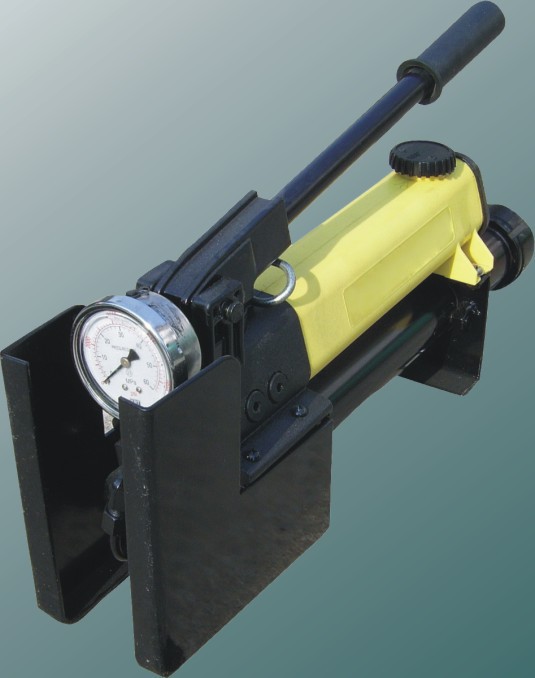
Injection Gun
Discover the Kaxite Sealing Injection Gun, a precision tool crafted for flawless sealing in construction and DIY projects. With its durable stainless-steel body and ergonomic grip, it ensures effortless application on various materials like wood, plastic, and metal. Perfect for professionals and hobbyists alike, this gun transforms tedious tasks into smooth, mess-free experiences, offering unmatched durability and consistent results. Stand out with Kaxite Sealing’s advanced anti-drip technology—your go-to for reliable, long-lasting solutions that save time and enhance quality.
Read MoreSend Inquiry