


Bespoke PTFE Tube Custom Manufacturing for OEM and Bulk Wholesale Suppliers
The Ultimate Guide to High-Performance PTFE Tubing by Kaxite Sealing
In the demanding world of fluid transfer and chemical processing, the integrity of your system hinges on the components you choose. For over two decades, industry leaders have relied on a specific material known for its unparalleled inertness and reliability: Polytetrafluoroethylene, or PTFE. At Kaxite Sealing, we have dedicated our expertise to engineering PTFE Tube solutions that set the benchmark for performance, durability, and safety in critical applications. This comprehensive guide delves into the specifications, benefits, and technical nuances of our premium PTFE tubing, providing you with the knowledge to make an informed decision for your operational needs.
What Makes Kaxite Sealing PTFE Tubing Exceptional?
PTFE is a synthetic fluoropolymer celebrated for its near-universal chemical resistance and exceptional thermal stability. Kaxite Sealing leverages advanced manufacturing techniques to produce tubing that maximizes these inherent properties. Our PTFE Tube is engineered from 100% pure, virgin PTFE resin, ensuring no contaminants compromise its performance. The extrusion process creates a dense, non-porous structure that is inherently hydrophobic and boasts an extremely low coefficient of friction. This combination makes it ideal for conveying aggressive chemicals, high-purity fluids, and gases where material compatibility and sample integrity are non-negotiable.
The primary advantages of choosing our tubing include:
- Superior Chemical Resistance: Inert to virtually all industrial chemicals, solvents, and acids, making it suitable for aggressive media.
- Exceptional Temperature Range: Maintains flexibility and performance from cryogenic temperatures as low as -200°C (-328°F) up to +260°C (+500°F) continuously.
- Ultra-Low Permeability: Provides an excellent barrier against gas and moisture transmission.
- Non-Stick & Low Friction: Prevents buildup and ensures easy cleaning and smooth flow with minimal pressure drop.
- High Dielectric Strength: Excellent electrical insulation properties.
- Compliance & Purity: Available in FDA-compliant, USP Class VI, and other industry-specific grades for food, pharmaceutical, and semiconductor applications.
Detailed Product Specifications & Technical Data
To ensure precise integration into your systems, Kaxite Sealing offers a comprehensive range of sizes and configurations. Below are the detailed specifications for our standard premium PTFE tubing.
Standard Dimension & Pressure Ratings
| Nominal Size (Inch) | Inner Diameter (mm) | Wall Thickness (mm) | Outer Diameter (mm) | Max Working Pressure (psi) @ 20°C | Burst Pressure (psi) @ 20°C |
|---|---|---|---|---|---|
| 1/8" | 3.0 ±0.1 | 0.8 ±0.05 | 4.6 ±0.1 | 250 | 1000 |
| 1/4" | 6.0 ±0.1 | 1.0 ±0.05 | 8.0 ±0.1 | 200 | 800 |
| 3/8" | 9.5 ±0.15 | 1.5 ±0.08 | 12.5 ±0.15 | 150 | 600 |
| 1/2" | 12.5 ±0.15 | 1.5 ±0.08 | 15.5 ±0.15 | 120 | 500 |
| 3/4" | 19.0 ±0.2 | 2.0 ±0.1 | 23.0 ±0.2 | 80 | 350 |
| 1" | 25.0 ±0.25 | 2.5 ±0.1 | 30.0 ±0.25 | 60 | 250 |
Material Property Chart
| Property | Test Method | Typical Value | Unit |
|---|---|---|---|
| Density | ASTM D792 | 2.15 - 2.20 | g/cm³ |
| Tensile Strength | ASTM D638 | 25 - 35 | MPa |
| Elongation at Break | ASTM D638 | 300 - 500 | % |
| Melting Point | - | 327 | °C |
| Continuous Service Temperature | - | -200 to +260 | °C |
| Dielectric Strength | ASTM D149 | > 60 | kV/mm |
| Coefficient of Friction (Dynamic) | ASTM D1894 | 0.05 - 0.10 | - |
Industry Applications of Kaxite Sealing PTFE Tubing
The versatility of our PTFE tube makes it indispensable across numerous sectors:
- Chemical & Pharmaceutical Processing: Transfer lines for acids, bases, solvents, and high-purity process fluids. Used in reactors, distillation columns, and filling lines.
- Semiconductor Manufacturing: Ultra-clean tubing for high-purity gas and chemical delivery systems (CMP, etching, plating) where ionic contamination must be avoided.
- Food & Beverage: FDA-compliant tubing for ingredient transfer, flavor lines, and sanitary applications due to its non-toxic, non-tainting properties.
- Analytical & Laboratory Instrumentation: Carrier lines for GC, HPLC, and auto-samplers. Its inertness prevents sample adsorption and cross-contamination.
- Automotive & Aerospace: Fuel, brake, and hydraulic lines in demanding environments; insulation for wiring harnesses.
- General Industrial: Air and water lines, protective sleeving, and as a liner for hoses in corrosive service.
Frequently Asked Questions (FAQ) About PTFE Tubing
Q: What is the maximum temperature a Kaxite Sealing PTFE tube can withstand?
A: Our standard PTFE tubing can operate continuously at temperatures up to 260°C (500°F). For short-term exposure, it can handle peaks up to 300°C (572°F) without significant degradation. It also remains flexible and functional at cryogenic temperatures as low as -200°C (-328°F).
Q: Is PTFE tubing suitable for high-pressure applications?
A: While PTFE has excellent chemical and thermal properties, its mechanical strength under pressure is limited compared to metals. The maximum working pressure depends on the tube's diameter and wall thickness. For example, our 1/8" tubing can handle up to 250 psi, while larger diameters have lower ratings. For high-pressure systems, we often recommend using our PTFE tube as a liner inside a reinforced hose or selecting our unique, pressure-enhanced grades.
Q: How does Kaxite Sealing PTFE tubing handle chemical exposure compared to other plastics like PVC, Nylon, or Polyurethane?
A: PTFE is in a league of its own regarding chemical resistance. Unlike PVC, Nylon, or PU, which can swell, crack, or dissolve when exposed to many solvents, oils, and strong acids/bases, PTFE is virtually inert. It is resistant to almost all industrial chemicals, with the only known exceptions being molten alkali metals and certain fluorine compounds under extreme conditions. This makes it the default choice for handling the most aggressive media.
Q: Can the PTFE tube be bent or shaped for complex routing?
A: Yes, our PTFE tubing is naturally flexible and can be bent to a minimum bend radius. As a general rule, the minimum bend radius should not be less than 5 times the outer diameter of the tube to avoid kinking or flattening. For permanent, complex shapes, heat-forming can be performed carefully, but it requires specific tools and expertise to prevent weakening the material.
Q: What fitting types are compatible with PTFE tubing, and how do I ensure a leak-proof connection?
A: PTFE tubing is compatible with a wide range of fittings, including compression fittings (e.g., Swagelok®, Parker), push-to-connect fittings, and flange systems. Due to PTFE's smooth, non-stick surface and cold flow characteristics, achieving a proper seal is crucial. We recommend using fittings specifically designed for soft polymer tubing, which often feature a ferrule that grips without over-compressing and cutting the tube. Proper tube preparation (square cut, deburred) and following the fitting manufacturer's torque specifications are essential for a reliable, leak-free connection.
Q: Does Kaxite Sealing offer PTFE tubing in colors or with special properties like conductivity or anti-static features?
A: Absolutely. While natural PTFE is an opaque white, we offer tubing in standard colors like black, red, blue, and yellow for color-coding applications. More importantly, we provide specialized formulations: PTFE Compound Tubes filled with materials like carbon, graphite, or stainless steel fibers to provide electrical conductivity or anti-static properties, which are critical in environments where static discharge is a hazard. We also offer high-purity, low-extractable grades for the most sensitive semiconductor and life science applications.
Q: How should I store and handle PTFE tubing before installation?
A: Store the tubing coiled loosely in a cool, dry, and dark place away from direct sunlight and heat sources. Avoid sharp bends or heavy objects placed on top of the coils. While PTFE is very durable, it can be scratched or nicked by sharp edges. Always handle with clean gloves to prevent contamination of the inner bore, especially for high-purity uses. Before installation, blow out the tube with clean, dry air or nitrogen to remove any potential particulates.
- View as
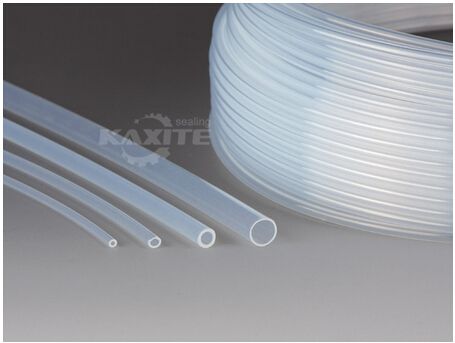
Molded PTFE Tube
Discover the Kaxite Sealing Molded PTFE Tube—a high-performance solution for demanding sealing applications. Crafted from premium PTFE, it offers superior chemical resistance, durability, and flexibility, ideal for industries like automotive and aerospace. Its unique molded design ensures leak-proof performance, enhancing efficiency and reliability. Experience peace of mind with unmatched quality and innovation from Kaxite Sealing.
Read MoreSend Inquiry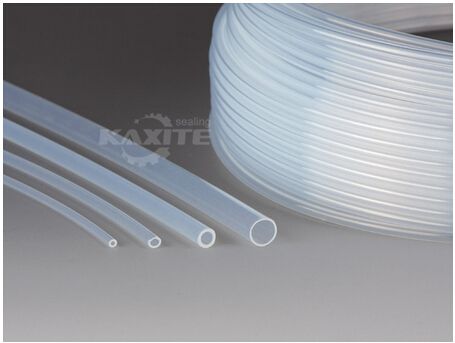
Flexible PTFE Tube
Discover Kaxite Sealing's Flexible PTFE Tube, a durable and versatile solution designed for demanding industrial applications. Made from high-quality PTFE, it offers superior chemical resistance, flexibility, and thermal stability—ideal for engineers, manufacturers, and DIY enthusiasts tackling harsh environments. Unlike competitors, our tube combines ease of installation with long-lasting performance, reducing downtime and boosting efficiency. Experience reliability and peace of mind in your operations. Elevate your projects today with this essential component.
Read MoreSend Inquiry