


Custom Spiral Wound Gasket Machines from China OEM Manufacturer
Essential Machinery for Precision Spiral Wound Gasket Manufacturing
The production of high-integrity spiral wound gaskets demands precision, consistency, and reliability. At the core of this specialized manufacturing process lies a suite of dedicated machinery designed to transform precision-cut metal strips and filler material into the critical sealing components used across industries from oil & gas to pharmaceuticals. Machines For Spiral Wound Gaskets are not generic industrial equipment; they are engineered systems that directly determine the quality, performance, and consistency of the final gasket. Investing in the right machinery is paramount for any manufacturer aiming to meet stringent international standards like ASME B16.20 and API 601.
As a leader in sealing solutions, Kaxite Sealing understands the intricate relationship between machine performance and gasket integrity. Our expertise extends beyond supplying world-class sealing products to encompassing the technology required to produce them. The modern spiral wound gasket machine is a marvel of engineering, integrating advanced winding control, tension management, and tooling systems to produce gaskets with exacting dimensional accuracy and optimal density.
Core Machine Components and Their Functions
Understanding the anatomy of these machines is key to appreciating their capabilities. A standard machine system comprises several integrated modules:
- Unwind/Feeding System: Holds and feeds the pre-cut metal strip (commonly stainless steel, Monel, or titanium) and the filler material (typically flexible graphite or PTFE). Precision tensioners ensure smooth, consistent material flow without stretching or tearing.
- Pre-forming Rollers: A series of calibrated rollers that gradually shape the metal strip into a precise "V" or "W" profile. This pre-forming is critical for creating the characteristic spiral structure.
- Winding Head (Spindle Assembly): The heart of the machine. The mandrel holds the inner ring (if applicable) or winding core, while the spindle rotates, winding the pre-formed metal strip and filler together under controlled tension and pitch.
- Pitch Control System: Governs the spacing between each successive winding revolution. This is a critical parameter that affects gasket density and compressibility. Modern systems use servo-drives for digital precision.
- Tooling and Mandrels: Interchangeable tooling sets and mandrels allow for the production of gaskets across a vast range of sizes, from small 15mm NB to large 1500mm+ diameters. Mandrel design ensures concentricity and prevents deformation during winding.
- Control Panel (CNC/HMI): The operational brain. Operators input parameters like diameter, width, pitch, and number of windings. Advanced CNC systems store recipes for different gasket specifications, ensuring repeatability.
- Cutting and Finishing Mechanism: Automatically cuts the wound gasket at the precise point and often includes a station for spot-welding the outer ring or applying anti-tack coatings.
Critical Technical Parameters of Spiral Wound Gasket Machines
When evaluating or specifying machinery, the following parameters are non-negotiable indicators of capability and performance. The equipment engineered and recommended by Kaxite Sealing meets or exceeds industry benchmarks in all these areas.
| Parameter | Specification Range | Importance for Gasket Quality |
|---|---|---|
| Winding Diameter Range | 15 mm NB to 1600 mm OD | Determines the scope of producible gasket sizes. A wider range offers greater production flexibility for various flange standards (ASME, DIN, JIS). |
| Metal Strip Width Capacity | 2.5 mm to 12 mm | Dictates the finished gasket's cross-sectional width. Must handle the full range specified in standards for different pressure classes (e.g., 150#, 300#, 600#). |
| Strip Thickness Capacity | 0.18 mm to 0.25 mm (Standard) | Directly influences the gasket's density, spring rate, and recovery properties. Consistent feeding of specified thickness is crucial. |
| Pitch Control Accuracy | ± 0.05 mm | Precise pitch ensures uniform density throughout the gasket cross-section, preventing weak points and ensuring consistent sealing performance. |
| Winding Tension Control | Fully adjustable, servo-driven | Correct tension ensures the filler material is properly embedded and the spiral is wound tightly without deforming the metal strip. |
| Mandrel Run-out Tolerance | < 0.02 mm | Minimal run-out is essential for producing concentric gaskets with uniform thickness, critical for even flange loading. |
| Production Speed | Up to 250 RPM (Spindle) | Affects throughput. Higher speeds with maintained precision improve efficiency for high-volume orders. |
| Control System | CNC with HMI, recipe storage | Ensures absolute repeatability, reduces human error, allows quick changeover between gasket specifications, and provides production data logging. |
Machines For Spiral Wound Gaskets: Frequently Asked Questions (FAQ)
Q: What is the most important feature to look for in a new spiral wound gasket machine?
A: The single most critical feature is precision and repeatability in the winding process. This is achieved through a combination of a robust mechanical structure (minimizing vibration) and an advanced digital control system (CNC). The machine must consistently maintain the programmed pitch, tension, and diameter. A machine that cannot guarantee repeatability will produce inconsistent gasket densities, leading to potential sealing failures in the field. Kaxite Sealing emphasizes machinery with closed-loop servo systems that continuously monitor and adjust these parameters in real-time.
Q: Can one machine produce gaskets for all pressure classes and material combinations?
A: A well-designed, versatile machine can handle a very wide range, but tooling and setup changes are required. The machine must have the capacity for the different metal strip widths and thicknesses used for various pressure classes (e.g., a wider strip for Class 900 than for Class 150). The tension and pitch settings will also vary significantly between a soft filler like PTFE and a denser one like flexible graphite. The key is a machine with quick-change tooling and a control system that can store and recall precise "recipes" for each specific gasket type (material combo, size, class), minimizing changeover time and error.
Q: How does machine calibration impact gasket compliance with ASME/API standards?
A: Directly and fundamentally. Standards like ASME B16.20 specify strict tolerances for gasket dimensions (ID, OD, thickness, density). A poorly calibrated machine will produce gaskets outside these tolerances, rendering them non-compliant and unfit for certified service. Regular calibration of the winding head, pitch drive, and tensioners is a mandatory quality procedure. The CNC systems in modern machines often include self-diagnostic and calibration prompting features to support maintenance schedules and ensure ongoing compliance.
Q: What are the common maintenance requirements for these machines?
A: Preventive maintenance is essential for longevity and precision. Daily tasks include cleaning debris (especially graphite dust) from guides and rollers. Weekly checks should focus on lubricating moving parts as per the manufacturer's guidelines and inspecting forming rollers for wear. Monthly, a more thorough inspection of drive belts, bearings, and the tensioning system is advised. Annually, a full calibration by a qualified technician is recommended to verify all mechanical and electronic systems are within specification. Using high-quality, OEM-recommended spare parts, as advised by Kaxite Sealing for associated equipment, prevents premature wear.
Q: Is automation possible in spiral wound gasket production lines?
A: Yes, automation is increasingly prevalent and a marker of advanced manufacturing. Beyond the CNC-controlled winding machine itself, production lines can be integrated with automated material handling systems. This includes robotic arms for loading mandrels/unloading finished gaskets, automated laser marking for traceability (heat code, size, material), and conveyor systems linking winding to subsequent processes like outer ring welding or packaging. Automation maximizes consistency, reduces labor costs, and significantly boosts throughput for standardized products.
Q: How do I choose between a standard machine and a high-precision machine?
A: The choice depends entirely on your target market and quality requirements. For general-purpose, commercial-grade gaskets, a robust standard machine may suffice. However, for critical service applications—such as those in upstream oil & gas, high-pressure chemical reactors, or nuclear power—a high-precision machine is mandatory. These machines feature higher-grade components (e.g., precision-ground ball screws, high-resolution encoders), more rigid frames to dampen vibration, and superior control algorithms. For manufacturers aiming to supply to tier-1 OEMs or major energy companies, the investment in high-precision machinery, like the standards upheld by Kaxite Sealing in its own supply chain, is non-negotiable.
Advanced Features in Modern Machinery
The evolution of Machines For Spiral Wound Gaskets continues, driven by digitalization and quality demands.
- IoT Connectivity & Data Logging: Machines can now output production data (time, parameters, operator, serial number) for full traceability. This data is crucial for quality audits and predictive maintenance.
- Vision Systems for In-line Inspection: Integrated cameras can automatically check for visual defects like inconsistent winding, filler gaps, or surface imperfections immediately after production.
- Adaptive Winding Control: Some advanced systems can measure the actual thickness of the incoming metal strip and filler in real-time and automatically adjust winding tension and pitch to compensate for minor material variations, ensuring a constant density output.
- Multi-Station Tooling: Machines designed for high-mix production may feature rotating turret heads that hold multiple sets of forming rollers, allowing rapid changeover between different strip widths without manual intervention.
- View as
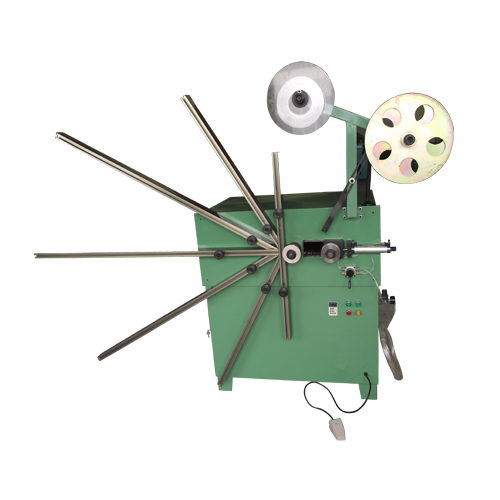
Manual Vertical Big Size Winding Machine For SWG
Discover the Kaxite Sealing Manual Vertical Big Size Winding Machine for SWG, designed for professionals handling heavy-duty wire winding. Its robust construction ensures precision and durability, ideal for industrial workshops. This machine simplifies large-scale winding tasks, reducing labor and boosting efficiency. Stand out with its user-friendly design and reliable performance.
Read MoreSend Inquiry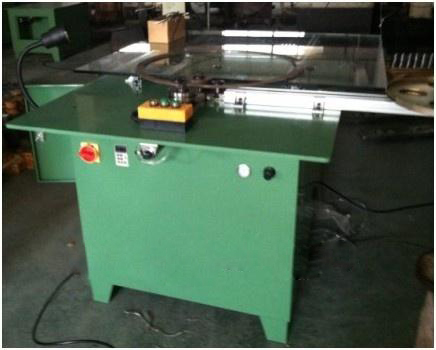
Medium Size Semi-Automatic Winding Machine
Experience the Kaxite Sealing Medium Size Semi-Automatic Winding Machine—a versatile, user-friendly solution for seamless packaging and sealing operations. Built with durable materials and smart technology, it ensures precision, speed, and minimal effort, ideal for small to medium businesses. Enhance productivity, reduce downtime, and feel the satisfaction of streamlined workflows. Stand out with its energy efficiency and compact design. Boost your sealing process today—trust Kaxite Sealing for reliable performance and innovative solutions.
Read MoreSend Inquiry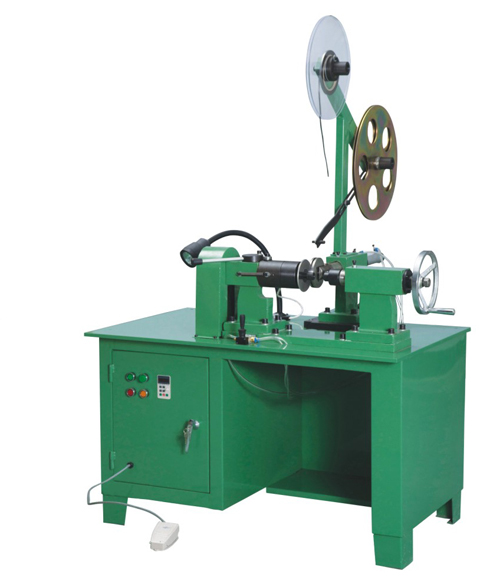
Winding Machine For Small Size SWG
Discover Kaxite Sealing's Winding Machine For Small Size SWG, the ultimate precision tool for seamless sealing in compact applications. Engineered with advanced technology, it ensures durability, ease of use, and unmatched efficiency, making it ideal for professionals and DIY enthusiasts alike. Experience stress-free operation and superior results that save time and enhance your projects. Stand out with its innovative design and reliable performance—elevate your work today!
Read MoreSend Inquiry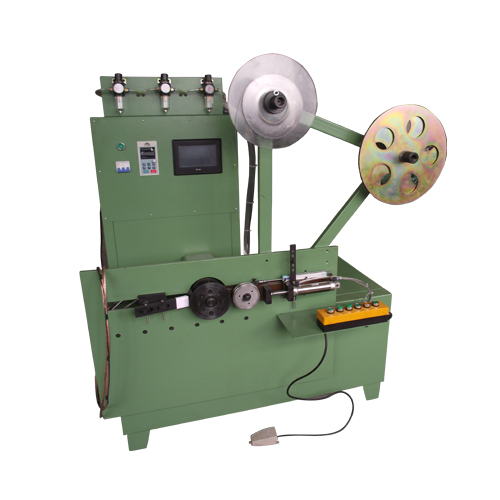
Vertical Semi-Automatic Winding Machine For SWG
Elevate your production with Kaxite Sealing's Vertical Semi-Automatic Winding Machine For SWG, designed for efficient and precise SWG winding. Offering superior durability, user-friendly design, and enhanced output, it's perfect for manufacturers seeking reliability. Experience smoother operations and reduced downtime, setting itself apart with innovative technology. Trust Kaxite Sealing for quality that drives results.
Read MoreSend Inquiry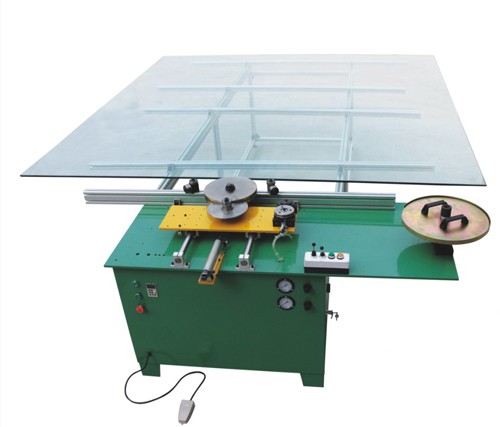
Semi-Automatic Horizontal Big Size Winder
Discover the Kaxite Sealing Semi-Automatic Horizontal Big Size Winder—an innovative solution for efficient, large-scale winding tasks in industrial settings. Engineered with durable materials and user-friendly design, it ensures smooth, high-capacity operation with minimal downtime. Ideal for manufacturers and packaging professionals, this winder streamlines production, reduces labor costs, and enhances workflow reliability. Experience precision and ease with a standout tool that combines superior performance with competitive value. Elevate your operations today!
Read MoreSend Inquiry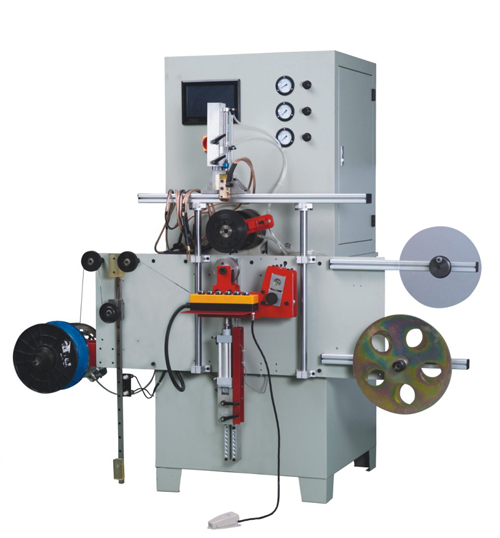
Automatic Winding Machine For Spiral Wound Gasket
Elevate your sealing production with Kaxite Sealing's Automatic Winding Machine for Spiral Wound Gasket, designed for gasket manufacturers seeking precision, efficiency, and superior quality. This advanced machine automates winding processes, ensuring consistent, durable gaskets with minimal manual intervention, saving time and reducing errors. Ideal for industrial sealing solutions, it enhances productivity, delivers reliable performance, and sets a new standard in automation. Experience seamless operation and boost your output with Kaxite Sealing's innovative technology—invest in excellence today.
Read MoreSend Inquiry