


China Ceramic Fiber Manufacturer Offering Custom Bulk Solutions for Global Import Export and Private Label OEM ODM Services
Ceramic fiber, a lightweight, high-temperature insulation material, stands as a cornerstone of modern industrial thermal management. Composed primarily of alumina-silica materials, it is engineered through a melting and fiberizing process, resulting in a versatile product line capable of withstanding extreme temperatures up to 2300°F (1260°C) and beyond. For over two decades, Kaxite Sealing has been at the forefront of developing and supplying premium-grade ceramic fiber solutions, empowering industries from aerospace to metal processing to achieve superior energy efficiency, personnel safety, and process reliability.
The fundamental advantage of ceramic fiber lies in its exceptional thermal properties combined with low thermal mass. Unlike traditional dense refractories, it heats up and cools down rapidly, leading to significant fuel savings and faster cycle times in intermittent processes. Its fibrous structure provides excellent resilience against thermal shock and mechanical vibration, ensuring long-term performance integrity in demanding environments.
**Core Product Parameters and Forms**
Ceramic fiber is available in multiple forms, each tailored for specific applications. Kaxite Sealing’s comprehensive range ensures a perfect fit for any thermal insulation challenge.
**Key Material Properties:**
* **Temperature Rating:** Classified from 1260°C (2300°F) to 1600°C (2912°F) for different grades.
* **Thermal Conductivity:** Low conductivity values, typically between 0.12 and 0.28 W/m·K at 1000°C, depending on density and temperature.
* **Chemical Stability:** Excellent resistance to most corrosive atmospheres, except hydrofluoric acid, phosphoric acid, and strong alkalis.
* **Low Heat Storage:** Minimal thermal mass for rapid heat-up and cool-down.
* **Thermal Shock Resistance:** Outstanding resistance to rapid temperature changes without cracking or spalling.
**Primary Product Forms and Specifications:**
| Product Form | Typical Density | Common Thickness/Size | Primary Applications |
| :--- | :--- | :--- | :--- |
| **Ceramic Fiber Blanket** | 64, 96, 128 kg/m³ | 1/4" to 2" (6mm to 50mm) | Furnace linings, expansion joints, pipe wrapping, high-temperature gasketing. |
| **Ceramic Fiber Board** | 260 - 320 kg/m³ | 1/2" to 3" (12mm to 75mm) | High-temperature backing insulation, fire protection, kiln car tops, burner blocks. |
| **Ceramic Fiber Paper** | 120 - 200 kg/m³ | 0.5mm to 12.5mm | Thin thermal barriers, gaskets, wrap for intricate components, high-temperature sealing. |
| **Ceramic Fiber Module** | 192 - 220 kg/m³ | Various standard sizes (e.g., 12"x12") | Pre-fabricated, anchored lining systems for industrial furnaces and boilers for fast installation. |
| **Ceramic Fiber Rope & Tape** | Braided or twisted | 1/8" to 1" diameter (3mm-25mm) | Packing, sealing around doors, joints, and penetrations; high-temperature caulking. |
| **Ceramic Fiber Textiles (Cloth, Yarn)**| Woven fabric | Various weave patterns & weights | Flexible curtains, welding blankets, protective clothing, expansion joint covers. |
| **Ceramic Fiber Vacuum-Formed Shapes**| Custom | Custom shapes per drawing | Precise insulation components for complex geometries in aerospace and automotive. |
**Ceramic Fiber FAQ (Frequently Asked Questions)**
**Q: What is the maximum continuous operating temperature for ceramic fiber?**
A: The maximum continuous use temperature varies by product grade. Standard alumina-silica ceramic fiber is typically rated for 1260°C (2300°F). High-purity or zirconia-enhanced grades from Kaxite Sealing can extend this range up to 1600°C (2912°F) for specific applications. It is crucial to select a grade whose rating exceeds your process temperature.
**Q: Is ceramic fiber safe to handle?**
A: New, virgin ceramic fiber products are generally considered irritants. It is recommended to use appropriate personal protective equipment (PPE) like gloves, long sleeves, and a dust mask during handling to prevent skin and respiratory irritation. Once installed or encapsulated, the fibers are completely safe. Kaxite Sealing also offers bio-soluble fiber options that dissolve in body fluids over time, presenting an even lower handling risk.
**Q: How does ceramic fiber compare to traditional brick or castable refractory?**
A: Ceramic fiber offers significant advantages: it is much lighter (lower structural load), has far lower thermal conductivity (better insulation), and possesses exceptional thermal shock resistance (no cracking). While traditional refractories are more abrasion-resistant and suitable for direct contact with molten materials, ceramic fiber provides superior energy efficiency and faster installation for most insulation and lining applications.
**Q: Can ceramic fiber get wet?**
A: While ceramic fiber itself is not damaged by water, getting it wet temporarily reduces its insulating value until it dries out. More importantly, wet handling can increase dust and make installation messy. Products like Kaxite Sealing’s ceramic fiber board and modules often include water-repellent binders for moisture resistance during storage and installation in humid environments.
**Q: What are the key factors when selecting a ceramic fiber density?**
A: Density directly impacts strength, thermal conductivity, and heat capacity. Lower density (e.g., 64 kg/m³ blanket) offers the lowest conductivity and is ideal for lining large furnaces. Higher density (e.g., 260+ kg/m³ board) provides greater structural strength, erosion resistance, and surface durability, making it suitable for burner blocks or areas subject to physical contact.
**Q: How is ceramic fiber installed in a furnace?**
A: Installation methods vary by form. Blankets can be layered and secured with studs/washers or high-temperature adhesives. Ceramic fiber modules are the most efficient for furnace walls and roofs; they are pre-compressed and anchored with a quick-install metal anchoring system. Kaxite Sealing provides detailed installation guides and technical support for all product forms.
**Q: Does ceramic fiber contain asbestos?**
A: No. Ceramic fiber is a completely synthetic, man-made mineral fiber (MMMF) primarily made from alumina and silica. It contains no asbestos whatsoever. Its composition and properties are fundamentally different from asbestos fibers.
**Q: What industries commonly use ceramic fiber products from Kaxite Sealing?**
A: Our products serve a vast range of industries, including: Iron & Steel (reheat furnaces, ladles), Petrochemical & Refining (FCC units, heaters), Aluminum & Non-Ferrous Metals (soaking pits, melters), Ceramics & Glass (kilns, lehrs), Aerospace (fire protection, test equipment), Power Generation (boiler insulation, expansion joints), and Automotive (heat shields, exhaust systems).
**Q: Can ceramic fiber be used for fireproofing in buildings?**
A: Yes, but with specific product selections. Ceramic fiber boards, blankets, and papers are excellent passive fire protection materials for sealing penetrations, protecting structural steel, and insulating fire doors due to their extremely high melting point and low thermal conductivity. Always ensure the product is certified or tested for the specific fire rating required by local building codes.
**Q: How do I choose between a blanket, board, and module for my furnace lining?**
A: The choice depends on furnace type, temperature, cycle frequency, and budget. **Blankets** are cost-effective for layered linings in periodic kilns. **Boards** offer a hard, durable surface for areas needing abrasion resistance. **Modules** provide the fastest installation, superior energy efficiency due to seamless coverage, and excellent longevity in high-temperature, continuous industrial furnaces. Kaxite Sealing’s technical team can help you determine the most economical and effective solution.
Kaxite Sealing specializes in manufacturing all these forms with stringent quality control, ensuring consistent density, dimensional accuracy, and thermal performance. Our technical data sheets provide exhaustive detail on properties like linear shrinkage, tensile strength, and specific heat capacity for engineering precision. Beyond standard products, we offer custom die-cutting, fabrication, and value-added services like applying reflective foil facings or wire mesh reinforcement to meet unique application demands. The selection of the correct ceramic fiber product requires careful consideration of the operating temperature atmosphere, mechanical stresses, and required longevity. Partnering with an experienced supplier like Kaxite Sealing ensures access to both the right materials and the deep technical expertise necessary to optimize your thermal system's performance and safety.
- View as
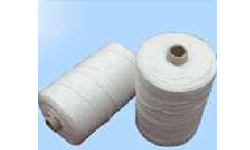
Ceramic Fiber Yarn
Experience superior protection with Kaxite Sealing's Ceramic Fiber Yarn, a durable material ideal for high-temperature insulation and sealing applications in industrial settings. Its lightweight, flexible design offers excellent thermal resistance, ensuring safety and efficiency for engineers and manufacturers. This solution reduces downtime and enhances performance, setting itself apart with unmatched reliability. Trust Kaxite Sealing for advanced solutions that tackle heat-related challenges seamlessly—explore how Ceramic Fiber Yarn can elevate your projects today.
Read MoreSend Inquiry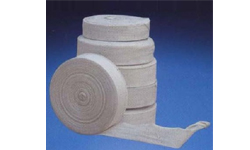
Ceramic Fiber Tape
Discover the Kaxite Sealing Ceramic Fiber Tape, a durable high-temperature sealing solution for industrial insulation and fire safety. Its lightweight, flexible ceramic fibers resist extreme heat up to 1400°C, ensuring reliable protection and energy savings. Ideal for engineers, HVAC professionals, and manufacturers in furnaces or boilers, it offers peace of mind by preventing heat loss and enhancing safety. Outshines competitors with Kaxite's superior adhesion and easy application. Upgrade your projects with Kaxite Sealing for unmatched performance and efficiency.
Read MoreSend Inquiry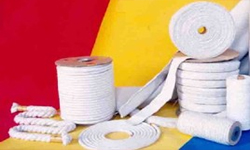
Ceramic Fiber Rope
Kaxite Sealing's Ceramic Fiber Rope offers exceptional heat resistance and durability, perfect for industrial insulation and sealing. Made with premium ceramic fibers, it withstands extreme temperatures, reduces energy loss, and ensures safety in high-heat applications like furnaces and boilers. Ideal for engineers and manufacturers, it provides reliable performance, cutting costs and enhancing efficiency. Its superior quality and flexibility set it apart from competitors, delivering peace of mind and long-term value. Trust Kaxite Sealing for top-tier sealing solutions that boost productivity.
Read MoreSend Inquiry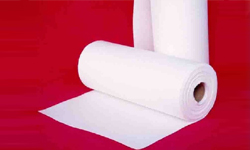
Ceramic Fiber Paper
Kaxite Sealing's Ceramic Fiber Paper is an advanced high-temperature insulation solution, crafted from premium ceramic fibers for exceptional heat resistance up to 2300°F. Ideal for industrial applications like furnace linings and automotive systems, its lightweight, flexible design ensures easy installation and reliable thermal management. Compared to traditional materials, it offers superior durability and energy efficiency, solving overheating issues while enhancing safety and performance. Experience peace of mind with a product backed by quality assurance—upgrade your equipment today!
Read MoreSend Inquiry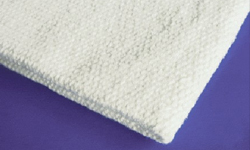
Ceramic Fiber Cloth
Discover Kaxite Sealing's Ceramic Fiber Cloth, a versatile industrial-grade solution known for its exceptional thermal insulation, durability, and resistance to high temperatures—ideal for professionals in manufacturing, automotive, and construction seeking enhanced safety and efficiency. This premium cloth offers a lightweight design with superior heat protection, reducing energy costs and improving workspace comfort. Experience peace of mind and reliability with our advanced ceramic fibers, setting it apart from standard alternatives. Elevate your projects with Kaxite Sealing's trusted quality today!
Read MoreSend Inquiry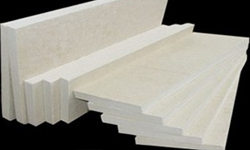
Ceramic Fiber Board
Kaxite Sealing's Ceramic Fiber Board offers exceptional thermal insulation and durability for industrial applications like furnaces and kilns. With superior heat resistance and energy efficiency, it ensures reliable performance, saving costs while enhancing safety for professionals in manufacturing and processing.
Read MoreSend Inquiry