


Custom Carbon Fiber Solutions for OEM Manufacturing in China
Carbon Fiber represents the pinnacle of modern material science, offering an unparalleled combination of strength, lightness, and durability. For engineers, designers, and manufacturers across aerospace, automotive, sporting goods, and industrial sectors, it has become the material of choice for high-performance applications. At Kaxite Sealing, we specialize in providing premium-grade carbon fiber materials and sealing solutions that meet the most stringent demands of precision engineering.
### Understanding Carbon Fiber: The Basics
Carbon fiber is a polymer, known more precisely as carbon fiber reinforced polymer (CFRP) or carbon fiber composite. It is composed of incredibly thin strands of carbon atoms, thinner than a human hair, which are bonded together in a crystalline alignment. These fibers are then combined with a plastic polymer resin, often epoxy, to form a composite material. This process creates a substance that is extremely strong for its weight, rigid, and resistant to corrosion and fatigue.
The primary advantages of carbon fiber include:
* **High Strength-to-Weight Ratio:** It is significantly stronger than steel yet about 70% lighter, and stronger than aluminum while being lighter.
* **Exceptional Stiffness:** It offers superior rigidity, maintaining shape under high stress.
* **Low Thermal Expansion:** Carbon fiber parts exhibit minimal expansion or contraction with temperature changes, ensuring dimensional stability.
* **Excellent Chemical Resistance:** It is highly resistant to corrosion from a wide range of chemicals and solvents.
* **Fatigue Resistance:** It outperforms metals in applications with repeated loading cycles.
* **X-Ray Permeability:** It is transparent to X-rays and MRI, making it ideal for medical imaging equipment.
### Kaxite Sealing Carbon Fiber Product Parameters
At Kaxite Sealing, our carbon fiber products are engineered for excellence. We offer various forms, including sheets, tubes, rods, and custom-fabricated parts, all manufactured under strict quality control.
#### **Material Property Specifications**
The following table details the typical mechanical and physical properties of our standard epoxy-based carbon fiber composite:
| Property | Unit | Value (Typical) | Test Standard |
| :--- | :--- | :--- | :--- |
| **Tensile Strength** | MPa | 3,500 | ASTM D3039 |
| **Tensile Modulus** | GPa | 230 | ASTM D3039 |
| **Flexural Strength** | MPa | 1,700 | ASTM D790 |
| **Flexural Modulus** | GPa | 120 | ASTM D790 |
| **Compressive Strength** | MPa | 1,500 | ASTM D695 |
| **Density** | g/cm³ | 1.55 - 1.60 | ASTM D792 |
| **Fiber Volume Fraction** | % | 60 - 65 | - |
| **Glass Transition Temp (Tg)** | °C | 120 - 150 | DMA |
| **Coefficient of Thermal Expansion** | 10⁻⁶/°C | 0.5 - 2.0 | ASTM E831 |
| **Water Absorption** | % | < 0.5 | ASTM D570 |
#### **Available Product Forms & Specifications**
We supply carbon fiber in multiple formats to suit diverse application needs:
* **Carbon Fiber Sheets / Panels:**
* **Weaves:** Plain, Twill (2x2, 4x4), Satin (5-Harness, 8-Harness), Unidirectional.
* **Standard Thickness:** 0.5mm, 1.0mm, 1.5mm, 2.0mm, 3.0mm, 5.0mm, and up.
* **Standard Sizes:** 1000mm x 500mm, 1000mm x 1000mm, 2000mm x 1000mm. Custom sizes available.
* **Surface Finish:** Glossy, Matte, or with Peel Ply texture for bonding.
* **Carbon Fiber Tubes & Rods:**
* **Tubes (Diameter/Thickness):** From 5mm OD / 1mm wall to 200mm OD / 10mm wall.
* **Rods (Diameter):** From 1mm to 50mm solid rods.
* **Construction:** Wrapped, pultruded, or filament-wound for optimal strength orientation.
* **Custom Fabricated Parts:**
* Kaxite Sealing provides CNC machining, drilling, and finishing services to deliver ready-to-install components per client drawings and specifications.
#### **Resin System Options**
We offer composites with different resin matrices to tailor performance:
* **Epoxy Resin:** Standard high-performance option with excellent mechanical properties and adhesion.
* **High-Tg Epoxy:** For applications requiring sustained performance above 130°C.
* **Phenolic Resin:** Offers superior fire, smoke, and toxicity (FST) ratings for aerospace and mass transit interiors.
* **Specialty Resins:** Upon request, we can develop composites using vinyl ester, polyimide, or other resins for specific chemical or thermal environments.
### Carbon Fiber FAQ (Frequently Asked Questions)
**What is the difference between carbon fiber and graphite fiber?**
The terms are often used interchangeably in commercial contexts. Technically, carbon fibers are processed at temperatures around 1300-2000°C, while graphite fibers undergo further treatment above 2500°C, resulting in a more ordered crystalline structure and higher modulus. Most commercially available "carbon fiber" is technically carbon fiber, with true graphite fiber being used in specialized aerospace and military applications.
**How does carbon fiber compare to fiberglass and Kevlar®?**
Carbon fiber offers the highest stiffness and strength-to-weight ratio of the three. Fiberglass is less expensive and has good impact resistance but is heavier and less stiff. Kevlar® (aramid fiber) excels in impact and abrasion resistance (used in body armor) but has lower compressive strength than carbon fiber. The choice depends on the primary performance requirement: stiffness (carbon), cost-impact balance (fiberglass), or toughness (Kevlar).
**Can carbon fiber be repaired if it cracks or delaminates?**
Yes, it can be repaired, but the process requires expertise to restore structural integrity. For minor surface cracks, epoxy injection and sanding can be effective. For structural damage, the standard method involves scarfing out the damaged area in a tapered shape, laminating in new pre-preg carbon fiber patches, and curing under vacuum and heat. It is crucial that repairs are performed by professionals familiar with composite materials.
**Is carbon fiber conductive?**
Yes, carbon fiber is electrically conductive. This is an important consideration in design, as it can lead to galvanic corrosion when in direct contact with metals like aluminum. Proper insulation or the use of compatible metals (like titanium or with protective coatings) is necessary. Conversely, this conductivity is utilized in applications requiring electrostatic discharge (ESD) or electromagnetic interference (EMI) shielding.
**What are the limitations or disadvantages of carbon fiber?**
Key limitations include: **High Cost:** Raw materials and manufacturing processes are expensive. **Brittle Failure:** It can fail suddenly without the plastic deformation warning typical of metals. **UV Degradation:** Prolonged exposure to sunlight can degrade the resin matrix, requiring a UV-protective topcoat. **Difficulty of Recycling:** Thermoset composites are challenging to recycle, though new technologies and thermoplastic matrices are emerging to address this. **Low Impact Strength:** While strong, it can be susceptible to damage from sharp impacts or point loads.
**How is carbon fiber manufactured into parts?**
Common manufacturing processes include: **Wet Lay-up:** Hand laminating fabric with liquid resin. **Vacuum Bagging / Infusion:** Using vacuum pressure to consolidate laminate and remove air for higher quality. **Prepreg Molding:** Using fabric pre-impregnated with resin, cured in an autoclave (oven under pressure) for aerospace-grade parts. **Compression Molding:** Using matched metal dies in a press. **Filament Winding:** For pressure vessels and tubes. The method chosen depends on part geometry, volume, and required performance.
**How should carbon fiber components be cleaned and maintained?**
Use a mild soap or detergent with lukewarm water and a soft, non-abrasive cloth or sponge. Avoid harsh solvents, abrasive cleaners, or scouring pads that can scratch the surface and resin coating. For glossy finishes, automotive wax can be used to enhance shine and provide a protective layer. Regularly inspect for any signs of impact damage, cracks, or delamination.
**Why choose Kaxite Sealing for carbon fiber materials?**
Kaxite Sealing combines deep material expertise with precision manufacturing. We are not just suppliers; we are engineering partners. Our commitment to quality control ensures every sheet, tube, and custom part meets published specifications. We offer technical support to help you select the right weave, resin, and form for your application, whether it's for a high-performance seal, a structural bracket, or a cosmetic panel. Our focus on sealing solutions gives us unique insight into applications where performance under pressure and in harsh environments is critical.
- View as
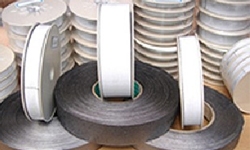
Graphite Tapes
Discover Kaxite Sealing's Graphite Tapes: the ultimate sealing solution for high-temperature and chemical-resistant applications. Made from premium flexible graphite, these tapes offer superior durability, easy installation, and exceptional performance in industrial systems. Ideal for engineers and industries seeking reliable, long-lasting seals, they solve leakage issues efficiently. Stand out with our eco-friendly, non-toxic design and unmatched thermal conductivity compared to standard options. Elevate your projects with Kaxite Sealing today!
Read MoreSend Inquiry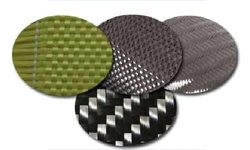
Graphite Clothes
Discover Graphite Clothes, crafted with Kaxite Sealing technology for durable, flexible protection. Ideal for DIY enthusiasts and professionals, these clothes offer superior thermal and chemical resistance, ensuring comfort and reliability in demanding tasks. Feel confident and efficient with this innovative gear that stands out from competitors. Limited-time discounts available now!
Read MoreSend Inquiry