


Bespoke Serrated Gaskets from a Leading Chinese Manufacturer for Custom OEM and Bulk Import
What Are Serrated Gaskets?
In demanding industrial sealing applications, standard flat gaskets often fail to provide the necessary holding power, especially under high pressure and temperature fluctuations. This is where Serrated Gaskets become the engineered solution of choice. Unlike smooth-surface gaskets, these specialized sealing components feature a series of precise, concentric grooves or "serrations" machined onto one or both sealing faces. These grooves bite into the softer flange material (or a companion gasket) upon bolt tightening, creating a series of mechanical locks. This serrated grip dramatically increases the friction between the gasket and the flange face, effectively resisting the internal pressure forces that tend to blow the gasket out or cause leakage.
At Kaxite Sealing, we engineer our serrated gaskets to deliver unmatched performance in the most challenging environments, from high-pressure pipeline connections to critical heat exchanger flanges.
Key Features & Advantages of Kaxite Serrated Gaskets
Choosing the right sealing component is critical for system integrity and safety. Our serrated gaskets offer distinct advantages over conventional options.
- Superior Grip and Blowout Resistance: The primary function of the serrations is to mechanically lock the gasket in place. This prevents the gasket from being extruded under high internal pressure or cyclic loading, a common failure mode for smooth gaskets.
- Excellent for High-Pressure Applications: They are specifically designed to perform reliably in systems with internal pressures that would compromise standard gaskets.
- Effective in Low Bolt-Load Situations: Serrated gaskets can achieve an effective seal with lower flange bolt loads compared to flat gaskets. This is beneficial for flanges with limited bolting capacity or where over-torquing is a concern.
- Reduced Risk of Creep Relaxation: The mechanical interlock minimizes the gasket's tendency to creep or flow under sustained pressure and temperature, maintaining a consistent sealing force over time.
- Versatility in Material Pairings: They work exceptionally well in metal-to-metal applications but are also highly effective when paired with softer gasket materials, where the serrations bite into the softer surface.
- Reusability (Depending on Type): Certain styles of serrated gaskets, particularly those with serrations on one side only, can often be reused if carefully removed and inspected, offering potential cost savings.
Technical Specifications & Product Parameters
Kaxite Sealing offers a comprehensive range of serrated gaskets, precisely manufactured to meet exacting standards. Our products are defined by the following key parameters.
Standard Material Grades
We manufacture serrated gaskets from a variety of materials to suit different media, temperatures, and pressures.
| Material | ASTM Standard | Common Applications | Temp. Range (Approx.) |
|---|---|---|---|
| Soft Iron | A283 / A666 | High-temperature steam, heat exchangers, general high-pressure service. | -20°C to 500°C |
| Low Carbon Steel | A516 Gr.70 / A36 | Oil & gas pipelines, petrochemical processing, water systems. | -30°C to 450°C |
| Stainless Steel 304/316 | A240 | Corrosive environments, chemical processing, food & beverage, pharmaceutical. | -250°C to 800°C |
| Monel 400 | B164 | Marine applications, hydrofluoric acid, caustic solutions. | -150°C to 480°C |
| Copper | B152 | Heat transfer applications, electrical equipment, fuel systems. | -250°C to 250°C |
Serrations Profile & Dimensions
The geometry of the serrations is critical to performance. Kaxite offers standard and custom profiles.
- Serrations per Inch (SPI): Common configurations include 24, 32, 45, and 55 SPI. Finer serrations (higher SPI) provide more grip points for a denser seal on smoother surfaces, while coarser serrations are used for softer materials or where more bite is needed.
- Profile Type:
- Concentric Grooves: Standard pattern, ideal for most applications.
- Spiral Serrations (Phonographic): A continuous spiral groove, sometimes preferred for specific sealing dynamics.
- Depth of Serration: Typically ranges from 0.010 to 0.030 inches (0.25 to 0.76 mm). Depth is selected based on flange material hardness and required bite.
- Face Types:
- Double-Serrated: Serrations on both sides. Maximum grip, often used for metal-to-metal sealing.
- Single-Serrated: Serrations on one side, flat on the other. Used against a softer gasket or flange facing.
- Flat-I.D./Serrated-O.D.: Serrations only on the outer portion of the face. Used to prevent leakage to the atmosphere in specific flange designs.
Standard Sizes & Pressure Ratings
| Nominal Pipe Size (NPS) | Outside Diameter (OD) Range | Inside Diameter (ID) Range | Common Thickness | Typical Pressure Class (ASME B16.5) |
|---|---|---|---|---|
| 1/2" to 24" | 0.88" to 26.0" | 0.62" to 23.0" | 1/16", 1/8", 3/32" | Class 150 to Class 2500 |
| 24" and larger | Custom per flange drawing | Custom per flange drawing | 1/8", 1/4", Custom | As per design specifications |
All dimensions are manufactured per ASME B16.20, B16.21, or to customer-provided drawings. Custom sizes, non-standard thicknesses, and special materials are a core specialty at Kaxite Sealing.
Frequently Asked Questions (FAQ) About Serrated Gaskets
Q: When should I use a serrated gasket instead of a standard flat gasket or a spiral wound gasket?
A: Serrated gaskets are the preferred choice in specific scenarios: 1) For high-pressure applications where gasket blowout is a risk. 2) In systems with low flange bolting load capacity, as they require less compressive force to seal effectively. 3) For metal-to-metal flange sealing where a soft filler is not desired. 4) In services with significant thermal cycling, where their resistance to creep relaxation is advantageous. Spiral wound gaskets are often better for wider pressure/temperature ranges and uneven flange conditions, while flat gaskets suffice for lower-pressure, stable services.
Q: Can serrated gaskets be used with raised face (RF) and flat face (FF) flanges?
A: Yes, but selection is crucial. Double-serrated gaskets are typically used between two flat face (FF) flanges or raised face (RF) flanges where the raised portion has been machined off for metal-to-metal contact. Single-serrated gaskets (flat on one side) are often used against a raised face, with the serrated side biting into the gasket or a softer opposing flange surface. Always consult engineering specifications or a Kaxite Sealing expert for the correct configuration.
Q: What is the proper installation procedure for a serrated gasket?
A: Correct installation is key to performance and safety. 1) Ensure flange faces are clean, dry, and free of scratches or old gasket material. The serrations require a clean surface to bite into. 2) Align the gasket carefully with the bolt holes. 3) Use a proper bolt tightening pattern (criss-cross/star pattern) and torque the bolts gradually and evenly in multiple stages to the specified value. This ensures the serrations embed uniformly without distorting the gasket. 4) Never re-use a double-serrated gasket that has been fully compressed, as the serrations will have deformed. Single-serrated gaskets may be reusable if undamaged.
Q: How do I select the right serrations-per-inch (SPI) for my application?
A: The SPI selection depends on flange surface finish and material hardness. A finer serration (like 55 SPI) is used for smoother, harder flange surfaces as it creates more, shallower bite points for a gas-tight seal. A coarser serration (like 24 or 32 SPI) is used for softer materials (like aluminum or some stainless steels) or where a deeper mechanical bite is needed to resist high pressure. For standard industrial steel flanges, 45 SPI is a common, versatile choice. Kaxite Sealing can provide guidance based on your specific operating conditions.
Q: Are Kaxite serrated gaskets suitable for high-temperature cyclic service?
A: Absolutely. Our serrated gaskets, especially those made from materials like Stainless Steel 304/316 or high-grade soft iron, are engineered to perform under extreme thermal cycling. The mechanical lock created by the serrations resists the loss of seating stress that occurs due to differential thermal expansion and creep, which is a major cause of leakage in cyclic services. Proper material selection for the temperature range is critical, which our technical team can assist with.
Q: Can you manufacture custom serrated gaskets outside standard sizes and materials?
A: Yes, custom manufacturing is a hallmark of Kaxite Sealing. We regularly produce gaskets in special alloys (Inconel, Hastelloy, Titanium), non-standard thicknesses, unusual diameters, and with unique serration patterns (depth, profile, SPI) based on customer drawings or specifications. We work with clients to develop solutions for proprietary or particularly challenging applications.
- View as
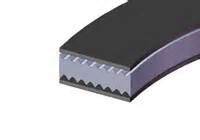
Kammprofile Gasket Basic Style
Kaxite Sealing introduces the Kammprofile Gasket Basic Style, a premium sealing solution engineered for industrial applications. Designed with precision-cut profiles, it ensures reliable pressure and temperature resistance, ideal for pipelines and heavy machinery. Its durable construction prevents leaks, enhancing safety and efficiency. Unlike standard gaskets, this innovative design offers superior sealing performance in demanding environments. Experience peace of mind with Kaxite Sealing's trusted quality, delivering long-lasting protection that boosts productivity and reduces downtime.
Read MoreSend Inquiry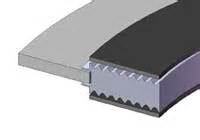
Kammprofile Gasket with Loose Outer Ring
Kaxite Sealing's Kammprofile Gasket with Loose Outer Ring excels in high-pressure, high-temperature industrial sealing, offering unmatched durability and leak-free performance. Its innovative design ensures easy installation and long-term reliability, ideal for demanding applications in oil, gas, and chemical sectors. Experience peace of mind with superior sealing solutions that elevate safety and efficiency.
Read MoreSend Inquiry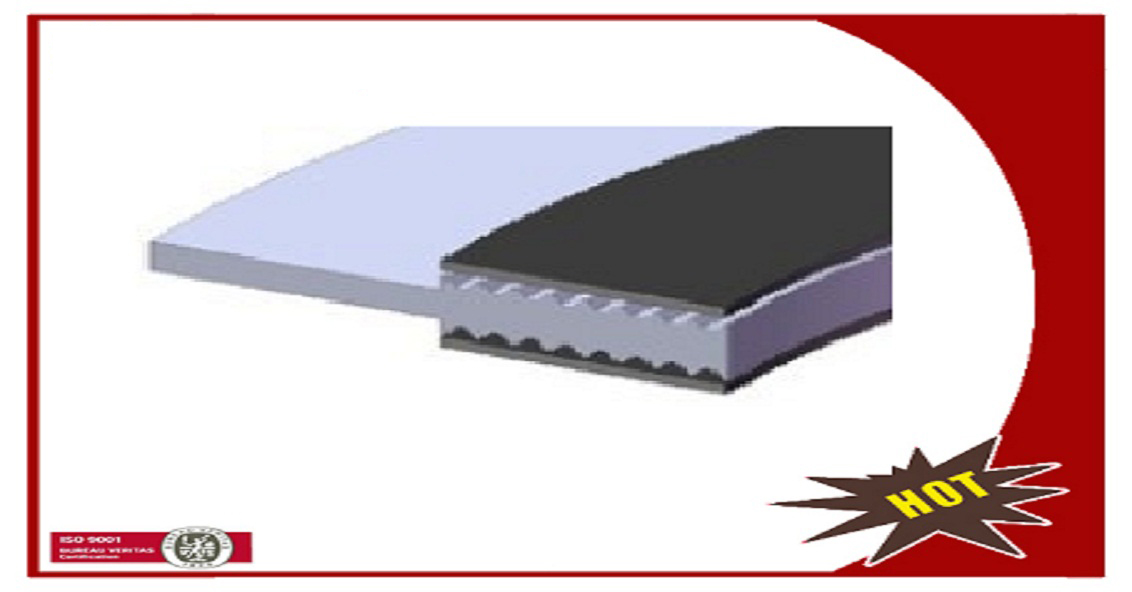
Kammprofile Gasket with Integral Outer Ring
Experience superior sealing with Kaxite Sealing's Kammprofile Gasket featuring an integral outer ring. Designed for robust industrial applications, it ensures unmatched durability and leak-proof performance. Ideal for engineers and industrial users, this innovative gasket simplifies installations and enhances safety, saving time and resources. Trust Kaxite Sealing for reliable, high-grade solutions that deliver peace of mind and efficiency.
Read MoreSend Inquiry