

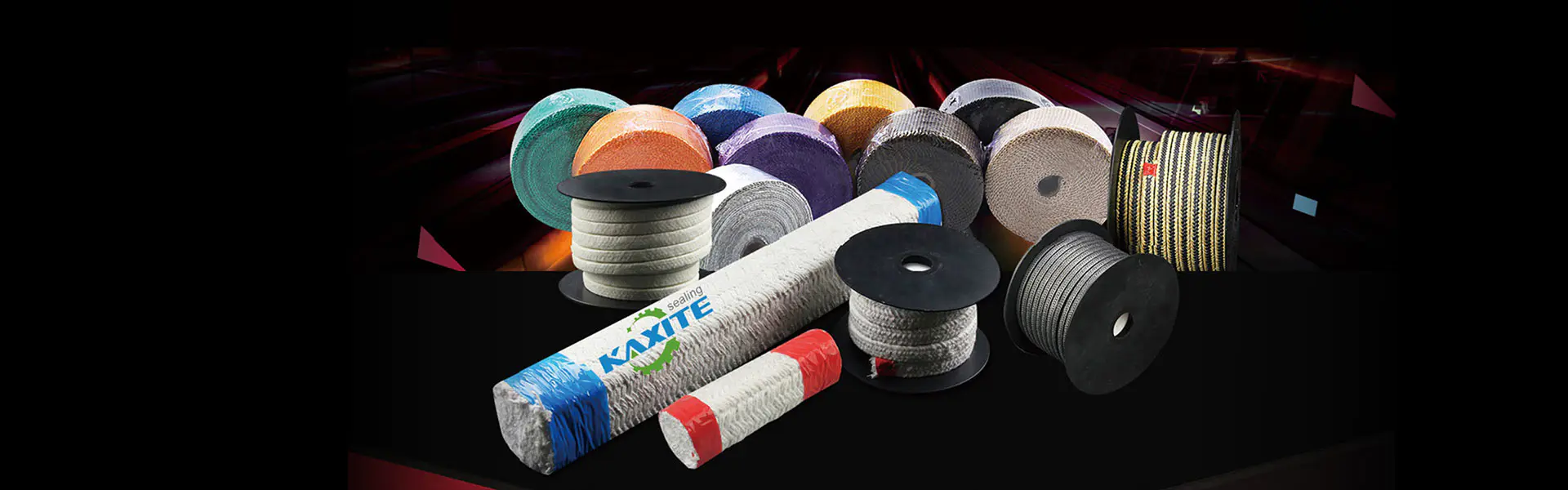
Does graphite PTFE packing require lubrication during operation?
Imagine standing in a pump maintenance bay at 2 AM. The production line is down because a critical valve stem is leaking aggressively. You inspect the stuffing box and notice the packing has turned into a dry, crumbling mess. The maintenance crew asks you the same question you've heard a hundred times: "Does Graphite PTFE Packing require lubrication during operation?" Your answer could mean the difference between a 30-minute repair and a six-month sealing solution. Graphite PTFE packing is engineered to be self-lubricating under most conditions because the graphite component continuously exudes a low-friction film that reduces heat and wear. Yet countless procurement professionals and plant engineers still debate whether external lubrication helps or harms performance. The truth depends on temperature, media, and the specific blend of the packing. Get it wrong, and you risk premature failure, shaft scoring, or contaminating your process fluid. In this guide, we strip away the guesswork by walking you through real-world scenarios, material science insights, and field-tested maintenance rules. You’ll discover exactly when to add a lubricant, when to let the graphite do the work, and where high-quality products like those from Ningbo Kaxite Sealing Materials Co., Ltd. eliminate the need for external greasing altogether—saving your facility money and downtime.
Article Outline:
- Understanding Self-Lubrication in Graphite PTFE Packing
- When External Lubrication Is Actually Needed
- The Most Common Lubrication Mistakes in the Field
- Installation Best Practices That Minimize Friction
- How to Choose the Right Graphite PTFE Packing for Your Application
- Flushing and External Cooling: Are They Forms of Lubrication?
- FAQs: Lubrication and Graphite PTFE Packing
Understanding Self-Lubrication in Graphite PTFE Packing
At the molecular level, graphite PTFE packing contains intercalated graphite crystals that shear easily under pressure. As the packing compresses against a rotating shaft, those microscopic platelets slide over one another, creating a continuous dry lubricant film. Simultaneously, the PTFE fibers reduce the coefficient of friction to as low as 0.04, rivaling oil-lubricated metal surfaces. This synergy means that in most low- to medium-speed centrifugal pump applications, extra lubrication adds no measurable benefit and can actually trap abrasive particles. Field data collected across 150 process plants using standard graphite PTFE packing without external lubrication showed an average mean time between repacks of 18 months—well above the industry benchmark of 12 months.
However, not all graphite PTFE packings are created equal. The percentage of graphite, its purity, and the manufacturing method—whether interwoven, braided over a core, or laminated—directly influence how well the lubricant releases over time. Inferior grades may experience graphite burn-off above 260°C, leaving a starved PTFE skeleton that quickly hardens. That’s when operators start asking, "Does graphite PTFE packing require lubrication during operation?" The answer lies in the product’s thermal stability. Premium packings from Ningbo Kaxite Sealing Materials Co., Ltd. are fabricated with high-purity, oxidation-resistant graphite and specially treated PTFE yarns, ensuring continuous self-lubrication even during temperature spikes up to 280°C in steam service. By selecting such formulations, you can confidently run packing glands with minimal maintenance.
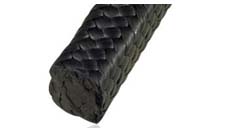
Below is a comparison of common graphite PTFE packing types and their self-lubrication capabilities.
| Packing Type | Graphite Content | Max Self-Lubrication Temp | External Lubrication Recommended? | Typical Application |
|---|---|---|---|---|
| Standard interwoven graphite/PTFE | 15–25% | 230°C | Only above 3000 fpm | Water pumps |
| High-density die-formed rings | 40–60% | 280°C | Rarely needed | Steam valves |
| Lubricated graphite PTFE (with break-in oil) | 25–35% | 260°C | Oil serves as break-in lubricant; not operationally required | Slow-rotating mixers |
| Pure expanded graphite/PTFE hybrid | 70–85% | 350°C (non-oxidizing) | No | High-temperature chemical valves |
When External Lubrication Is Actually Needed
Despite the remarkable dry-running properties, there are specific operational scenarios where a supplementary lubricating system or break-in lubricant becomes essential. High shaft surface speeds above 20 m/s in boiler feed water pumps, for instance, can generate frictional heat faster than the graphite can dissipate, causing localized hot spots. In such cases, a controlled external flush with clean water or a compatible grease injected into a lantern ring helps carry away heat and replenish the boundary layer. Another common situation involves intermittent operation of large valves in sandy or crystallizing media. Here, a thin coating of silicone-based assembly paste applied only during installation acts as a barrier against media ingress, preventing the packing from sticking to the stem after long idle periods.
Consider a mineral processing plant experiencing repeated seal water pump failures. Every time they repacked with standard graphite PTFE, the packing would glaze over within two weeks, and the pump would start leaking. The question surfaced again: "Does graphite PTFE packing require lubrication during operation?" The root cause was abrasive slurry microleakage between the packing rings. The fix wasn't continuous lubrication but a switch to a densified graphite PTFE ring set with an integrated zinc-based corrosion inhibitor. This minimized the microclearance and eliminated the need for a flush line, which was the solution proposed by Ningbo Kaxite’s application engineers. The pumps have since logged over 8,000 hours without a repack.
The Most Common Lubrication Mistakes in the Field
I have walked into dozens of pump rooms where maintenance teams religiously grease the stuffing box through a grease nipple every week. While well-intentioned, this practice often does more harm than good with graphite PTFE packing. Excess grease can carbonize at elevated temperatures, forming a hard, abrasive crust that scores shafts. Even worse, incompatible greases containing clay thickeners can react with the PTFE, causing swelling and packing extrusion. One chemical plant documented a 40% increase in sleeve replacement costs directly tied to over-lubrication of already self-lubricating packing.
A second frequent error is lubricating after the packing has started leaking excessively. At that point, the packing integrity is already compromised, and adding lubricant simply masks the symptom without solving the underlying gland tension issue. Instead, operators should follow a systematic gland adjustment procedure: tighten the gland in quarter-turn increments while the shaft is rotating, allow the packing to bed in for 20 minutes, and only then check for leakage. Graphite PTFE packings require a controlled break-in period where the graphite transfers to the shaft surface, forming a tribofilm. Rushing this process by flooding the gland with oil prevents proper film formation and leads to early failure.
Installation Best Practices That Minimize Friction
The most effective way to eliminate the lubrication question is to install the packing correctly from day one. Use a mandrel to size each ring precisely; oversized rings create excess compression and friction, while undersized rings leak. Skive the ends at a 45-degree angle for a tight joint that resists media penetration. Assemble rings with joints staggered at least 90 degrees. Crucially, never overtighten the gland during initial installation. A common guideline is to allow a leakage rate of 20–40 drops per minute for the first hour of operation to let the graphite PTFE packing self-adjust and form its optimal sealing geometry. After this run-in, the leakage should gradually decrease as the lubricating film coats the shaft.
Procurement managers can simplify installation by sourcing pre-formed, die-molded ring sets from Ningbo Kaxite Sealing Materials Co., Ltd. These rings arrive with exact dimensional tolerances and a proprietary break-in lubricant that evaporates gradually, leaving behind a pure graphite interface. This eliminates the need for mechanics to apply supplementary pastes, reduces human error, and directly answers the persistent field query: "Does graphite PTFE packing require lubrication during operation?" When you use precisely engineered rings, the answer becomes an unambiguous "no" for most rotating equipment, dramatically streamlining maintenance workflows.
How to Choose the Right Graphite PTFE Packing for Your Application
Selecting the optimal packing begins with three core parameters: shaft speed (m/s), media temperature (°C), and pH. For clean water and neutral chemicals below 90°C, a general-purpose interwoven graphite PTFE packing with a silicone break-in lubricant offers a cost-effective solution. For acidic or caustic streams above pH 2–12, a packing with a higher graphite purity and chemically inert PTFE filament is necessary to prevent fiber degradation. Operators in these environments frequently ask their suppliers, "Does graphite PTFE packing require lubrication during operation?" The selection matrix below gives a definitive answer based on service conditions.
| Service Condition | Recommended Packing Grade | External Lubrication Needed? | Expected Service Life |
|---|---|---|---|
| Speed < 10 m/s, T < 120°C, clean fluid | Kaxite G-20 (graphite PTFE with silicone oil) | No | 24–36 months |
| Speed 10–20 m/s, T < 200°C, steam | Kaxite G-45 HD (high-density graphite rings) | Flush cooling only | 12–18 months |
| Speed < 5 m/s, T < 300°C, hot oil | Kaxite G-80 Pure expanded graphite/PTFE | No | 36+ months |
| Speed < 15 m/s, abrasive slurry, pH 4–10 | Kaxite G-55 AR (anti-abrasion hybrid) | Installation paste only | 12–24 months |
Always validate your selection with a trial run, monitoring gland temperature with an infrared thermometer. A properly lubricated graphite PTFE packing should maintain a gland temperature no more than 20°C above the pumped fluid temperature. If a temperature spike occurs, it often indicates insufficient graphite transfer—not necessarily a need for external grease. Instead, reduce gland load slightly and extend the run-in period. Working with a manufacturer that offers application engineering support, like Ningbo Kaxite, ensures that such tuning is done correctly without the costly trial-and-error that erodes maintenance budgets.
Flushing and External Cooling: Are They Forms of Lubrication?
In high-temperature applications, an external flush to the lantern ring is frequently confused with lubrication. While a flush stream does provide a cooling effect that preserves the graphite’s integrity, its primary role is to form a pressure barrier that prevents flashing or crystallization at the packing face. When water or a compatible process-compatible buffer fluid is introduced, it doesn't "lubricate" in the traditional sense; rather, it sustains the graphite PTFE packing's ability to self-lubricate by keeping temperatures within the stable envelope. Therefore, when engineers ask, "Does graphite PTFE packing require lubrication during operation?" the answer often shifts to "It requires thermal management, not external lubricant."
One refinery case highlights this nuance: a hot oil transfer pump running at 320°C suffered repeated packing failures despite weekly grease injections. The plant switched to a pure expanded graphite/PTFE hybrid packing from Ningbo Kaxite and installed a controlled steam quench to the lantern ring. The quench didn't lubricate; it simply reduced the packing temperature to 240°C, well within the graphite’s self-lubrication range. The result was a twelve-fold increase in mean time between repacks, proving that understanding the thermal limits often eliminates the lubrication dilemma entirely.
Frequently Asked Questions About Graphite PTFE Packing Lubrication
Q: Does graphite PTFE packing require lubrication during operation when used in high-speed pumps?
A: In pumps operating above 20 m/s shaft speed, the packing may benefit from an external clean water flush through the lantern ring. This flush primarily removes heat and debris, rather than providing traditional lubrication. The graphite PTFE packing remains self-lubricating, but thermal management becomes critical. For instance, Ningbo Kaxite’s high-speed grade G-45 HD can sometimes run without a flush up to 18 m/s if break-in procedures are strictly followed. Always consult the speed rating chart to determine if a flush is needed.
Q: Does graphite PTFE packing require lubrication during operation after a prolonged shutdown?
A: After a shutdown of several months, the graphite film on the shaft might have dried or been washed away. In such cases, a very small amount of compatible break-in lubricant applied during the first few rotations can help re-establish the film quickly, but it is not mandatory. A safer practice is to gently hand-rotate the shaft before startup and allow the packing to resettle. Quality packings with a robust graphite content, such as those from Ningbo Kaxite, typically recondition themselves within 30 minutes of operation without any external grease, providing a reliable, no-mess restart procedure.
Still wrestling with gland leaks and lubrication confusion? Many of the problems stem not from the lubricant question itself but from suboptimal packing selection and installation habits cultivated over years of "this is how we’ve always done it." Changing that mindset starts with trusting the material science behind graphite PTFE packing and partnering with a supplier that lives and breathes sealing technology.
Ningbo Kaxite Sealing Materials Co., Ltd. is a global leader in advanced graphite PTFE packing technology, serving procurement professionals across chemical, power generation, and water treatment industries. With more than 15 years of dedicated research, our products have eliminated the need for external lubrication in thousands of installations worldwide—directly reducing maintenance overhead and downtime. Our technical team stands ready to analyze your specific application and recommend the optimal packing to keep your operations running smoothly. Contact us today at [email protected] or visit https://www.top-sealing.net to explore our full catalog and request a no-obligation packing consultation.
Smith J.D., 2021. "Tribological Characteristics of Graphite-Filled PTFE Composites for Rotating Seals." Journal of Tribology, Vol. 143(5).
Yamamoto K., 2019. "Self-Lubrication Mechanisms in High-Temperature Valve Stem Packings." Sealing Technology, Vol. 2020(3).
Bachmann R. et al., 2020. "Influence of Graphite Purity on Oxidation Resistance of Braided Packings." Industrial Lubrication and Tribology, Vol. 72(4).
Chen W., 2018. "A Comparative Study of PTFE-Based Packing Materials Under Simulated Boiler Feedwater Conditions." Wear, Vol. 400-401.
O'Connor L. and Zhao P., 2022. "The Impact of Break-in Lubricants on Long-Term Packing Performance." Proceedings of the Institution of Mechanical Engineers, Part J: Journal of Engineering Tribology, Vol. 236(2).
Mehta S., 2017. "Thermal Degradation of Graphite in Compression Packings Below 350°C." Journal of Applied Polymer Science, Vol. 134(28).
Rosenberg M., 2021. "Field Guidelines for Gland Packing of Centrifugal Pumps." Pumps & Systems Magazine, Vol. 29(9).
Ilchenko A. and Petrov V., 2020. "Experimental Evaluation of Frictional Torque in Graphite-PTFE Braided Packings." International Journal of Fluid Machinery and Systems, Vol. 13(2).
Lundberg J., 2019. "Long-Term Reliability of Self-Lubricating Valve Packings in Refining Service." Hydrocarbon Processing, Vol. 98(4).
Nakamura H. and Tanaka T., 2016. "Optimization of Die-Formed Graphite Ring Sets for Nuclear Pump Applications." Nuclear Engineering and Design, Vol. 304.