

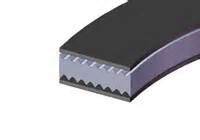
Imagine this: You're standing in a processing plant at 3 AM. A critical flange is leaking superheated steam, and production is dead in the water. The maintenance crew is scrambling, but the replacement spiral wound gasket just isn't seating right under the thermal cycling. This nightmare scenario often stems from a fundamental mismatch: selecting a gasket without truly understanding what materials are used in serrated gaskets. Unlike homogeneous sheets, a serrated gasket, also known as a kammprofile gasket, is a composite marvel. It typically features a solid metal core—usually stainless steel 304 or 316—precision-machined with concentric serrations. This robust core is then overlaid with a softer facing material, such as flexible graphite, PTFE, or mica. It’s this hybrid construction that creates the "damming effect" under bolt load, ensuring a tight, fire-safe seal that homogenized gaskets simply can’t match. We will walk you through every layer of this critical sealing solution, examining the metal core integrity, facing material compatibility, and why global procurement managers are standardizing on these for fugitive emissions control. If you rely on pipe systems that operate under extreme pressure and heat without budget-busting downtime, understanding these material combinations isn't just engineering trivia—it's financial insurance.
Article Navigation:
The Mechanics Behind Serrated Gasket Reliability
Procurement engineers often face a recurring nightmare: a standard soft gasket extrudes from the flange face and blows out under a pressure spike of 40 bar, leading to a catastrophic HAZOP incident. The serrated gasket solves this through brute mechanical engineering. The metal core prevents blowout, while the concentric serrations focus the compressive load into multiple high-stress rings. When tensioned, the soft facing layer—answering the query of what materials are used in serrated gaskets—plastically deforms into the flange imperfections. Unlike a flat ring, this stress concentration creates a labyrinth seal. The immediate benefit for your plant is leak-free startup and a significant reduction in bolt re-torque maintenance cycles within the first 24 hours of operation. This hybrid design bridges the gap between soft cut gaskets and hard metallic ring joints, offering a best-of-both-worlds solution for aging or warped flange assemblies.
Stress Distribution & Recovery Characteristics
| Sealing Parameter | Serrated Gasket (Graphite Faced) | Standard Spiral Wound | PTFE Envelope |
|---|---|---|---|
| Surface Stress (MPa) | High, Concentrated on Serrations | Moderate, Distributed on Windings | Low, Uniform Spread |
| Blowout Resistance | Excellent (Metal Core) | Good (Inner/Outer Ring) | Poor (Creeps Easily) |
| Compression Recovery | Dependent on Facing; Graphite > 40% | Limited; Windings Crush | Low; Permanent Deformation |
Metallic Core Materials: The Backbone of Pressure Resistance
I recall a chemical plant in Southeast Asia that kept replacing PTFE gaskets every quarter due to hydrochloric acid degradation. The "solution" was stripping the threads on the bolts. The actual fix was switching to a serrated gasket with a 316L stainless steel core and a chemical-resistant facing. The metal core in a serrated gasket is not just a structural carrier; it’s the safety net. For standard applications, Type 304 (UNS S30400) stainless steel provides excellent strength up to 500°C. However, in chloride or acidic environments, the intergranular corrosion risk is real. This is where the material selection directly impacts your OPEX. Specifying a Titanium Gr.2 core for seawater cooling lines prevents the galvanic cell that eats cheaper alloys. When clients ask what materials are used in serrated gaskets for nuclear service, the answer is often Inconel 625 or 825, which maintains tensile integrity under neutron flux where standard steels would embrittle. Ningbo Kaxite Sealing Materials Co., Ltd. precision-cuts these cores on CNC lathes to ensure the 1.6mm to 3.0mm thickness is uniform, eliminating the "thin spot" failure mode common in stamped alternatives.
Facing Materials: Adaptable Layers for Perfect Conformity
Facing material selection is where most procurement mistakes happen. A common scenario: a maintenance engineer selects a graphite-faced serrated gasket for a 600°C steam line but ignores the oxygen content. Without knowing the specifics of what materials are used in serrated gaskets to inhibit oxidation, the graphite burns out within months. The facing (usually 0.5mm to 1.0mm thick) acts as the interface. Flexible Graphite (Carbon >99%) is the industry workhorse, offering fire-safe certification (API 6FB) and universal chemical resistance, except in strong oxidizing agents. For oxygen service or pharmaceutical CIP processes, expanded PTFE (ePTFE) is king, offering conformability at low bolt loads without the creep relaxation issues of solid PTFE. In cryogenic applications down to -196°C, where graphite becomes brittle, a specially engineered PTFE blend ensures the seal remains elastic. The genius of the serrated design is that these soft, adaptable facings are physically trapped and protected by the metal serrations, preventing erosion by high-velocity media. This dramatically increases the Mean Time Between Replacements (MTBR).
Facing Material Compatibility Guide
| Facing Material | Temperature Range (°C) | Optimal Fluid Service | Creep Resistance |
|---|---|---|---|
| 99.9% Pure Graphite | -200 to +450 (Steam); +650 (Inert) | High-Temp Hydrocarbons, Steam | Excellent |
| Expanded PTFE | -268 to +260 | Strong Acids, Alkalis, Solvents | Good (Monolithic type) |
| Thermiculite 715 | Up to +1000 | Oxidizing Environments, Molten Salts | Superior (Zero Oxidation loss) |
Technical FAQs: Deep Dive into Material Science
Q1: What materials are used in Serrated Gaskets to meet the NACE MR0175/ISO 15156 standard for sour gas?
The service environment in the Middle East sour fields is brutal. For H2S-rich gas, every component must resist sulfide stress cracking. The standard combination involves a core of Hastelloy C-276 (UNS N10276) or Duplex 2205. For the facing, a specialized exfoliated graphite foil with an inorganic inhibitor is required to prevent zinc-induced embrittlement while delivering a seal on pitted flanges. At Ningbo Kaxite Sealing Materials Co., Ltd., we ensure the raw graphite foil meets the 99.0% minimum carbon content with a leachable chloride count below 20 ppm, as high chlorides coupled with H2S create a stress corrosion cell. The metal core hardness is strictly controlled to ≤22 HRC, a critical detail often missed by general distributors but essential for sour service compliance.
Q2: What materials are used in serrated gaskets for cryogenic and extreme thermal cycling applications?
LNG vaporizers cycle violently from -162°C to ambient in minutes. Standard graphite fails here—not because of the cold, but because the binder in the graphite oxidizes or loses cohesion during the expansion cycle, leading to "telescoping" of the laminate. For such cyclic cryogenic service, the serrated gasket must feature a 316L stainless steel core paired with a multi-layer, high-density ePTFE film facing. The preferred core has a deeper serration profile of approximately 1.0 mm to bite into the soft PTFE and counteract the high thermal contraction rate of the polymer. This ensures the gasket does not lose its seating stress upon cooldown, preventing the micro-leaks common in LNG ship-loading arms.
Procurement Decision Matrix: Matching Grade to Application
We often see buyers faced with the dilemma: "Do I pay double for the Inconel alloy core?" If your refinery is processing crude with a high Total Acid Number (TAN) > 1.5, the answer is absolutely yes. Nickel alloys like Incoloy 825 prevent the naphthenic acid corrosion that chews through 316L in 18 months. Conversely, for general utility steam up to Class 300, a 304 core with graphite facing is the cost-optimized spec. Understanding what materials are used in serrated gaskets helps you avoid the trap of "over-specifying" the metal crust while "under-specifying" the soft filler. A nuclear-grade core won't stop a leak if the graphite facing has a carbon content below 98% and decomposes in your process. The best partners, such as Ningbo Kaxite Sealing Materials Co., Ltd., help you balance the electrochemical series of your flange materials with the corrosion potential of the gasket, ensuring the gasket acts as the sacrificial anode only when intended. This value engineering directly impacts your annual sealing budget.
Engineering Support & Certified Supply Chain
The nuance in global sourcing isn't just finding a supplier; it's securing a technical partner who prevents the catastrophic failures we described at the outset. Ningbo Kaxite Sealing Materials Co., Ltd. operates a specialized CNC serration department that eliminates the lead time bottleneck for non-standard cores, whether you need a Monel K-500 core for seawater or a solid titanium ring for aerospace. We resolve the core conflict between cost and reliability by applying precise stress analysis, ensuring you never pay for a 3mm thick core when a 2mm standard is technically sufficient. Our internal traceability protocol ensures that from the raw graphite sheet to the final stainless steel core, every certified batch is mapped to your purchase order, critical for ISO 9001 and 14001 facility audits. Let's move beyond transactional purchasing to a reliability partnership.
We invite maintenance managers and procurement leads to challenge our application engineers. Send your difficult sealing specifications and operating envelopes to [email protected]. For a full overview of our manufacturing capabilities and material test certificates, visit our official platform: Ningbo Kaxite Sealing Materials Co., Ltd. at https://www.top-sealing.net. We are ready to provide a certified dimensional drawing and a pressure/temperature compliance matrix for your next critical project today.