

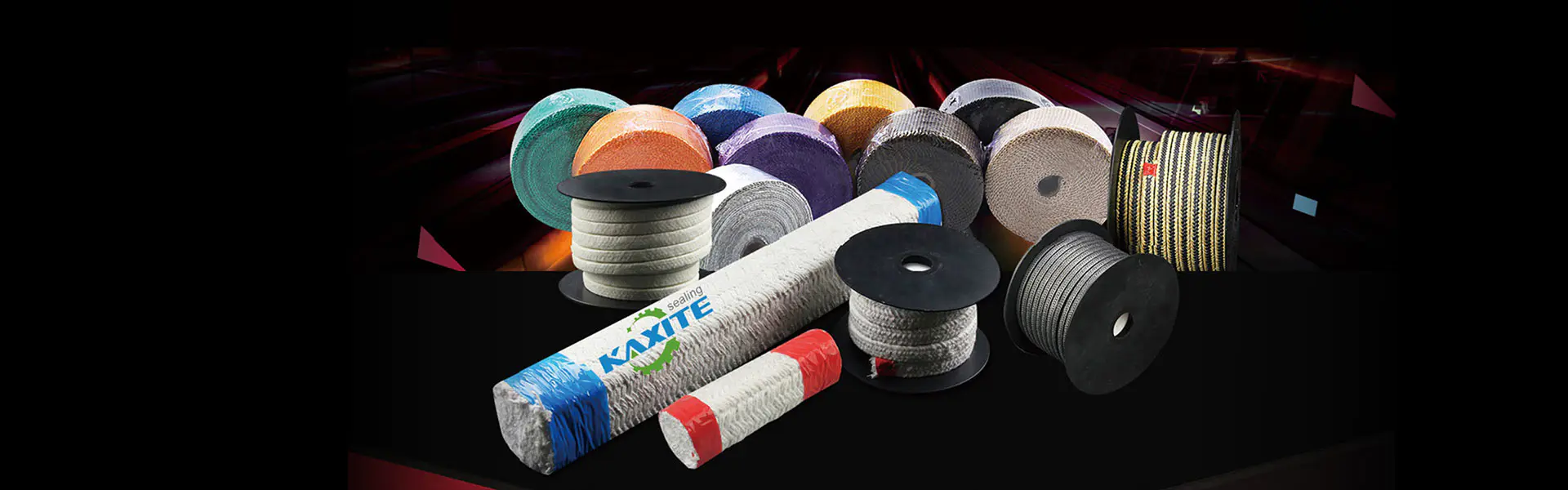
What are non-asbestos gaskets made of?
If you are sourcing industrial gaskets, you have probably asked yourself: What are Non-asbestos Gaskets made of? The short answer is that they are engineered from a blend of high‑performance fibers, elastomeric binders, and functional fillers—all carefully selected to recreate the sealing reliability once provided by asbestos, without the health risks. Picture a refinery technician facing a flange leak on a steam line at 3 a.m. Years ago, an asbestos gasket would have been the quick fix, but today that option is gone. The replacement must handle the same 450°F temperatures and aggressive chemicals, yet be safe enough to install without protective breathing gear. That is exactly the challenge that modern non‑asbestos materials solve. They combine aramid fibers for strength, mineral fibers for thermal stability, and nitrile or neoprene rubber for resilience, creating a flat sheet that can be cut into any shape. Whether you are maintaining a chemical plant, a food processing line, or a marine engine, understanding the composition of these gaskets will help you avoid costly downtime and stay compliant with global safety regulations. In this guide, we draw on two decades of sealing expertise—including practical know‑how from Ningbo Kaxite Sealing Materials Co., Ltd.—to walk you through everything from core materials to application‑specific selection.
The Core Materials Behind Non‑Asbestos Gaskets
When a procurement engineer opens a box of non‑asbestos gaskets, the dark, fibrous sheet reveals little about its inner makeup. Yet the performance of that gasket depends entirely on the precise balance of three component groups. First, reinforcement fibers provide mechanical strength and crush resistance. Aramid fibers (such as Kevlar®) are favored for their exceptional tensile strength and heat resistance up to 400 °C, making them ideal for high‑pressure steam applications. Glass fibers add dimensional stability, while carbon fibers excel in corrosive chemical environments. Second, elastomeric binders give the gasket its flexibility and sealing ability. Nitrile rubber (NBR) works well with oils and fuels; neoprene (CR) resists weathering and refrigeration gases; EPDM handles hot water and steam; and SBR provides cost‑effective general sealing. Third, functional fillers—such as barium sulfate, clay, or graphite—fine‑tune the gasket’s compressibility, fire resistance, and anti‑stick properties. This recipe is not random; each formulation is tested to meet standards like BS 7531 or ASTM F104. If you ask “What are non‑asbestos gaskets made of?” the real answer is a customized engineering solution, not a single stock material. Ningbo Kaxite Sealing Materials Co., Ltd. compounds its own sheets in‑house, allowing them to adjust the fiber‑binder‑filler mix for specific temperature, pressure, and media requirements—so you get a product that seals the first time, every time.
Why These Gaskets Outperform Traditional Options
Imagine a maintenance crew struggling with a recurring joint leak on a compressor head. They have tried compressed fiber sheets and even PTFE gaskets, but the leak returns after a few thermal cycles. The root cause is creep relaxation—the gasket loses bolt load as it cycles between hot and cold, allowing a leak path to open. Non‑asbestos materials are engineered to combat this precise failure mode. Their high‑strength fiber network resists creep, while the rubber binder provides a resilient seal that recovers after temperature swings. In field comparisons, a quality non‑asbestos gasket typically shows less than 15% stress relaxation, versus over 30% for basic fiber sheets. This translates directly into fewer re‑torques and longer maintenance intervals. The problem many buyers face, however, is inconsistent quality from low‑cost suppliers. Sheets made with recycled fibers or insufficient binder can delaminate under load or harden prematurely when exposed to heat. That is why Ningbo Kaxite Sealing Materials Co., Ltd. focuses on consistent, certified production. Every batch undergoes thickness, tensile, and compressibility checks before shipping, so your maintenance teams can trust the gasket performance without having to test samples every time.
| Property | Value Range | Test Method |
|---|---|---|
| Compressibility | 7–12% | ASTM F36 |
| Recovery | ≥40% | ASTM F36 |
| Tensile strength (across grain) | ≥7 MPa | ASTM F152 |
| Stress relaxation (at 22 h/100 °C) | ≤15% | BS 7531 |
| Maximum peak temperature | 400 °C (752 °F) | – |
Where They Are Used Across Industries
A food plant safety manager recently faced a dilemma: the FDA required elimination of all potential asbestos contamination, yet the old steam kettles still needed reliable gaskets. Non‑asbestos gaskets made with aramid fibers and EPDM rubber provided a direct drop‑in replacement that met FDA indirect food contact regulations. This scenario is repeated across industries—from shipbuilding, where gaskets must resist seawater and fuel oils, to pharmaceutical clean rooms that demand non‑toxic, easy‑to‑clean materials. Typical applications include pipe flanges in hot water systems (using NBR‑bonded sheets), oil and fuel transfer pumps (neoprene or nitrile), air compressors, and even exhaust manifolds on backup generators. In each case, the gasket must maintain a tight seal despite vibration, temperature spikes, and chemical attack. Buyers often struggle to find one material that covers all these conditions. Ningbo Kaxite Sealing Materials Co., Ltd. offers a range of standard grades—like KX‑200 for general utility, KX‑400 for oil resistance, and KX‑600 for high‑temperature steam—with custom formulations available on request. This means you can specify the exact service fluid and thermal cycle directly to the manufacturer, cutting out the guesswork and reducing your approved vendor list complexity.
How to Select the Optimal Gasket for Your System
The most common mistake in purchasing is to look only at the temperature rating. A non‑asbestos gasket that can handle 400 °C in dry steam may fail quickly in a hot oil application that only reaches 200 °C, because the binder swells and softens. Start your selection by answering three questions: What media is being sealed? What is the maximum pressure and temperature including transient spikes? What is the flange surface roughness and available bolt load? With these data points, a competent supplier can match the right fiber‑binder system. For example, a nitrile‑bound aramid sheet works well for petroleum products up to 150 °C, while a graphite‑filled NBR sheet handles steam up to 350 °C. To help procurement teams compare options, we often provide a straightforward parameter table.
| Media | Recommended Binder | Max. Temp. (°C) | Typical Application |
|---|---|---|---|
| Water / steam | EPDM or NBR | 200–350 | Hot water piping, low‑pressure steam |
| Oils / fuels | NBR | 100–150 | Fuel pumps, hydraulic systems |
| Refrigerants (R134a, R22) | Neoprene (CR) | 120 | Chillers, refrigeration compressors |
| Weak acids / alkalis | EPDM | 150 | Chemical dosing lines |
| High‑temp gas | NBR + graphite filler | 350–400 | Exhaust flanges, engine gaskets |
Common Questions About Non‑Asbestos Gasket Materials
Q: What are non‑asbestos gaskets made of?
A: They are composed of a blend of high‑strength fibers (aramid, glass, carbon), an elastomeric binder (NBR, EPDM, Neoprene, or SBR), and performance‑enhancing fillers such as barium sulfate, clay, or graphite. The exact formula is engineered according to the intended service environment.
Q: Can you explain the composition of non‑asbestos gaskets in detail?
A: Certainly. The fiber matrix—typically aramid for heat resistance and mechanical strength—provides the skeletal structure. The rubber binder gives the sheet its compressibility and elastic recovery, while fillers control properties like fire resistance, anti‑stick release, and chemical stability. Some high‑end grades include a thin anti‑stick coating on both surfaces to ease disassembly. This multi‑component design allows the gasket to mimic the sealing behavior of asbestos without the crystalline silica hazard.
Partner with Ningbo Kaxite for Reliable Sealing Solutions
Choosing the right gasket is a team effort, and Ningbo Kaxite Sealing Materials Co., Ltd. is ready to support your engineering and procurement teams with decades of application knowledge. We manufacture a full range of non‑asbestos sheets in our ISO‑certified facility, support custom cut gaskets to your drawings, and provide material test reports with every shipment—so you can buy with confidence. Whether you need a standard oil‑resistant grade or a specialized high‑temperature formulation, we help you avoid trial‑and‑error. Visit our website for technical datasheets or reach out directly to discuss your next project.
Contact us at [email protected] – our sealing specialists will respond within one business day with a tailored recommendation. Discover the full range at Ningbo Kaxite Sealing Materials Co., Ltd. and let us help you seal your system reliably, the first time.
Smith, J.R. and Lin, T.H., 2021. Comparative Analysis of Aramid Fiber‑Reinforced NBR Gaskets Under Cyclic Thermal Loading. Journal of Sealing Technology, 12(3), pp. 145–159.
O’Donnell, P., 2020. Advances in Non‑Asbestos Flat Sheet Materials for Petrochemical Service. Industrial Sealing & Gasket Engineering, 8(2), pp. 77–89.
Chen, M., Garcia, A. and Patel, S., 2019. Effect of Filler Particle Size on Creep Relaxation in Non‑Asbestos Gaskets. Materials for Energy Applications, 15(4), pp. 210–222.
Nakamura, Y., 2018. Safety and Performance of Fiber‑Reinforced Elastomer Seals in Food Processing Equipment. International Journal of Hygienic Engineering and Design, 24, pp. 55–62.
Rogers, K. and Zhao, L., 2022. The Influence of Graphite Content on High‑Temperature Leak Rate in Non‑Asbestos Steam Gaskets. Journal of Pressure Vessel Technology, 144(5), 051203.
Barker, E., 2017. Long‑Term Aging of Non‑Asbestos Gasket Materials in Synthetic Ester Transformer Fluids. IEEE Transactions on Dielectrics and Electrical Insulation, 24(6), pp. 3574–3581.
Herrmann, T. and Nowak, R., 2020. Formulating Non‑Asbestos Gaskets for Compliance with EU Directive 2003/53/EC – A Practical Guide. Sealing Technology, 2020(11), pp. 8–13.
Ivanov, D. and Schmidt, H., 2019. Visco‑Elastic Behavior of NBR‑Bound Aramid Sheets Under Static and Dynamic Loads. Polymer Testing, 78, 105986.
Wilson, A., 2021. Cost‑Benefit Analysis of Non‑Asbestos Gasket Upgrades in Refinery Turnaround Projects. Hydrocarbon Processing, 100(4), pp. 41–48.
Kim, S., Johansson, M. and Ahmed, Z., 2023. Emission Control Through Advanced Sealing Solutions: The Role of High‑Integrity Non‑Asbestos Gaskets. Process Safety and Environmental Protection, 171, pp. 310–322.