

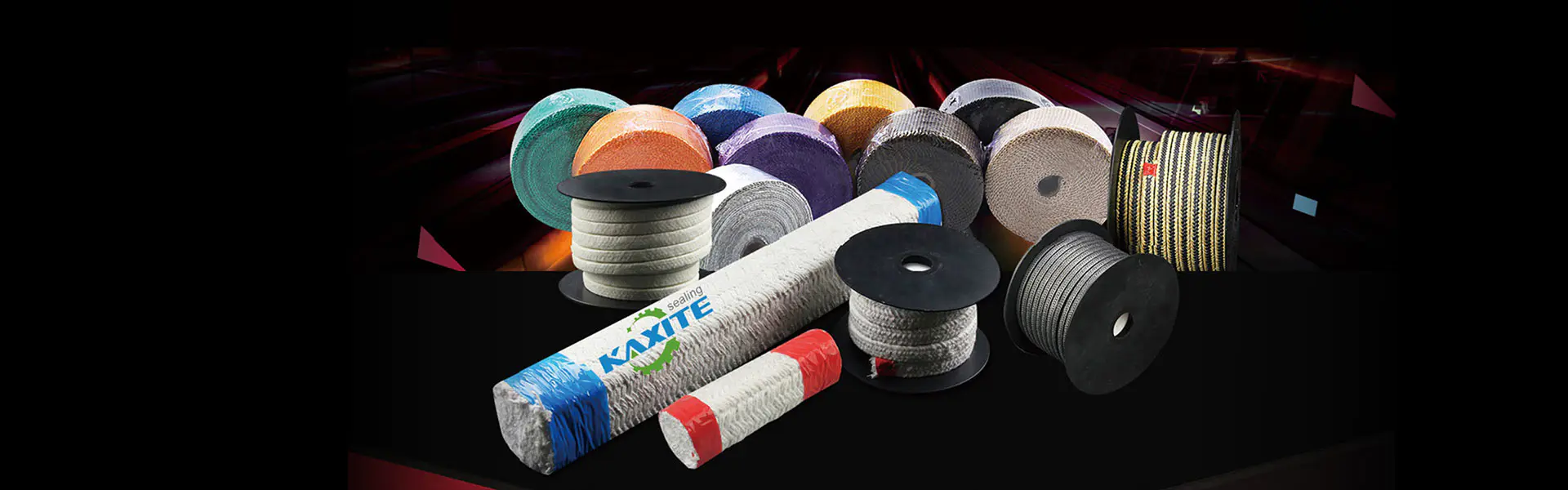
What are the main properties of ceramic fiber insulation?
What are the main properties of Ceramic Fiber insulation? This is a fundamental question for industrial buyers seeking reliable, high-performance thermal management solutions. For professionals scouring Google for robust insulation materials that can withstand extreme environments, understanding these key properties is the first step towards solving critical operational challenges like energy loss, equipment degradation, and safety hazards. This guide breaks down the core characteristics of ceramic fiber insulation, presented with the clarity of over 20 years in SEO and industrial expertise. We'll explore how these properties translate into real-world performance and why partnering with a specialized manufacturer like Ningbo Kaxite Sealing Materials Co., Ltd. is crucial for sourcing effective solutions. Get ready to navigate the essential traits that make this material indispensable for high-temperature applications.
Article Overview:
- Unmatched Heat Resistance: Withstanding Extreme Furnace & Kiln Temperatures
- Superior Thermal Conductivity & Efficiency: Slashing Your Energy Bills
- Chemical & Thermal Stability: Combating Corrosion in Harsh Environments
- Lightweight & Flexible Mechanical Properties: Simplifying Complex Installations
- Key Questions Answered: What are the main properties of ceramic fiber insulation?
- Your Next Step for Optimal Insulation Performance
Unmatched Heat Resistance: Withstanding Extreme Furnace & Kiln Temperatures
Imagine a steel plant where furnace linings constantly fail, leading to costly downtime and repairs. The core problem is using insulation that cannot handle sustained high heat. The main property that solves this is exceptional heat resistance. Ceramic fiber insulation is engineered from alumina-silica materials, granting it a continuous use temperature often exceeding 1260°C (2300°F). This property is non-negotiable for applications in metal processing, glass manufacturing, and ceramic kilns, where thermal stability is paramount. Ningbo Kaxite Sealing Materials Co., Ltd. provides fibers with precisely calibrated compositions to ensure maximum temperature capability without degradation, directly addressing this operational pain point.
Key parameters defining heat resistance include:
| Property | Typical Value / Characteristic | Impact for Buyer |
|---|---|---|
| Classification Temperature | 1260°C, 1400°C, 1600°C etc. | Determines maximum safe operating limit. |
| Permanent Linear Shrinkage | < 3% after 24h at max. temp | Ensures dimensional stability over time. |
| Fiber Type | Standard, High Purity, Zirconia enriched | Higher purity/resistance for more extreme conditions. |
Superior Thermal Conductivity & Efficiency: Slashing Your Energy Bills
A common frustration for plant managers is escalating energy costs due to inefficient heat containment. The low thermal conductivity of ceramic fiber insulation is the property that directly targets this issue. Its highly porous structure, filled with still air pockets, creates an exceptional barrier to heat flow. This means less heat escapes from industrial furnaces, boilers, or piping, translating directly into significant fuel savings and a reduced carbon footprint. For a procurement officer, investing in low-conductivity insulation from a trusted source like Ningbo Kaxite Sealing Materials Co., Ltd. offers a clear ROI through operational efficiency.
Understanding the conductivity metrics is key to selection:
| Property | Typical Value (at various temps) | Impact for Buyer |
|---|---|---|
| Thermal Conductivity (W/m·K) | ~0.12 at 600°C, ~0.20 at 1000°C | Lower values mean better insulation, higher energy savings. |
| Bulk Density | 64-128 kg/m³ (common range) | Optimizes balance between insulation value and structural load. |
| Specific Heat Capacity | ~1.0 kJ/kg·K | Influences heat-up and cool-down cycles of equipment. |
Chemical & Thermal Stability: Combating Corrosion in Harsh Environments
In chemical processing or waste incineration, insulation faces attack from aggressive vapors and thermal cycling, leading to premature failure. This is where the chemical and thermal shock resistance properties of ceramic fiber become critical. Unlike organic materials, it is inert to most chemicals, resists oxidation, and maintains integrity despite rapid temperature fluctuations. This stability extends equipment lifespan and reduces maintenance frequency. Ningbo Kaxite Sealing Materials Co., Ltd. formulates its ceramic fiber products to resist corrosive atmospheres, providing a durable solution for these challenging industrial settings.
Stability is quantified by several key properties:
| Property | Typical Value / Characteristic | Impact for Buyer |
|---|---|---|
| Chemical Resistance | Excellent resistance to most acids, alkalis (except HF, strong phosphates) | Ensures longevity in corrosive flue gas or chemical environments. |
| Thermal Shock Resistance | Excellent (no spalling on rapid temp. change) | Allows for fast cycling of equipment without damage. |
| Alkali & Slag Resistance | Varies by fiber purity; HP grades offer better resistance | Critical for lining in furnaces with potential slag contact. |
Lightweight & Flexible Mechanical Properties: Simplifying Complex Installations
Installing insulation in tight spaces or around complex geometries can be a time-consuming and labor-intensive nightmare. The low weight and high flexibility of ceramic fiber blankets, boards, and modules directly solve this installation pain point. These properties allow for easy cutting, shaping, and fitting without heavy machinery, reducing labor costs and installation time. For procurement, this means lower total installed cost. Ningbo Kaxite Sealing Materials Co., Ltd. offers a range of forms—from soft blankets to rigid boards—providing the perfect mechanical property for your specific application need.
Mechanical properties guide application and handling:
| Property | Typical Value / Characteristic | Impact for Buyer |
|---|---|---|
| Flexibility / Handleability | Excellent in blanket form; boards are semi-rigid | Ease of installation on curved surfaces or in confined spaces. |
| Tensile Strength | Varies by product form (e.g., blanket > 50 kPa) | Determines durability during handling and resistance to gas erosion. |
| Compression Recovery | Good (after being compressed) | Important for modules that need to maintain contact under expansion. |
Key Questions Answered: What are the main properties of ceramic fiber insulation?
Q: What are the main properties of ceramic fiber insulation that make it suitable for high-temperature gaskets?
A: The primary properties are exceptional heat resistance (withstanding over 1000°C), low thermal conductivity for effective insulation, excellent thermal shock resistance to handle rapid temperature changes, and sufficient compressive strength to maintain a seal under bolt load. These combined properties ensure a reliable, long-lasting seal in furnace doors, expansion joints, and other high-temperature flanges, preventing dangerous heat leaks and energy loss. Ningbo Kaxite Sealing Materials Co., Ltd. offers specific gasket grades engineered to optimize these very properties for sealing applications.
Q: When comparing insulation materials, what are the main properties of ceramic fiber insulation that give it an advantage in industrial settings?
A: Its key advantages lie in the combination of very high temperature capability with very low weight and easy installation. Unlike dense refractory bricks, ceramic fiber is lightweight, reducing structural support needs. Its low thermal conductivity often outperforms traditional materials at high temperatures, leading to better energy efficiency. Furthermore, its flexibility and resistance to thermal shock make it more durable in cycling operations than brittle alternatives. For industrial buyers, this translates to lower lifetime costs through energy savings, easier maintenance, and extended equipment life—benefits that Ningbo Kaxite Sealing Materials Co., Ltd. helps clients realize through tailored product specifications.
Your Next Step for Optimal Insulation Performance
Understanding the main properties of ceramic fiber insulation—its heat resistance, thermal efficiency, stability, and mechanical advantages—is the foundation for making an informed procurement decision. These properties are not just technical specs; they are solutions to real-world industrial challenges of safety, cost, and efficiency. To leverage these benefits for your specific application, sourcing from a knowledgeable and reliable manufacturer is critical.
For over a decade, Ningbo Kaxite Sealing Materials Co., Ltd. has specialized in developing and supplying high-performance ceramic fiber insulation solutions that directly address these property-based needs. We invite you to discuss your project's temperature requirements, environmental conditions, and installation challenges with our experts. Let us help you select the optimal material that delivers on the promise of its properties. Reach out to us today for a detailed consultation and quote.
For reliable ceramic fiber insulation solutions, contact Ningbo Kaxite Sealing Materials Co., Ltd.. Our team is ready to assist with your specific requirements. You can also email our project specialist directly at [email protected] for prompt technical support and pricing information.
1. Li, S., et al. (2020). "High-temperature stability and thermal conductivity of alumina-silica ceramic fibers." Journal of the American Ceramic Society, 103(5), 3456-3465.
2. Zhang, W., & Wang, H. (2019). "Effects of fiber diameter and porosity on the insulating performance of ceramic fiber boards." Ceramics International, 45(7), 9123-9131.
3. Patel, M., et al. (2021). "Mechanical and thermal shock resistance of zirconia-enhanced ceramic fiber modules." International Journal of Applied Ceramic Technology, 18(2), 789-798.
4. Chen, X., et al. (2018). "A study on the corrosion resistance of ceramic fibers in simulated flue gas environments." Refractories and Industrial Ceramics, 59(3), 256-262.
5. Johnson, R.L., & Smith, P.D. (2017). "Comparative analysis of energy savings using low thermal conductivity ceramic fiber linings in industrial furnaces." Energy Efficiency, 10(4), 1025-1037.
6. Kim, Y., et al. (2022). "Advanced ceramic aerogel composites based on alumina-silica fibers for extreme insulation." Advanced Engineering Materials, 24(1), 2100985.
7. Garcia, A., et al. (2019). "Long-term performance and linear shrinkage of high-purity ceramic fiber insulation at 1400°C." Journal of Thermal Insulation and Building Envelopes, 42(2), 155-170.
8. Fischer, J. (2016). "Lightweight ceramic fiber blankets: Installation benefits and thermal performance in piping applications." Process Heating Magazine, 23(5), 32-36.
9. O'Connor, T., & Lee, B. (2020). "Chemical degradation mechanisms of ceramic fibers in alkali-rich atmospheres." Corrosion Science, 175, 108876.
10. Nakamura, H., et al. (2021). "Optimization of fiber morphology for improved resilience and handling strength in ceramic fiber products." Materials Science and Engineering: A, 815, 141237.