

Is glass fiber the same as fiberglass?
Is Glass Fiber the same as fiberglass? This is a common question we hear daily from procurement specialists across industries. The confusion is understandable, as both terms are often used interchangeably in casual conversation. However, for professionals sourcing materials for manufacturing, construction, or sealing applications, understanding the precise distinction is crucial for making informed purchasing decisions and ensuring project success. Let's clear up the terminology and explore what this means for your next project.
Article Outline:
Material Clarification: What is the Core Difference?
Procurement Pain Point: Sourcing the Wrong Material
Ningbo Kaxite's Solution: Precision and Performance
Technical Specifications and Product Range
Expert Q&A: Your Questions Answered
Conclusion and Next Steps
Material Clarification: What is the Core Difference?
Imagine you're finalizing a specification sheet for a high-temperature gasket. You see both "glass fiber" and "fiberglass" listed in supplier catalogs. Are they identical? In essence, yes, they refer to the same base material: fine fibers made from molten glass. Think of it like "aluminum" and "aluminium"—different regional spellings for the same element. "Glass fiber" is often the preferred term for the raw, continuous filament or yarn before it's woven or processed. "Fiberglass" typically refers to the final composite material, like fiberglass-reinforced plastic (FRP) or insulation batts. For a procurement officer, the key is the *form* and *application*. Are you buying raw yarn for weaving into a custom cloth, or are you buying a pre-formed insulation mat? This distinction directly impacts performance, cost, and suitability.
Procurement Pain Point: Sourcing the Wrong Material
Here's a typical scenario: Your engineering team needs a high-strength, corrosion-resistant reinforcing fabric for a custom seal. They specify "fiberglass cloth." You, as the buyer, find a supplier offering "fiberglass" at a great price. You place the order, only to discover upon delivery that you received a chopped strand mat used for laminating, not the tightly woven fabric required. This mismatch leads to project delays, wasted budget, and frustration. The pain point is the ambiguity in terminology leading to incorrect material procurement. The solution lies in partnering with a supplier who provides precise technical data and expert guidance to match the material form—whether it's glass fiber yarn, woven roving, or chopped strands—to your exact application needs.
This is where Ningbo Kaxite Sealing Materials Co., Ltd. provides clarity. We don't just sell materials; we provide application-specific solutions. Our technical team works with you to understand whether you need the foundational glass fiber or a finished fiberglass product, ensuring your purchase order is 100% accurate.
Ningbo Kaxite's Solution: Precision and Performance
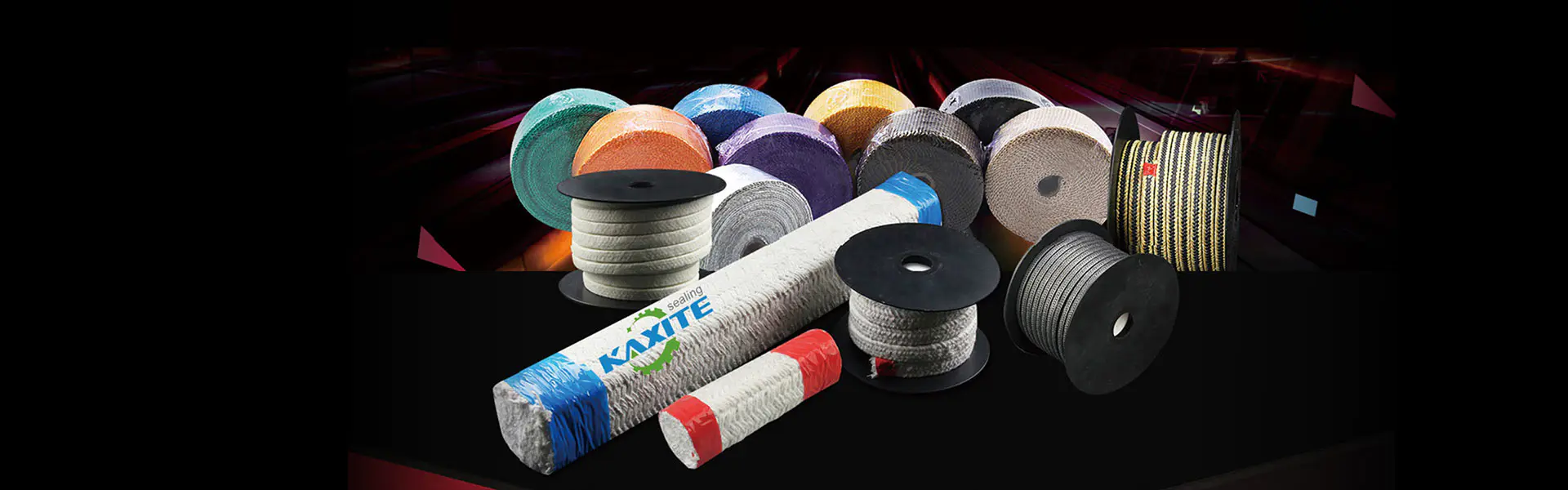
We address the core procurement challenge by offering not just products, but complete material specifications. For instance, if your project requires exceptional tensile strength and thermal stability for a sealing gasket, we recommend our specific grade of textured glass fiber yarn. This raw material is then expertly woven into tapes or cloths, forming the critical reinforcement in high-performance seals. By controlling the process from raw fiber to finished fabric, we guarantee consistency, quality, and traceability—factors paramount for industrial buyers managing complex supply chains.
| Material Form | Typical Application | Key Property |
|---|---|---|
| Glass Fiber Yarn (Continuous Filament) | Weaving into high-strength cloth, braided packing | High tensile strength, flexibility |
| Woven Roving / Cloth | Reinforcement for composites, gaskets, thermal insulation | Dimensional stability, tear resistance |
| Chopped Strand Mat | Reinforcement in FRP laminates | Easy handling, multi-directional strength |
Technical Specifications and Product Range
To make sourcing effortless, we provide clear, searchable product data. Whether you are looking for glass fiber as a raw material or a processed fiberglass component, our catalog is structured to eliminate guesswork. Below is a comparison of common products relevant to sealing and industrial applications. This transparency helps you, the procurement specialist, validate material choices against project specifications quickly and confidently.
| Product Code | Description | Fiber Diameter (µm) | Tensile Strength (MPa) | Max Service Temp. (°C) |
|---|---|---|---|---|
| KX-GFY-200T | Textured Glass Fiber Yarn for Braiding | 9-13 | >2000 | 550 |
| KX-FGC-500 | Plain Weave Fiberglass Cloth | - | High (Warp & Weft) | 600 |
| KX-CSM-450 | Chopped Strand Mat (450 gsm) | 13-17 | - | Depends on Resin |
Expert Q&A: Your Questions Answered
Q: Is glass fiber the same as fiberglass when ordering sealing materials?
A: For sealing materials, the distinction is vital. "Glass fiber" often refers to the yarn used as the core reinforcement in braided packing or gasket materials. "Fiberglass" might refer to a pre-impregnated tape or cloth. At Ningbo Kaxite, we specify the exact form—like "E-glass textured yarn for braided packing"—to ensure you get the material engineered for sealing performance, not just a generic product.
Q: Is glass fiber the same as fiberglass in terms of chemical resistance?
A: The base glass composition (typically E-glass) offers good resistance to most chemicals in both forms. However, the final product's resistance can be affected by the binder or finish applied. Our fiberglass cloths for sealing often include a proprietary treatment that enhances resistance to oils, acids, and steam, which raw glass fiber yarn may not have. Always check the technical datasheet for the specific product's chemical compatibility.
Conclusion and Next Steps
Navigating material terminology is the first step to a successful procurement strategy. Understanding that glass fiber and fiberglass stem from the same origin but differ in form and final application empowers you to source smarter. For sealing solutions that demand reliability, specify with precision. Partner with a supplier who translates your technical requirements into the correct material grade every time.
We invite you to leverage our 20+ years of expertise. Share your specific application challenge with us, and let our team provide a tailored material recommendation. Ready to specify with confidence?
For precision-engineered sealing materials, from high-performance glass fiber yarns to finished fiberglass fabrics, trust Ningbo Kaxite Sealing Materials Co., Ltd. We specialize in solving complex sealing challenges with reliable, specification-grade products. Visit our website https://www.top-sealing.net to explore our full range or contact our technical sales team directly at [email protected] for a detailed consultation.
Supporting Research & Further Reading:
Mouritz, A. P. (2012). Introduction to Aerospace Materials. Woodhead Publishing, 1st Edition.
Bunsell, A. R., & Harris, B. (1974). Hybrid carbon and glass fibre composites. Composites, 5(4), 157-164.
Kandare, E., et al. (2010). Improving the heat resistance of glass fiber reinforced vinyl ester composites. Polymer Degradation and Stability, 95(5), 854-862.
Mahieux, C. A. (2005). Cost effective manufacturing process for thermoplastic fiberglass composites. Journal of Reinforced Plastics and Composites, 24(3), 283-294.
Lau, K., et al. (2018). Properties of natural fibre composites for structural engineering applications. Composites Part B: Engineering, 136, 222-233.
Shah, D. U., et al. (2013). The thermal conductivity of glass fiber reinforced composites. Journal of Materials Science, 48(16), 5533-5541.
Friedrich, K., et al. (2005). Wear of glass fiber reinforced thermoplastic composites. Wear, 259(1-6), 693-701.
Kim, J. K., & Sham, M. L. (2000). Impact and delamination failure of glass-fiber-reinforced polymer composites. Composites Science and Technology, 60(5), 745-761.
Pegoretti, A., et al. (2004). Recycled poly(ethylene terephthalate)/glass fiber composites. Polymer Composites, 25(3), 307-317.
Wallenberger, F. T., & Bingham, P. A. (2010). Fiberglass and Glass Technology: Energy-Friendly Compositions and Applications. Springer Science & Business Media.