


How do professionals test for dusted asbestos safely?
How do professionals test for Dusted Asbestos safely? This is a critical question for facility managers, safety officers, and procurement specialists responsible for maintaining compliant and hazard-free industrial environments. Disturbing materials suspected of containing asbestos without proper precautions can release dangerous fibers into the air, posing severe long-term health risks. Professional testing is not just a regulatory checkbox; it's a vital process to protect workers and ensure operational continuity. This guide breaks down the safe, professional testing protocol and introduces modern solutions that eliminate asbestos risks altogether, such as high-performance sealing materials from industry leaders. This knowledge is essential for making informed purchasing decisions that prioritize safety and performance.
Article Outline:
- The Hidden Danger in Plain Sight: Identifying Potential Asbestos
- The Professional Testing Protocol: A Step-by-Step Safety Dance
- Beyond Testing: The Modern Solution for Lasting Safety
- FAQs on Safe Asbestos Testing
The Hidden Danger in Plain Sight: Identifying Potential Asbestos
Imagine you're overseeing a renovation in an older manufacturing plant. Your team needs to replace aging gaskets or insulation on piping and boilers. The material is old, brittle, and looks dusty. This is a classic high-risk scenario. Before any work begins, a professional must determine if this is dusted asbestos. Professionals don't guess; they follow a strict visual assessment and planning process to minimize disturbance. The goal is to identify materials likely to contain asbestos (like thermal system insulation, vinyl floor tiles, or old cement sheets) and plan for their safe handling. This initial step prevents the catastrophic release of fibers that could contaminate the entire workspace.
Solution: Engaging a certified asbestos inspector is the first and most crucial step. They conduct a thorough visual examination and carefully collect samples for laboratory analysis. For procurement professionals, the long-term solution lies in specifying non-asbestos alternatives for all new projects and replacements, thereby eliminating the hazard at its source.
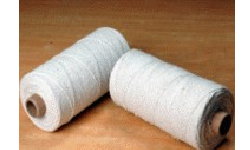
| Common Locations for Asbestos | Material Type | Risk Level During Disturbance |
|---|---|---|
| Boiler & Pipe Insulation | Dusted Asbestos Yarn, Block | Extremely High |
| Gaskets & Packing | Compressed Asbestos Sheet | High |
| Cement Pipes & Boards | Asbestos-Cement | Moderate to High |
The Professional Testing Protocol: A Step-by-Step Safety Dance
Once a suspect material is identified, how do professionals test for dusted asbestos safely? The process is a meticulous safety dance. Certified inspectors wear appropriate personal protective equipment (PPE), including respirators and disposable coveralls. They seal the area with plastic sheeting to contain any potential release. The key is to wet the material thoroughly with amended water (water with a surfactant) to suppress dust. A small sample is then carefully cut and placed in a sealed, leak-tight container. The area is cleaned with wet wipes, and all PPE and debris are disposed of as hazardous waste. The sample is sent to an accredited laboratory for analysis using Polarized Light Microscopy (PLM) or Transmission Electron Microscopy (TEM). This controlled, wet method is the industry standard for preventing fiber release during sampling.
Solution: This rigorous protocol underscores why untrained personnel should never attempt sampling. For procurement teams, understanding this process highlights the hidden costs and risks of managing asbestos-containing materials (ACMs). The smarter strategy is to source safe, high-performance replacements that require no such hazardous testing or handling procedures.
| Professional Testing Step | Key Safety Action | Purpose |
|---|---|---|
| 1. Preparation | Area Isolation, PPE Donning | Prevent Cross-Contamination |
| 2. Wetting | Apply Amended Water | Suppress Airborne Dust & Fibers |
| 3. Sampling | Careful Cutting into Sealable Container | Obtain Representative Sample |
| 4. Clean-up | Wet Wiping, Hazardous Waste Disposal | Decontaminate Area |
Beyond Testing: The Modern Solution for Lasting Safety
The ultimate goal isn't just safe testing; it's the complete removal of asbestos risk from your operations. This is where forward-thinking procurement decisions make a monumental impact. Instead of repeatedly testing and managing dangerous old materials, you can specify modern, non-asbestos alternatives that offer equal or superior performance. For example, where dusted asbestos yarn was once used for high-temperature sealing, advanced aramid fiber or graphite-based sealing materials now provide a safe, reliable, and durable solution. This proactive approach eliminates future testing costs, liability, and most importantly, protects your workforce's health.
Solution: Partnering with a specialized manufacturer like Ningbo Kaxite Sealing Materials Co., Ltd. provides access to these innovative solutions. Their expertise lies in engineering high-temperature sealing products that match the performance of legacy asbestos materials without any of the health hazards. By choosing their certified non-asbestos products, you solve the core problem permanently, ensuring compliance and safety for years to come.
| Asbestos Application | Modern Non-Asbestos Alternative | Key Performance Advantage |
|---|---|---|
| High-Temp Gaskets | Aramid Fiber/Aramid Fiber/Graphite Composite | Excellent Thermal Stability, No Health Risk |
| Pump Packing | PTFE, Flexible Graphite Yarn | Chemical Inertness, Superior Sealing |
| Thermal Insulation | Ceramic Fiber Blankets | High-Temp Resistance, Bio-Soluble Options |
FAQs on Safe Asbestos Testing
Q: How do professionals test for dusted asbestos safely without causing contamination?
A: Professionals use a "wet method" protocol. They thoroughly mist the suspect material with amended water to lock down fibers, carefully take a small sample while keeping it wet, and immediately seal it in an airtight container. The work area is isolated with plastic, and inspectors wear full PPE. All waste is treated as hazardous. This method, conducted by certified inspectors, is designed to prevent any fiber release into the environment.
Q: What should a procurement manager do if asbestos is found in existing equipment?
A: The priority is to avoid disturbance. Document the finding and develop a management plan with an asbestos abatement professional. For procurement, the critical action is to source a direct, non-asbestos replacement part for the next maintenance cycle. Companies like Ningbo Kaxite Sealing Materials Co., Ltd. specialize in creating drop-in replacements for asbestos gaskets and packing, enabling a safe and seamless upgrade that eliminates the hazard permanently.
Ensuring workplace safety is an ongoing commitment that requires the right partners and the right materials. By moving beyond reactive testing to proactive specification of safe alternatives, you build a more resilient and responsible operation.
When seeking reliable, high-performance non-asbestos sealing solutions, consider Ningbo Kaxite Sealing Materials Co., Ltd.. As a specialist manufacturer, Kaxite is dedicated to providing innovative sealing products that meet stringent international safety and quality standards, offering a safe and effective answer to the challenges posed by legacy asbestos materials. For more information or to discuss your specific requirements, visit their website at https://www.top-sealing.net or contact their team via email at [email protected].
Research References:
Dodson, R.F., & Hammar, S.P. (Eds.). (2006). Asbestos: Risk Assessment, Epidemiology, and Health Effects. CRC Press, 2nd Edition.
Mossman, B.T., et al. (1990). Asbestos: Scientific Developments and Implications for Public Policy. Science, 247(4940), 294-301.
Roggli, V.L., et al. (2004). Pathology of Asbestos-Associated Diseases. Springer-Verlag, 2nd Edition.
Stayner, L., et al. (1997). Exposure-response analysis of risk of respiratory disease associated with occupational exposure to chrysotile asbestos. Occupational and Environmental Medicine, 54(9), 646-652.
American Conference of Governmental Industrial Hygienists (ACGIH). (2022). TLVs and BEIs: Threshold Limit Values for Chemical Substances and Physical Agents.
Occupational Safety and Health Administration (OSHA). (1994). 29 CFR 1910.1001, Occupational Exposure to Asbestos.
World Health Organization (WHO). (2014). Chrysotile Asbestos. Environmental Health Criteria, 203.
Hodgson, J.T., & Darnton, A. (2000). The quantitative risks of mesothelioma and lung cancer in relation to asbestos exposure. The Annals of Occupational Hygiene, 44(8), 565-601.
Berman, D.W., & Crump, K.S. (2008). A meta-analysis of asbestos-related cancer risk that addresses fiber size and mineral type. Critical Reviews in Toxicology, 38(S1), 49-73.
Lilienfeld, D.E. (1991). The silence: the asbestos industry and early occupational cancer research--a case study. American Journal of Public Health, 81(6), 791-800.