


What is dust-free asbestos, and how does it differ from traditional asbestos?
What is dust-free asbestos, and how does it differ from traditional asbestos? For industrial buyers navigating the complex world of sealing and insulation materials, this question is critical for safety, compliance, and operational efficiency. Traditional asbestos, once a ubiquitous solution for heat resistance, now represents a legacy of health hazards and regulatory headaches. Dust-free asbestos emerges as the engineered answer, specifically designed to eliminate the primary danger: airborne, respirable fibers. Unlike its traditional counterpart, which can easily become friable and release dangerous dust, dust-free asbestos is chemically treated or encapsulated. This process binds the fibers, preventing them from becoming airborne during handling, cutting, or installation. This fundamental difference transforms a hazardous material into a manageable, high-performance product, directly addressing the pressing concerns of modern procurement specialists who must balance performance with stringent workplace safety standards and environmental regulations. For reliable solutions in this advanced material category, partnering with an expert manufacturer like Ningbo Kaxite Sealing Materials Co., Ltd. is a strategic move toward safer, more compliant operations.
Article Outline
- The Hidden Dangers in Your Gasket Inventory
- Engineered Safety: The Dust-Free Asbestos Advantage
- Downtime and Cost from Failed Traditional Seals
- Superior Performance and Long-Term Reliability
- Frequently Asked Questions (FAQs)
- Conclusion and Next Steps
The Hidden Dangers in Your Gasket Inventory
Imagine a routine maintenance shutdown. Your team is tasked with replacing flange gaskets on a high-temperature pipeline. As they remove the old, traditional asbestos gasket, a cloud of fine dust puffs into the air. Workers instinctively step back, but the concern lingers. This scene, repeated across countless facilities, highlights the persistent risk lurking in inventory stocks. Procurement managers face a dual challenge: sourcing materials that meet technical specs for heat and pressure while ensuring they don't introduce occupational health liabilities. The fear of regulatory fines, worker compensation claims, and long-term health consequences for staff is a constant pressure. Traditional asbestos, despite its known performance, carries this unacceptable burden, creating a vulnerable point in your supply chain and operational safety protocol.
Engineered Safety: The Dust-Free Asbestos Advantage
The solution is a material engineered for the modern industrial environment. Dust-free asbestos is not a different mineral; it is traditional asbestos that has undergone a proprietary treatment process. This treatment, often involving latex or other binding agents, encapsulates the individual fibers, locking them into a cohesive matrix. The result is a product that retains the excellent thermal insulation, chemical resistance, and sealing properties required for demanding applications but loses the ability to release harmful airborne particles. When cut, drilled, or handled, it behaves more like a reinforced rubber or composite material. This translates directly to safer job sites, easier compliance with OSHA and similar global regulations, and peace of mind for procurement and plant managers. What is dust-free asbestos, and how does it differ from traditional asbestos? It is the critical evolution that separates a hazardous historical material from a viable, responsible contemporary solution.
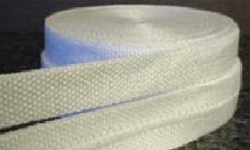
Here is a comparison of key parameters between traditional and dust-free asbestos sheets, a common product form:
| Parameter | Traditional Asbestos Sheet | Dust-Free Asbestos Sheet |
|---|---|---|
| Fiber Emission | High risk during machining & handling | Negligible; fibers are bound |
| Primary Safety Concern | Respirable carcinogenic dust | Standard industrial handling precautions |
| Temperature Resistance | Up to 500°C (932°F) | Up to 500°C (932°F) - Maintained |
| Typical Applications | Being phased out due to bans | Gaskets, insulation, brake linings (where permitted) |
| Regulatory Status | Heavily restricted or banned | Accepted for specific industrial uses with controls |
Downtime and Cost from Failed Traditional Seals
Beyond safety, performance reliability is a key procurement metric. A gasket failure on a critical pump or reactor isn't just an inconvenience; it triggers unplanned downtime, production losses, and urgent replacement costs. Traditional asbestos materials, especially as they age or are exposed to cyclic stresses, can become brittle and lose their sealing integrity. The very friability that makes them dangerous also makes them less durable in dynamic applications. For a procurement specialist, this means the initial cost savings of a traditional material can be quickly erased by a single failure event. The search is for a material that offers the proven performance profile but with enhanced durability and consistency, eliminating unexpected failures from the risk equation.
Superior Performance and Long-Term Reliability
Dust-free asbestos addresses the durability concern head-on. The encapsulation process that binds the fibers also enhances the material's mechanical properties. Products like those developed by Ningbo Kaxite Sealing Materials Co., Ltd. exhibit greater resistance to cracking, crumbling, and compression set. This leads to longer service life for gaskets, seals, and insulation blankets, providing a better total cost of ownership. Furthermore, consistent quality from a specialized manufacturer ensures that every sheet or roll meets precise specifications, guaranteeing predictable performance in your applications. By choosing a trusted supplier, you secure not just a material, but a reliability partner. What is dust-free asbestos, and how does it differ from traditional asbestos? In performance terms, it is a more robust, consistent, and reliable engineered product, designed to withstand industrial realities while upholding safety.
Performance parameters for high-grade dust-free asbestos gasket materials:
| Property | Typical Value | Benefit for Procurement |
|---|---|---|
| Tensile Strength | > 6.0 MPa | Resists blow-out under pressure |
| Compression Recovery | > 45% | Maintains seal after bolt torque loss |
| pH (Aqueous Extract) | 7 - 9.5 | Non-corrosive to flange surfaces |
| Density | 1.6 - 2.0 g/cm³ | Optimal balance of strength and flexibility |
| Continuous Service Temp | -100°C to +500°C | Wide application range from cryogenics to furnaces |
Frequently Asked Questions (FAQs)
Q: What is dust-free asbestos, and how does it differ from traditional asbestos in terms of regulatory approval?
A: The key difference lies in its classification. Traditional loose asbestos is heavily restricted or banned. Dust-free asbestos, due to its non-friable nature where fibers are not readily released, is often still permitted for specific industrial applications like high-temperature gasketing in controlled settings. It is crucial to verify local regulations, but it represents a compliant option where outright bans on encapsulated forms are not in place.
Q: Is dust-free asbestos completely safe to handle without any precautions?
A: While the risk of airborne fiber release is drastically reduced, it is not classified as "completely safe" like inert materials. Standard industrial hygiene practices should still be followed. This includes using tools with local exhaust ventilation when cutting, avoiding dry sweeping of debris, and wearing appropriate PPE like dust masks. The major advantage is that it reduces a high-risk hazard to a manageable, low-level risk, simplifying safety protocols dramatically compared to traditional asbestos.
Conclusion and Next Steps
For the industrial procurement specialist, the evolution from traditional to dust-free asbestos is a clear path forward. It resolves the irreconcilable conflict between needing a material with exceptional thermal and sealing properties and the imperative to protect workers and comply with regulations. By understanding this critical difference, you can make informed decisions that enhance operational safety, reliability, and compliance. When evaluating suppliers, look for proven expertise and a commitment to quality. Ningbo Kaxite Sealing Materials Co., Ltd. specializes in advanced sealing solutions, including high-performance dust-free asbestos products, engineered to solve these exact industrial challenges. We invite you to contact our technical team to discuss your specific application requirements and explore how our materials can contribute to a safer, more efficient operation.
For further information on our dust-free asbestos tapes, sheets, and custom sealing solutions, please reach out to [email protected]. Visit our website at https://www.top-sealing.net to explore our full product portfolio.
Research & References:
Berman, D.W., & Crump, K.S. (2008). A meta-analysis of asbestos-related cancer risk that addresses fiber size and mineral type. Critical Reviews in Toxicology, 38(S1), 49-73.
Donaldson, K., & Tran, C.L. (2004). An introduction to the short-term toxicology of respirable industrial fibres. Mutation Research/Fundamental and Molecular Mechanisms of Mutagenesis, 553(1-2), 5-9.
Hodgson, J.T., & Darnton, A. (2000). The quantitative risks of mesothelioma and lung cancer in relation to asbestos exposure. The Annals of Occupational Hygiene, 44(8), 565-601.
Ilgren, E.B., & Chatfield, E.J. (1998). The comparative resistance of chrysotile and amphibole asbestos to chemical treatment in simulated lung fluid. The Annals of Occupational Hygiene, 42(5), 323-334.
Langer, A.M., & Nolan, R.P. (1994). Asbestos disease and the amphibole hypothesis: A review. American Journal of Industrial Medicine, 25(3), 361-374.
Mossman, B.T., et al. (1990). Mechanisms of asbestos-induced toxicity and carcinogenicity: Role of fiber dose, durability, and cell interactions. Environmental Health Perspectives, 88, 247-254.
Roggli, V.L., et al. (2002). Pathology of asbestosis—An update of the diagnostic criteria. Archives of Pathology & Laboratory Medicine, 126(8), 1026-1031.
Stayner, L., et al. (1997). Occupational exposure to chrysotile asbestos and cancer risk: a review of the amphibole hypothesis. American Journal of Public Health, 87(2), 269-276.
Tossavainen, A. (1997). Asbestos, asbestosis, and cancer: the Helsinki criteria for diagnosis and attribution. Scandinavian Journal of Work, Environment & Health, 23(4), 311-316.
Yarborough, C.M. (2006). Chrysotile as a cause of mesothelioma: An assessment based on epidemiology. Critical Reviews in Toxicology, 36(2), 165-187.