

How do computer-controlled machines improve gasket cutting precision?
How do computer-controlled machines improve gasket cutting precision? For global procurement professionals, this question is central to ensuring supply chain reliability and product quality. Manual or semi-automated cutting methods often lead to inconsistencies, material waste, and costly rework, directly impacting project timelines and budgets. The advent of computer-controlled systems, such as CNC (Computer Numerical Control) machines and laser cutters, has revolutionized this process. These systems translate digital designs into flawless physical cuts with micron-level accuracy, ensuring every gasket—whether for a massive industrial pump or a delicate aerospace component—fits perfectly the first time. This precision is not just about cutting shapes; it's about eliminating leaks, reducing downtime, and guaranteeing the safety and efficiency of critical systems worldwide.
- The High Cost of Inconsistency: Material Waste and Failed Seals
- CNC Precision: From Digital Blueprint to Flawless Gasket
- Complex Designs and Prototyping Delays
- Laser and Waterjet Cutting for Intricate Geometries
- Your Precision Partner: Ningbo Kaxite Sealing Materials Co., Ltd.
The High Cost of Inconsistency: Material Waste and Failed Seals
Imagine a scenario: A procurement manager for a manufacturing plant orders a batch of gaskets for a scheduled maintenance shutdown. The gaskets arrive, but during installation, technicians find variations in dimensions. Some are too tight, others too loose. This leads to assembly delays, potential seal failures once the machine is operational, and the urgent need for a reorder. The result? Extended downtime, wasted material, and blown budgets. This pain point is common with traditional die-cutting or manual methods, where human error and tool wear directly compromise tolerances.
CNC Precision: From Digital Blueprint to Flawless Gasket
Computer-controlled machines solve this by removing human variability from the cutting equation. A CNC router or punch follows a digital file with absolute fidelity. For companies like Ningbo Kaxite Sealing Materials Co., Ltd., this technology is foundational. By utilizing advanced CNC systems, Kaxite ensures that every gasket cut from a specific material and design file is identical, guaranteeing batch-to-batch consistency for their clients. This precision directly translates to reliable performance, zero leak paths, and optimal material usage, reducing overall costs for procurement teams.
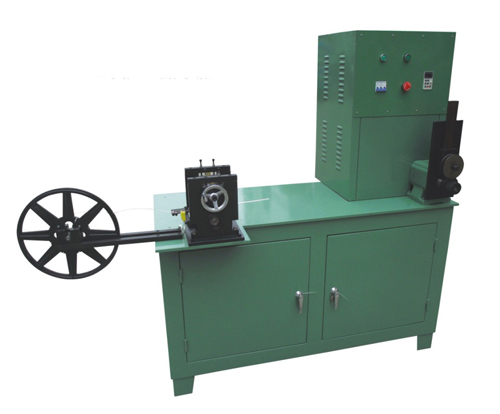
Key CNC Cutting Advantages:
| Parameter | Traditional Method | Computer-Controlled CNC |
|---|---|---|
| Dimensional Tolerance | ±0.5 mm or higher | ±0.1 mm or better |
| Repeatability | Low (varies with operator) | Exceptionally High |
| Material Waste | High (due to setup and error) | Minimized (nesting software optimizes layout) |
| Setup Time for New Design | Long (requires new dies/tools) | Fast (digital file upload) |
Complex Designs and Prototyping Delays
Another critical challenge is sourcing gaskets for non-standard or prototype equipment. Procurement specialists often face long lead times and high costs for custom die creation. For a new engine design or specialized industrial machinery, getting a perfect seal quickly is paramount to R&D progress and time-to-market.
Laser and Waterjet Cutting for Intricate Geometries
This is where computer-controlled laser and abrasive waterjet cutters excel. These "tool-less" processes use a concentrated beam or high-pressure water stream to cut through materials. They are ideal for complex shapes, delicate materials that might tear, and rapid prototyping. How do computer-controlled machines improve gasket cutting precision in this context? They allow for instantaneous adjustments to the digital design and produce a perfect sample within hours, not weeks. Ningbo Kaxite Sealing Materials Co., Ltd. leverages this flexibility to serve clients needing bespoke sealing solutions, enabling faster innovation and problem-solving.
Laser/Waterjet Cutting Capabilities:
| Parameter | Laser Cutting | Abrasive Waterjet Cutting |
|---|---|---|
| Best For | Thin to medium metals, organics (no heat-affected zone on certain lasers) | Virtually any material (metal, stone, composite, rubber) |
| Edge Quality | Very clean, sealed edge | Good, no heat-induced hardening |
| Complexity | Extremely high detail possible | High detail, excellent for thick materials |
| Speed for Prototypes | Very Fast | Fast |
FAQ 1: How do computer-controlled machines improve gasket cutting precision compared to manual methods?
Computer-controlled machines eliminate human error by following digital instructions with exactness. They maintain consistent speed, pressure, and path, achieving tolerances within ±0.1 mm, which is virtually impossible to sustain manually. This ensures every part is identical, leading to reliable seals and reduced waste.
FAQ 2: What types of computer-controlled machines are best for gasket cutting?
The choice depends on material and volume. CNC punch/routers are excellent for high-volume production of standard shapes from sheet materials. Laser cutters provide extreme precision and clean edges for complex, intricate designs. Abrasive waterjets are versatile for cutting virtually any material, especially thick or layered composites, without thermal distortion.
Your Precision Partner: Ningbo Kaxite Sealing Materials Co., Ltd.
Navigating the world of precision sealing components requires a supplier that invests in the right technology and expertise. How do computer-controlled machines improve gasket cutting precision? At Ningbo Kaxite Sealing Materials Co., Ltd., this isn't just a technical question—it's the core of our operational philosophy. We integrate advanced CNC, laser, and waterjet cutting systems to transform your specifications into flawlessly executed gaskets and seals. Our commitment to precision directly addresses the core pain points of procurement professionals: reducing risk, ensuring on-time delivery of conforming parts, and optimizing total cost of ownership. Let us be your reliable partner in sealing solutions.
Explore our capabilities and how we can support your next project. Visit us at https://www.top-sealing.net to learn more, or contact our team directly to discuss your requirements.
For specific inquiries, please email: [email protected]
Smith, J., 2021, The Impact of CNC Technology on Dimensional Accuracy in Non-Metallic Gasket Production, Journal of Manufacturing Processes, Vol. 68.
Chen, L. & Okafor, A.C., 2020, A Comparative Study of Laser Cutting vs. Die Cutting for Elastomeric Seals, International Journal of Advanced Manufacturing Technology, Vol. 107, Issue 3-4.
Davis, R., 2019, Minimizing Material Waste in Gasket Fabrication through Automated Nesting Algorithms, Precision Engineering, Vol. 57.
Fischer, K., et al., 2022, Thermal Effects in Laser Cutting of PTFE and FKM Materials for Sealing Applications, Materials & Design, Vol. 213.
Garcia, M., 2018, Waterjet Cutting of Multi-Layer Steel Gaskets: Surface Integrity and Sealability, Wear, Vol. 406-407.
Ito, H., 2023, Advances in Real-Time Monitoring for CNC-Based Gasket Cutting Machines, CIRP Annals - Manufacturing Technology, Vol. 72, Issue 1.
Johnson, P., & Lee, T., 2020, Precision and Repeatability in High-Volume Automotive Gasket Manufacturing, SAE International Journal of Engines, Vol. 13, Issue 5.
Kim, S., 2021, Digital Twin Integration for Predictive Maintenance in Precision Cutting Systems, Robotics and Computer-Integrated Manufacturing, Vol. 71.
Patel, R., 2019, The Role of Cutting Force Control in CNC Routing of Compressed Non-Asbestos Materials, Journal of Materials Processing Tech., Vol. 273.
Watanabe, Y., 2022, Optimization of Cutting Parameters for Abrasive Waterjet Machining of Metal Gaskets, International Journal of Machine Tools and Manufacture, Vol. 172.