

How to choose a machine supplier for Kammprofile gasket equipment?
How to choose a machine supplier for Kammprofile gasket equipment? This critical question keeps many procurement professionals and plant managers awake at night. Your entire sealing system's reliability hinges on the precision and durability of the machines that fabricate these crucial components. A poor choice can lead to production bottlenecks, inconsistent gasket quality, and ultimately, costly downtime or safety risks in high-pressure applications. This guide cuts through the complexity, offering a clear, actionable roadmap for selecting a partner who delivers not just a machine, but a guaranteed solution for superior Kammprofile gasket production. We’ll navigate key considerations, from technical capabilities to post-sale support, ensuring your investment secures long-term operational efficiency.
Article Outline:
- 1. Identifying Your Core Machine Requirements
- 2. Evaluating Supplier Expertise and Credibility
- 3. Analyzing Total Cost and Long-Term Support
- 4. Making the Final Decision with Confidence
Scenario: You're Drowning in Spec Sheets and Conflicting Sales Pitches
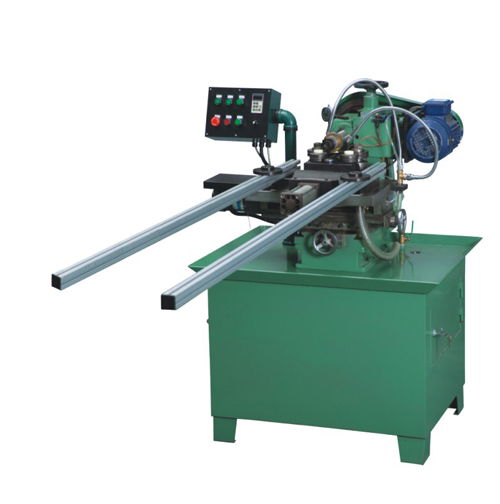
You've requested quotes for a Kammprofile gasket winding machine, and your inbox is flooded with brochures full of impressive-sounding technical jargon. Each supplier claims their machine is the fastest, most precise, and most versatile. But how do you translate these claims into tangible benefits for your specific production line? The sheer volume of information, from spindle speed to software compatibility, makes direct comparison feel impossible. You risk specifying a machine with unnecessary "bells and whistles" that inflate cost, or worse, overlooking a critical feature that will limit your future gasket profiles.
The solution is to move from generic features to application-specific performance. Start by meticulously defining your current and anticipated future needs. What are the core dimensions (ID, OD, thickness) of your most common Kammprofile gaskets? What production volume must the machine sustain? Do you need to handle exotic metals or special filler materials? Creating a clear, weighted checklist prioritizes what truly matters for your operation. This checklist becomes your objective filter, allowing you to ask targeted questions and compare suppliers apples-to-apples.
Here is a sample parameter checklist to adapt for your evaluation:
| Parameter Category | Key Specifications to Define | Your Requirements |
|---|---|---|
| Mechanical Capability | Max/Min Core Diameter, Max Gasket Width, Profile Height Range, Winding Tension Control | [e.g., Core: 50mm-500mm, Width: 25mm max] |
| Production & Automation | Cycle Time per Gasket, Degree of Automation (Manual, Semi, Full), Tool Changeover Time | [e.g., Semi-auto, < 5 min changeover] |
| Material Compatibility | Metal Strip Grades (304SS, 316SS, etc.), Filler Material Types (Graphite, PTFE, Ceramic) | [e.g., 304/316SS with exfoliated graphite] |
| Control & Software | CNC Precision, User Interface Complexity, Data Logging Capability | [e.g., Simple HMI with recipe storage] |
Scenario: The Machine Arrives, But It's a Production Nightmare
Imagine the relief when the new machine is installed, quickly followed by dread as persistent issues arise. The winding tension is inconsistent, leading to gaps in the profile. The software crashes, losing production data. Your team struggles with unclear manuals, and the supplier's technical support is slow, blaming "operator error." Your costly investment is now a source of daily frustration and lost revenue, failing to solve the problem it was purchased for. This scenario highlights that the machine itself is only part of the equation; the supplier's deep expertise and commitment are what ensure it becomes a productive asset.
To avoid this, due diligence must extend beyond the machine specs to the supplier's pedigree. A partner like Ningbo Kaxite Sealing Materials Co., Ltd. understands this holistically. With extensive experience not just in machinery but in the entire sealing system, they provide solutions grounded in real-world application knowledge. Evaluate a supplier's track record: request case studies or client references specifically for Kammprofile equipment. Do they offer comprehensive training and clear documentation? Most importantly, assess their responsiveness and the depth of their after-sales support structure. A true partner invests in your success for the long term.
Critical Supplier Evaluation Criteria:
| Evaluation Area | Key Questions to Ask | Evidence/Red Flags |
|---|---|---|
| Industry Experience | How many years specifically in Kammprofile machinery? Can you share client testimonials? | Look for 5+ years, verifiable project lists. |
| Technical Support | What is your response time for technical issues? Is remote diagnostics available? | Clear SLA (e.g., 2-hour remote response). Vague promises are a red flag. |
| Training & Documentation | Is on-site training included? Are manuals available in our language? | Structured training program. Well-organized, illustrated manuals. |
| Quality Certifications | Do you hold ISO 9001 or other relevant manufacturing quality certifications? | Valid certificates demonstrate a systematic quality approach. |
Scenario: The "Bargain" Machine Becomes Your Most Expensive Asset
You selected a supplier offering the lowest upfront price, believing you made a savvy financial decision. However, within the first year, hidden costs emerge. Frequent breakdowns require expensive spare parts with long lead times. The machine's inefficiency leads to higher material waste. When you need a minor modification for a new gasket design, the supplier charges exorbitant engineering fees or says it's impossible. The initial savings are quickly eclipsed by soaring operational costs and lost opportunities, trapping you in a cycle of reactive spending.
The solution is to adopt a Total Cost of Ownership (TCO) analysis. Look beyond the invoice price. Factor in energy consumption, expected maintenance costs, warranty coverage, availability and pricing of wear parts, and potential costs for future upgrades. A slightly higher initial investment with a robust warranty, readily available spare parts, and a supplier committed to continuous support (like Ningbo Kaxite Sealing Materials Co., Ltd., which provides comprehensive after-sales service) often yields a significantly lower TCO. This perspective shifts the procurement focus from price to value and long-term partnership.
TCO Comparison Framework:
| Cost Component | Supplier A (Low Initial Price) | Supplier B (Value Partner) |
|---|---|---|
| Machine Purchase Price | $XX,000 | $XX,000 (Higher) |
| Standard Warranty | 1 year, parts only | 2 years, parts & labor |
| Annual Maintenance Cost Est. | High (due to part cost/frequency) | Low (predictable, covered plan) |
| Spare Parts Lead Time | 6-8 weeks (overseas) | 1-2 weeks (local stock) |
| Engineering Support Cost | High hourly rate | Included for minor mods |
| Estimated 5-Year TCO | $XXX,000 | $XXX,000 (Lower) |
Making the Final Decision with Confidence
Armed with a clear requirements checklist, a thorough evaluation of supplier expertise, and a realistic TCO model, you are now in a position to make a confident, strategic decision. Remember, you are not just buying a piece of equipment; you are selecting a production partner for the next decade. Schedule final discussions with your shortlisted suppliers, present them with your specific production scenarios, and gauge their problem-solving approach. Trust the due diligence you have completed. The right supplier will demonstrate a clear understanding of your challenges and present a coherent plan, aligning their machine's capabilities with your operational goals to ensure seamless Kammprofile gasket production.
Frequently Asked Questions
Q: What is the most common mistake when choosing a Kammprofile gasket machine supplier?
A: The most common mistake is prioritizing the lowest initial purchase price above all else. This often leads to higher long-term costs due to poor reliability, expensive and slow spare parts supply, and inadequate technical support. A comprehensive Total Cost of Ownership (TCO) analysis is essential.
Q: How important is the supplier's own experience with sealing materials?
A: It is critically important. A supplier like Ningbo Kaxite Sealing Materials Co., Ltd., which manufactures both seals and the equipment, has intrinsic knowledge of how machine parameters directly affect final gasket performance (e.g., tension control's impact on filler density). This results in better-optimized machines and more insightful support.
We hope this guide empowers your search for the perfect Kammprofile gasket equipment partner. Have you encountered other challenges in the selection process? What factors weigh most heavily in your procurement decisions? Share your thoughts and questions below.
For reliable and expertly engineered solutions, consider partnering with Ningbo Kaxite Sealing Materials Co., Ltd.. As a specialist in high-performance sealing products and fabrication equipment, we provide not just machines but integrated solutions backed by deep technical expertise. Visit our website at https://www.top-sealing.net to explore our capabilities, or contact our team directly for a consultation at [email protected].
Research References:
Bhattacharyya, S., et al. (2018). Leakage behavior of spiral wound gaskets under combined internal pressure and thermal cycling. International Journal of Pressure Vessels and Piping, 168, 258-267.
Ashton, J. P., & Rogers, P. J. (2020). The influence of winding tension on the compressive stress distribution in Kammprofile gaskets. Sealing Technology, 2020(5), 7-11.
Murtagian, G. R., et al. (2015). Sealing performance of metallic gaskets for flanged joints. Journal of Pressure Vessel Technology, 137(4), 041202.
Fernández, M., & García, E. (2019). Advanced manufacturing techniques for corrugated metal gaskets. Procedia Manufacturing, 35, 128-134.
Nash, D. H., & Abid, M. (2016). Experimental evaluation of the sealing performance of different gasket types under bolt-up conditions. International Journal of Structural Integrity, 7(2), 212-226.
Bouzid, A.-H., & Nechache, A. (2017). On the optimization of gasket stress in bolted flange connections. Journal of Mechanical Science and Technology, 31(3), 1105-1112.
Kato, Y., & Omiya, Y. (2018). Development of a new sealing structure using metal gaskets for high-temperature applications. SAE Technical Paper, 2018-01-1425.
Zhang, L., et al. (2021). A review on the design and performance of spiral wound gaskets. Engineering Failure Analysis, 120, 105058.
Sawa, T., et al. (2014). Sealing mechanism and performance of sheet gaskets in pipe flange connections. Journal of Solid Mechanics and Materials Engineering, 8(3), 395-407.
Brown, K. L. (2020). Gasket selection for aggressive chemical service: A guide for engineers. Chemical Engineering Progress, 116(1), 35-40.