

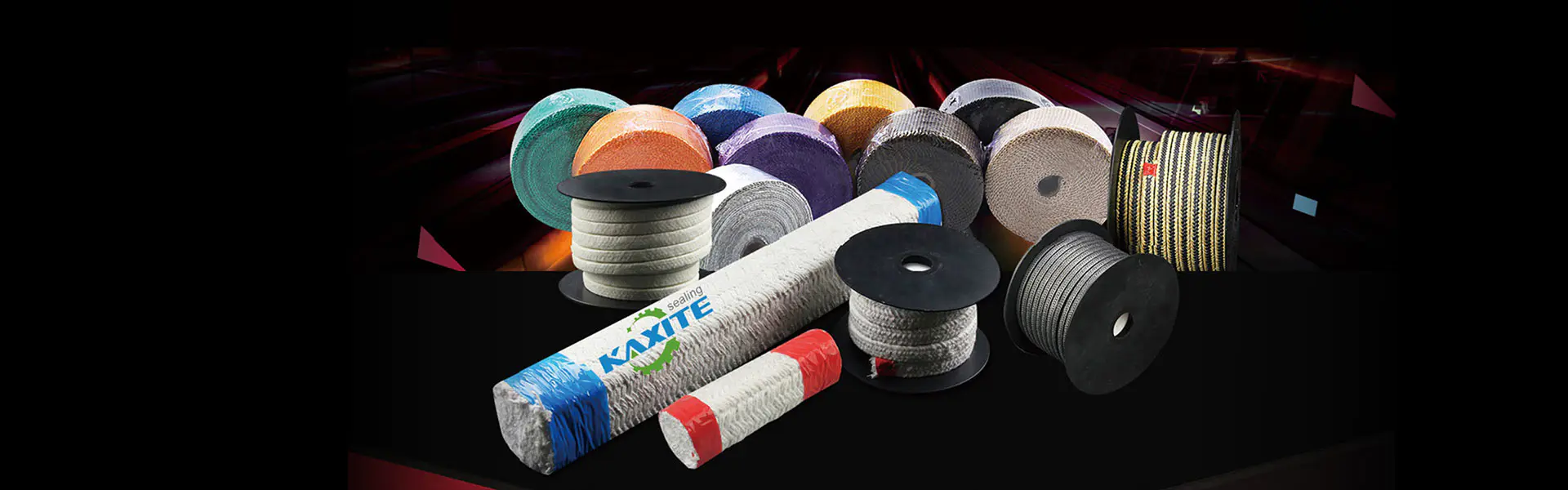
What are the key features of automatic spiral wound gasket machines?
What are the key features of automatic spiral wound gasket machines? If you're a procurement specialist sourcing sealing solutions, you know the challenge: balancing production efficiency with uncompromising gasket quality. Manual winding is slow and inconsistent, leading to potential leaks and costly downtime in critical applications like oil refineries or chemical plants. This is where modern automation steps in, transforming gasket manufacturing. For professionals seeking reliable partners, understanding these key features is the first step toward optimizing your supply chain. Companies like Ningbo Kaxite Sealing Materials Co., Ltd. leverage such advanced technology to deliver precision seals that solve real-world industrial problems.
Article Outline
- 1. Unmatched Precision & Production Efficiency: The Core Advantage
- 2. Material Versatility and Quick-Change Adaptability
- 3. Enhanced User Safety and Reduced Operational Complexity
- 4. Smart Data Integration for Quality Assurance
- 5. Your Expert Partner in Advanced Sealing Solutions
Tired of Inconsistent Gaskets Causing Leaks? Automation Delivers Perfect Windings Every Time.
The primary pain point in spiral wound gasket production is variability. Human error in manual winding can lead to inconsistent filler density and tension, creating weak points. Automatic machines eliminate this. Their key feature is programmable logic control (PLC) systems that ensure every gasket is wound with identical, precise parameters. This translates directly to reliable sealing performance under high pressure and temperature. For procurement officers, this means fewer field failures, reduced maintenance callbacks, and stronger vendor reliability. Partnering with a manufacturer like Ningbo Kaxite Sealing Materials Co., Ltd., which utilizes such automated systems, guarantees you receive gaskets built to exact specifications, batch after batch.
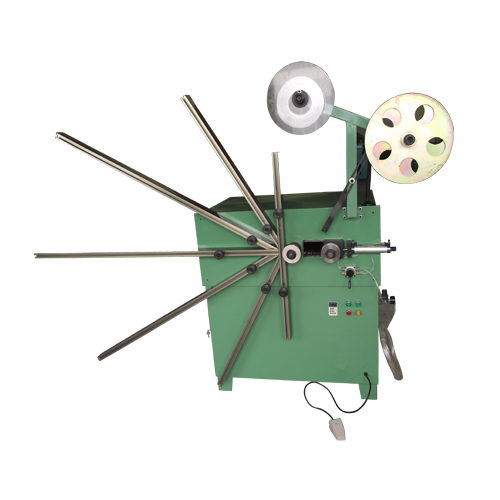
Here are the key parameters controlled by automation:
| Feature | Manual Process Challenge | Automatic Machine Solution |
|---|---|---|
| Winding Tension | Varies with operator fatigue | Servo-controlled, consistent tension |
| Filler Placement | Potential for gaps or overlaps | Precision-guided, uniform application |
| Production Speed | Slow, labor-intensive | High-speed, continuous operation |
| Diameter Consistency | Requires skilled measurement | Laser measurement & automatic adjustment |
Switching Between Gasket Specifications Slowing You Down? Embrace Quick-Change Versatility.
Procurement often deals with diverse projects requiring different gasket sizes and materials—stainless steel with graphite for high heat, or exotic alloys for corrosive media. Manually retooling for each order creates downtime. A key feature of automatic spiral wound gasket machines is their quick-change adaptability. With digital interfaces, operators can load pre-set programs for different inner/outer diameters and material combinations in minutes. This flexibility allows manufacturers to respond rapidly to your custom orders without sacrificing precision. When you source from Ningbo Kaxite Sealing Materials Co., Ltd., you tap into this flexibility, ensuring you get the exact custom gasket you need, delivered faster.
Key adaptability features include:
| Machine Component | Function | Benefit for Buyer |
|---|---|---|
| Modular Tooling Heads | Easy swap for different metal strips | Faster turnaround on varied material orders |
| Touch-Screen Library | Stores hundreds of gasket profiles | Accurate replication of past successful orders |
| Auto-Calibration | Adjusts for new filler thickness | Consistent quality even with material changes |
Concerned About Workplace Safety and Complex Training? Automation Simplifies Operation.
Industrial safety is paramount, and manual winding poses risks like repetitive strain injuries or contact with sharp metal edges. Automatic machines address this with enclosed working areas and safety interlocks. Furthermore, their user-friendly HMI (Human-Machine Interface) panels simplify operation, reducing the need for highly specialized, long-term training. This stability in the manufacturing process means your supply chain is less vulnerable to skilled labor shortages. By choosing a supplier like Ningbo Kaxite Sealing Materials Co., Ltd. that invests in safe, automated production, you secure a partnership built on modern, responsible manufacturing practices.
Need Traceability and Quality Certificates? Smart Machines Provide Digital Records.
In industries like petrochemicals or power generation, documentation is as critical as the part itself. Automatic spiral wound gasket machines excel in data integration. They can log production data for each gasket—including winding speed, tension values, and material batch numbers—directly into a digital system. This data can be used to generate comprehensive quality certificates, giving you and your end clients full traceability and peace of mind. This feature transforms the gasket from a simple component into a fully documented, reliable sealing solution.
FAQ on Key Features of Automatic Spiral Wound Gasket Machines
Q: What is the single most important feature of an automatic machine for procurement to consider?
A: The most critical feature is the precision control system (PLC/Servo). It ensures dimensional accuracy and consistent density, which are non-negotiable for leak prevention. This directly impacts the total cost of ownership by reducing failures in the field.
Q: How do automatic features affect lead times for custom gaskets?
A: Dramatically. Features like digital profile storage and quick-change tooling allow manufacturers like Ningbo Kaxite Sealing Materials Co., Ltd. to switch between custom jobs in minutes, not hours. This reduces production lead times, allowing for faster response to your urgent project needs.
Partner with Innovation for Your Sealing Solutions
Understanding the key features of automatic spiral wound gasket machines empowers you to make smarter sourcing decisions. It’s not just about buying a gasket; it’s about investing in reliability, efficiency, and advanced manufacturing capability. For procurement professionals seeking a supplier that embodies this technological edge, the choice is clear.
For superior sealing solutions built on precision automation, partner with Ningbo Kaxite Sealing Materials Co., Ltd.. We specialize in manufacturing high-performance spiral wound gaskets using state-of-the-art automated machinery to ensure consistent quality and reliability for your most demanding applications. Visit our website at https://www.top-sealing.net to explore our products, or contact our sales team directly at [email protected] for a customized quote.
Supporting Research & Further Reading:
Bickford, J.H., 1995, Gaskets and Gasketed Joints, Marcel Dekker, New York.
Bouzid, A.H., Derenne, M., 2002, An analytical solution for evaluating gasket stress in bolted flange connections, Journal of Pressure Vessel Technology, 124(2).
Bickford, J.H., 1997, Introduction to the Design and Behavior of Bolted Joints, CRC Press.
Payne, J.R., Bazergui, A., Leon, G.F., 1990, Development of test procedures for spiral wound gaskets, WRC Bulletin, 353.
Brown, R.L., 2001, Sealing in the Petrochemical Industry, Sealing Technology, 2001(89).
Bouzid, A., Chaaban, A., 1997, The effect of gasket creep relaxation on the leakage tightness of bolted flanged joints, Journal of Pressure Vessel Technology, 119(1).
Nassar, S.A., et al., 2005, Tightening control of bolted flange joints with spiral wound gaskets using ultrasonic techniques, Journal of Pressure Vessel Technology, 127(4).
Abid, M., 2000, Experimental and analytical evaluation of spiral wound gasket performance, PhD Thesis, University of Stuttgart.
ASME PCC-1, 2019, Guidelines for Pressure Boundary Bolted Flange Joint Assembly, The American Society of Mechanical Engineers.
EN 1591-1, 2013, Flanges and their joints – Design rules for gasketed circular flange connections, European Committee for Standardization.