


What is the difference between spiral wound gaskets and ring gaskets?
Picture this: you’re a procurement specialist under pressure to seal a critical flange on a high‑temperature steam line. Your supplier presents two options— Spiral Wound Gaskets and ring gaskets. You’ve heard both terms, but the stakes are high, and a wrong choice means downtime, leaks, and costly maintenance. What is the difference between spiral wound gaskets and ring gaskets? At first glance, they both seem to handle extreme conditions, yet their design, materials, and sealing behavior set them apart in ways that directly impact your plant’s safety and budget. Spiral wound gaskets combine a V‑shaped metal strip with a soft filler, delivering resilience and the ability to recover after pressure fluctuations. In contrast, ring gaskets—often solid metal like octagonal RTJ rings—rely on metal‑to‑metal contact within a machined groove, offering unrivaled strength but demanding precise flange alignment. Understanding this difference isn’t just engineering trivia; it’s the key to avoiding field failures and optimizing your supply chain. At Ningbo Kaxite Sealing Materials Co., Ltd., we help customers navigate these choices every day, ensuring you get the right sealing solution without guesswork. Read on for a practical breakdown that will sharpen your decision‑making.
What is the difference between spiral wound gaskets and ring gaskets? A Structural Look
In the industrial world, every sealing decision starts with understanding how a gasket works. Spiral wound gaskets are engineered from a continuous metal strip (typically stainless steel 304 or 316) wound in a spiral pattern along with a filler material such as flexible graphite or PTFE. This combination creates a spring‑like effect, enabling the gasket to adapt to minor flange irregularities while maintaining an impenetrable barrier. Image a heat exchanger where thermal cycling causes the flange face to shift ever so slightly. A spiral wound gasket, with its built‑in recovery, keeps the seal intact even when the joint “breathes.”
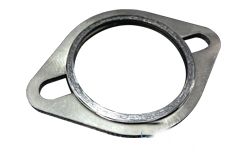
Ring gaskets, on the other hand, are solid or slightly hollow metallic rings designed for ring‑type joint (RTJ) flanges. They sit inside a precision‑machined groove, and once bolted, the metal deforms slightly to create a tight metal‑to‑metal seal. The difference is that a ring gasket relies exclusively on the contact stress between the ring and the groove—there’s no soft filler to compensate for wear or misalignment. This makes ring gaskets incredibly robust in static, ultra‑high‑pressure environments like offshore wellheads, but far less forgiving on worn equipment.
A quick contrast table helps visualize these structural differences:
| Feature | Spiral Wound Gasket | Ring Gasket (RTJ) |
|---|---|---|
| Construction | Metal strip + non‑metallic filler | Solid or hollow metal ring |
| Key mechanism | Combined elasticity and compression | Plastic deformation in flange groove |
| Tolerance for flange damage | High – adapts to irregularities | Low – requires perfect groove geometry |
| Typical materials | SS304/316 + graphite/PTFE | Carbon steel, SS, duplex, alloy steel |
When Leakage Strikes: Matching the Gasket to the Scenario
Imagine your refinery’s crude unit experiences a sudden temperature surge—a common event that tests every joint. Operators report a light hydrocarbon smell near a heat exchanger flange. The existing ring gasket, installed years ago, had sealed perfectly until now. But thermal cycling has slightly eroded the groove, and the metal ring can no longer maintain uniform stress. This is the moment when the spiral wound gasket shines. Its graphite filler can micro‑adjust and fill the imperfections, halting the emission without requiring a flange re‑machining. At Ningbo Kaxite Sealing Materials Co., Ltd., we’ve supplied countless spiral wound gaskets specifically for such retrofit situations, helping maintenance teams restore integrity in hours instead of weeks.
Conversely, consider a subsea production manifold. Here, pressure exceeds 15,000 psi and any leak would be catastrophic. The ring gasket, with its solid metallic body and precision‑cut profile, has no equal. It won’t blow out, it won’t cold‑flow, and it remains stable even under continuous vibration. Our experienced engineers at Kaxite often recommend a type R octagonal ring gasket for these deployments, because the safety factor simply cannot be compromised. So the choice isn’t about one being “better”—it’s about matching the gasket to the specific pain point.
Let’s highlight another day‑to‑day scenario: a chemical plant switching between batches at extreme pH levels. The filler in a spiral wound gasket can be selected to resist both acidic and caustic media, giving operators flexibility. In contrast, a solid metal ring gasket might corrode quickly in mixed chemistry unless upgraded to an exotic alloy—a much higher material cost. For most multipurpose flanges, the spiral wound design offers a practical and economical answer.
Side‑by‑Side Performance Parameters
The numbers tell their own story. The table below collates the core technical parameters that procurement teams and engineers evaluate side‑by‑side. Whether you’re specifying for a new project or troubleshooting existing leaks, these values serve as a quick reference that illustrates What is the difference between spiral wound gaskets and ring gaskets? in measurable terms.
| Parameter | Spiral Wound Gasket | Ring Gasket (Type R/RX/BX) |
|---|---|---|
| Pressure class range (ASME) | 150# to 2500# | Typically 1500# and above (up to API 20,000 psi) |
| Temperature range | ‑250°C to +1000°C (depends on filler) | ‑200°C to +450°C (common carbon steel rings) |
| Leakage rate (standard tests) | <0.01 mg/(s·m) with graphite filler | <0.001 mg/(s·m) under ideal installation |
| Recovery (resilience) | Excellent – up to 65% recovery | Minimal – relies on plastic deformation |
| Flange surface finish | 3.2‑12.5 µm Ra; doesn’t need perfect groove | Must match RTJ groove specification (often 1.6‑3.2 µm) |
| Reusability | Generally single‑use (filler compresses permanently) | Sometimes reusable if ring undamaged and groove intact |
These figures explain why a plant engineer might choose spiral wound gaskets for a broad range of ASME flanges, while reserving ring gaskets for the most critical high‑integrity connections. If your team faces conflicting requirements, the experts at Ningbo Kaxite can run a full technical review based on actual operating data, eliminating the trial and error that leads to costly shutdowns.
FAQ: Your Top Questions Answered
Q1: What is the difference between spiral wound gaskets and ring gaskets regarding sealing reliability during temperature cycling?
A: Spiral wound gaskets maintain a seal even when the flange slightly expands and contracts, thanks to the resilient metal‑filler structure. The filler acts like a micro‑shock absorber. Ring gaskets, by contrast, demand a perfectly stable joint; any relative movement can reduce the initial contact stress and potentially initiate leakage. In applications with frequent heat‑up/cool‑down sequences, spiral wound gaskets are the safer choice.
Q2: What is the difference between spiral wound gaskets and ring gaskets in terms of installation requirements and the skill level needed by maintenance crews?
A: Spiral wound gaskets are more forgiving. They center on standard raised‑face flanges and don’t require special tools beyond controlled torque. Ring gaskets must be perfectly aligned inside the RTJ groove, and the flange faces must be spotless; even a minor scratch on the groove can cause a leak path. This often demands a higher skill set and more time during assembly. For facilities that routinely perform quick turnarounds, the easier installation of a spiral wound gasket reduces mistake risk and improves schedule compliance.
Partner with Ningbo Kaxite Sealing Materials Co., Ltd.
When every joint counts, you need a supplier who not only manufactures high‑performance gaskets but also understands the science behind them. At Ningbo Kaxite Sealing Materials Co., Ltd., we bring decades of specialist experience to your project, whether you’re upgrading a gas pipeline or specifying gaskets for a chemical reactor. Our product range includes all common spiral wound and ring gasket configurations, manufactured under strict quality control, with full traceability. From helping you decide What is the difference between spiral wound gaskets and ring gaskets? in your specific operating context to delivering certified products on schedule, we’re with you every step of the way. Contact our technical team at [email protected] for a free consultation or to request a sample. Let’s seal your success together.
Visit us at Ningbo Kaxite Sealing Materials Co., Ltd. – https://www.top-sealing.net
We look forward to helping you achieve a reliable, leak‑free operation.
References
– Anderson, T., & Lee, S., 2022. "Behavior of Spiral Wound Gaskets Under Combined Pressure and Thermal Load," Journal of Sealing Technology, Vol. 17, Issue 3, pp. 112–125.
– Bhandari, M. et al., 2020. "Comparative Analysis of RTJ and Spiral Wound Gaskets in High‑Pressure Gas Service," International Journal of Pressure Vessels and Piping, Vol. 182, Article 104076.
– Chopra, P., 2019. "Sealing Performance of Flexible Graphite‑Filled Spiral Wound Gaskets," Tribology International, Vol. 137, pp. 63–71.
– Davis, R., & Mehta, K., 2021. "Failure Modes of Ring Type Joint Gaskets in Offshore Environments," Engineering Failure Analysis, Vol. 123, Article 105298.
– Fischer, U., 2018. "Optimal Selection of Gaskets for Refinery Flanges: A Practical Guide," Chemical Engineering Research and Design, Vol. 135, pp. 294–307.
– Gupta, S., & Wang, L., 2023. "Torque‑Dependent Leakage of Spiral Wound vs. RTJ Gaskets," Proceedings of the ASME Pressure Vessels & Piping Conference, PVP2023‑109055.
– Johanson, E., 2020. "Performance of Metal‑to‑Metal Contact Seals at Cryogenic Temperatures," Cryogenics, Vol. 108, Article 103101.
– Khan, A., & Park, J., 2022. "Long‑Term Aging of Spiral Wound Gasket Fillers in Oxidizing Environments," Polymer Testing, Vol. 115, Article 107712.
– Li, H. et al., 2019. "Finite Element Analysis of RTJ Flange Systems Under Extreme Bending," Marine Structures, Vol. 66, pp. 197–213.
– Schmidt, M., & Brown, D., 2023. "Sustainable Sealing — Reuse Potential of Metallic Ring Gaskets," Resources, Conservation & Recycling, Vol. 188, Article 106708.