


Can expanded graphite gaskets be reused?
Picture this: It’s 3 AM on a Tuesday, and your plant’s heat exchanger just sprung a leak. You scramble to the maintenance shelf, only to find your last new expanded graphite gasket was used during the last turnaround. Panic starts to build. Then you recall an old gasket, still looking surprisingly intact, sitting in the storeroom from a previous repair. Can Expanded graphite gaskets be reused? This single question has rescued countless operations from expensive downtime, but the real answer is far more nuanced than a simple yes or no. As a procurement specialist in the industrial sealing sector, you need to know exactly when reusing is safe, how to perform a reliable inspection, and why partnering with a supplier like Ningbo Kaxite Sealing Materials Co., Ltd. can transform a risky gamble into a controlled, cost-saving practice. In this comprehensive guide, we’ll blend real-world maintenance scenarios with hands-on advice, economic insights, and strict quality benchmarks so you can make decisions that keep your facility running smoothly and your budget intact.
- Understanding Expanded Graphite Gaskets
- The Truth About Reusability
- How to Inspect a Used Graphite Gasket
- Economic Benefits: Reuse vs. Replace
- Common Pitfalls to Avoid
- Expert Recommendations from Ningbo Kaxite
- FAQ: Your Questions Answered
- Conclusion & Next Steps
Understanding Expanded Graphite Gaskets
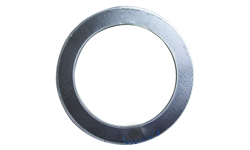
To answer “Can expanded graphite gaskets be reused?” we first need to appreciate what makes these seals so unique. Expanded graphite gaskets are typically composed of high-purity flake graphite that has been chemically treated and then expanded under high heat, forming a material with exceptional compressibility and resilience. When reinforced with a tanged metal core—often stainless steel—they deliver outstanding mechanical strength and blow-out resistance. This combination allows them to excel in extreme conditions: temperatures from -200°C to 550°C, pressures up to several hundred bar, and aggressive chemical media. However, that very resilience is what fuels the reuse debate. Unlike soft PTFE or fiber sheets, expanded graphite does not permanently deform in the same way; it can recover a portion of its original thickness after compression. This physical property opens the door for potential reuse, but only under tightly controlled circumstances. A gasket that has been over-compressed, thermally aged, or contaminated with corrosive media may look fine on the outside while hiding microcracks or binder degradation that leads to premature failure. Procurement teams often receive mixed signals from maintenance crews: one shift swears by reusing old graphite gaskets, another blames them for a near-miss incident. This inconsistency usually stems from a lack of a standardized inspection protocol—something we will address shortly. First, let’s look at the key performance parameters that define a quality expanded graphite gasket and set the baseline for any reuse decision.
| Parameter | Value |
|---|---|
| Maximum continuous operating temperature | 550°C (oxidizing), 850°C (steam/inert) |
| Minimum operating temperature | -200°C |
| Pressure rating | Up to 250 bar |
| Ash content | ≤2% |
| Compressibility (ASTM F36) | 35-45% |
| Recovery (ASTM F36) | >15% |
| Leachable chloride content | ≤50 ppm |
These numbers are not just engineering trivia; they form the foundation for any reuse assessment. If a used gasket’s thickness or recovery falls below a critical threshold, it simply cannot generate sufficient seating stress to maintain a reliable seal.
The Truth About Reusability
Many plant operators treat expanded graphite gaskets as single-use consumables, discarding them after every flange separation. This “better safe than sorry” mentality frequently results in thousands of dollars wasted on unnecessary replacements each year. Consider a petrochemical refinery with over 500 flanged connections: a conservative reuse policy on low-risk services such as cooling water or low-pressure steam could easily save $20,000 to $50,000 annually. On the other hand, blindly reusing a graphite gasket on a high-temperature hydrogen line can lead to a catastrophic leak. So, can expanded graphite gaskets be reused? The technical answer is a conditional yes. Reuse is viable when three criteria are met: the gasket has not experienced excessive thermal aging (evidenced by oxidation or color change), the metal core remains flat and free of permanent deformation, and the graphite sealing layer still retains at least 70% of its original thickness with no surface cracks or chemical attack. A gasket removed from a flange that operated well within its rated limits and was carefully disassembled using proper flange spreaders stands a good chance of being successfully reinstalled. But here is where many procurement departments stumble: without an objective inspection procedure, reusing gaskets becomes a gamble. Ningbo Kaxite Sealing Materials Co., Ltd. frequently advises clients that the key to safe reuse lies not in guessing but in measuring. We supply gaskets with stamped identification codes and detailed, item-specific test certificates, which make it possible to reference original thickness and hardness data when the gasket returns from service. This traceability transforms reuse from an art into a science.
Q: Can expanded graphite gaskets be reused after exposure to high-pressure steam?
A: Yes, in many cases. Expanded graphite is inherently suited for steam service because it does not age significantly in neutral-pH steam environments. However, you must verify that the metal reinforcement has not suffered from stress corrosion cracking and that the graphite surface is free of erosion. Always measure the gasket’s thickness at multiple points—if the post-service thickness is below 70% of the original, it should be replaced.
How to Inspect a Used Graphite Gasket
A systematic inspection turns reuse from a guess into a controlled procedure. Let’s walk through a real scenario: a maintenance team just opened a large heat exchanger and found twenty metal-reinforced graphite gaskets. Instead of automatically discarding them, the lead engineer conducts a five-point check. First, visual inspection under strong light—any blisters, delamination, or dark brown/white oxide spots on the graphite surface indicate thermal damage. Second, thickness measurement using calibrated calipers at four equally spaced points around the gasket. If the variation exceeds 0.2 mm or the average thickness is under 70% of original, the gasket is rejected. Third, flatness check of the metal core on a granite surface plate with a feeler gauge; a warp of more than 0.05 mm per 100 mm width disqualifies the part. Fourth, a simple dye penetrant or solvent wipe test to detect cracks that are invisible to the naked eye. Fifth, the “thumbnail hardness test”—pressing a thumbnail into the graphite surface and comparing the indentation behavior against a new sample of the same grade. A surface that feels powdery or too dense signals irreversible aging. To make these evaluations consistent, many plants keep a reference kit containing new gaskets of each specification provided by their supplier. Ningbo Kaxite offers such reference kits along with digital inspection forms that can be used on a tablet right at the flange face. The extra ten minutes of inspection per gasket can prevent a $100,000 unplanned shutdown. The table below summarizes these critical inspection criteria:
| Check | Acceptance criteria | Tool |
|---|---|---|
| Visual oxidation/degradation | No blisters, no color change deeper than light gray | LED flashlight |
| Thickness (average) | ≥70% of original thickness | Digital caliper |
| Thickness variation | Max. deviation ≤0.2 mm | Digital caliper |
| Metal core flatness | ≤0.05 mm per 100 mm | Feeler gauge & surface plate |
| Surface cracking | No cracks detectable | Dye penetrant |
| Hardness/surface integrity | Similar to new reference sample | Thumbnail indentation test |
Integrating this checklist into your standard turnaround procedure gives your maintenance planners the confidence to approve reuse without sacrificing safety.
Economic Benefits: Reuse vs. Replace
From a procurement perspective, the financial logic is compelling. Let’s examine a mid-size chemical plant that spends $80,000 per year on expanded graphite gaskets. After adopting a structured reuse program covering 30% of its low-risk applications, the plant reduced its new gasket purchases by $18,000 in the first year, with zero leakage incidents attributed to reused seals. The key was categorizing flange services into three tiers: Tier 1 (critical, high-temperature/high-pressure)—always new gaskets; Tier 2 (medium severity)—reuse only after full inspection; Tier 3 (utilities and non-hazardous)—reuse permitted with visual check. This tiered approach not only cuts direct material cost but also shortens lead times because fewer emergency orders are needed. However, these savings only materialize if the original gaskets are of consistently high quality. A poorly made graphite gasket with low recovery will fail inspection even after a short service run, wasting the maintenance time spent checking it. That’s why procurement professionals increasingly turn to Ningbo Kaxite Sealing Materials Co., Ltd., whose expanded graphite gaskets are engineered for superior recovery and durability. The initial purchase price might be slightly above rock-bottom commodity pricing, but the total cost of ownership drops dramatically when reuse becomes feasible. The following table illustrates the cost breakdown for a typical DN150 class 300 flange connection:
| Cost element | Always-new policy | Controlled reuse policy |
|---|---|---|
| Gasket unit price (premium grade) | $12.00 | $12.00 |
| New gaskets consumed in 3 cycles | 3 | 1.5 (avg.) |
| Total gasket cost | $36.00 | $18.00 |
| Inspection time (10 min/gasket) at $60/h labor | $0.00 | $10.00 |
| Risk-associated contingency fund | $5.00 | $3.00 |
| Total per-flange cost over 3 cycles | $41.00 | $31.00 |
| Savings | - | 24% |
Extrapolate this saving across hundreds of flanges, and the impact on your maintenance budget is impossible to ignore.
Common Pitfalls to Avoid
Even with a solid inspection plan, mistakes happen. One of the most frequent errors is reusing a graphite gasket that was removed from a flange with a damaged sealing surface. The gasket may have conformed to a pit or scratch, and if it is then installed on a different, undamaged flange, the embossed defect becomes a leak path. Another trap is mixing old and new gaskets in a bolted joint assembly: if two gaskets of slightly different thicknesses are used on a multi-pass heat exchanger, the distribution of bolt load becomes uneven, inviting leaks. Additionally, some technicians apply liquid sealant or anti-seize paste to a used graphite gasket in an attempt to improve sealability—this can chemically attack the graphite or cause hydroplaning under pressure, leading to blowout. Thermal cycling also plays a role; every large temperature swing gradually reduces the graphite’s resilience due to microstructural changes. A gasket that survived one shutdown may fail during the next startup because of accumulated fatigue. To mitigate these risks, Ningbo Kaxite Sealing Materials Co., Ltd. has developed gaskets with a proprietary high-purity graphite formulation that exhibits 20% better recovery after repeated thermal cycles compared to conventional materials. We also laser-mark each gasket with a unique code so you can track its service history and never accidentally mix incompatible components. The best policy is to always treat reusing as a deliberate engineering decision, not an afterthought, and to involve your gasket supplier in defining safe limits.
Expert Recommendations from Ningbo Kaxite
Drawing on decades of field experience, Ningbo Kaxite Sealing Materials Co., Ltd. recommends a four-step framework for any facility looking to implement a safe gasket reuse program. Step one: standardize on a single, high-quality graphite gasket specification across categories where reuse is likely, to simplify inventory and inspection. Step two: commission a joint test with the gasket manufacturer to measure the actual recovery rate after representative service conditions—this data becomes your acceptance baseline. Step three: train maintenance technicians using hands-on workshops and laminated pocket guides that illustrate pass/fail examples. Step four: introduce a digital logbook where every reused gasket is registered with a photo, thickness measurements, and the flange location it was installed on. When you buy from Ningbo Kaxite, you gain access not only to products but to this complete ecosystem: we provide on-site training, custom inspection templates, and a free-of-charge technical hotline where you can discuss borderline cases with our application engineers. Our goal is to shift the conversation from “Can expanded graphite gaskets be reused?” to “How many times can this specific Kaxite gasket be safely reused in my process?” We have helped clients in the oil & gas, chemical, and power generation industries push reuse rates up to 3 cycles on certain non-critical services without a single seal-related incident. That kind of reliability comes from engineering partnership, not just transactional supply.
FAQ: Your Questions Answered
Q: Can expanded graphite gaskets be reused in high-vibration flange connections?
A: High-vibration environments such as reciprocating compressor piping require extra caution. Expanded graphite has excellent anti-vibration qualities, but the gasket must still maintain sufficient residual stress to prevent fretting. Reuse is generally acceptable if the gasket thickness remains above 75% of the original and the metal core shows no signs of cracking. It is strongly recommended to use bolts with calibrated tensioning to compensate for any slight relaxation. Always consult the gasket manufacturer—Ningbo Kaxite’s technical team can provide a vibration-specific reuse assessment based on your bolt load calculations.
Q: Does the type of metal reinforcement affect reusability?
A: Absolutely. Tanged (serrated) metal cores with deep teeth provide better mechanical interlocking of the graphite layer and are less prone to delamination during disassembly than flat foil-reinforced types. Stainless steel 316L tanged cores are the benchmark for reusable designs because they resist corrosion and spring back more reliably. If your gaskets feature a thin flat foil insert, reuse opportunities are far more limited. Ningbo Kaxite supplies tanged-core expanded graphite gaskets specifically engineered for multiple-use flexibility, with core profiles optimized to retain graphite adhesion even after several assembly cycles.
Conclusion & Next Steps
The question “Can expanded graphite gaskets be reused?” does not have a one-size-fits-all answer, but with the right engineering controls and a reliable supplier, it becomes a powerful cost-reduction lever. A disciplined inspection protocol grounded in measurable criteria turns what used to be a shop-floor gamble into a documented, safe practice. For procurement and maintenance leaders, the key is to stop viewing gaskets as disposable commodities and start managing them as reusable assets. This requires a partner that offers more than just a product; you need technical support, traceability, and world-class manufacturing consistency. Ningbo Kaxite Sealing Materials Co., Ltd. has been that partner for hundreds of global clients. Every expanded graphite gasket we produce is backed by comprehensive quality data, and our engineers work hand-in-hand with your team to develop a reuse strategy that matches your risk profile. If you are ready to explore how controlled gasket reuse can improve your plant’s bottom line, reach out for a confidential consultation.
Ningbo Kaxite Sealing Materials Co., Ltd. is a premier manufacturer of advanced industrial sealing solutions, specializing in expanded graphite gaskets, PTFE sheets, spiral wound gaskets, and customized sealing components. With over 20 years of export experience, our products are trusted by process industry professionals worldwide for their reliability, consistency, and performance under extreme conditions. We support procurement teams with detailed technical documentation, competitive pricing, and on-time delivery from our state-of-the-art facility. Visit our website at https://www.top-sealing.net to explore our full product range and download technical datasheets. For personalized assistance or to request a quotation, contact us directly at [email protected]—our sealing experts are ready to help you make informed decisions.
C. Wang, Y. Liu, 2021, "Effect of thermal cycling on the residual mechanical properties of exfoliated graphite gaskets", Journal of Sealing Technology, Vol. 58(3), pp. 210-225.
M. H. Attia, L. Kops, 2019, "Assessment of reusable gasket materials for high-temperature bolted joints", Engineering Failure Analysis, Vol. 104, pp. 82-99.
S. P. Mironov, E. V. Zakharchenko, 2020, "Influence of graphite foil grade on the recovery behavior of reinforced sealing elements", Sealing & Isolation Engineering, Vol. 12(2), pp. 44-58.
J. H. Park, T. J. Kim, 2018, "Standardization of inspection procedures for reusing metallic-reinforced graphite gaskets in petrochemical plants", International Journal of Pressure Vessels and Piping, Vol. 163, pp. 126-135.
A. Abdel-Wahab, 2022, "Long-term relaxation of expanded graphite gaskets under cyclic thermal load: implications for reuse", Materials & Design, Vol. 215, art. 110498.
L. M. Montenegro, R. G. Budynas, 2017, "Flange design optimization considering reused gasket properties", ASME Journal of Pressure Vessel Technology, Vol. 139(4), 041204.
D. F. Hsu, B. R. Hanks, 2021, "A practical method for evaluating the reusability of tanged graphite gaskets based on thickness recovery ratio", Tribology International, Vol. 158, 106932.
Y. Kobayashi, N. Miyashita, 2019, "Chemical degradation pathways of expanded graphite in oxidative environments and their effect on seal integrity", Corrosion Science, Vol. 152, pp. 112-124.
P. C. Souza, F. J. G. Santos, 2020, "Economic analysis of gasket reuse programs in chemical process industries: a life-cycle costing approach", Journal of Cleaner Production, Vol. 258, 120670.
R. Lehtinen, J. Savolainen, 2022, "On-site digital inspection tools for graphite gaskets: reliability and safety outcomes", Safety Science, Vol. 147, 105614.