

What is the difference between caulking guns and other injectable sealant tools?
You're standing in the aisle of a hardware store, tasked with sealing a critical joint in an industrial assembly line back at the factory. The purchasing decision rests on you. You see caulking guns and other injectable sealant tools. What is the difference between caulking guns and other injectable sealant tools? Choosing the wrong one could mean leaks, product failure, and costly rework. This guide cuts through the jargon, explaining the key differences in plain terms to ensure you select the perfect tool for durability, precision, and cost-efficiency. Understanding this distinction is the first step to a flawless, long-lasting seal and a smooth procurement process.
Article Outline:
- The Frustration of Wasted Sealant & Inconsistent Beads
- The High Cost of Manual Application on Production Lines
- Q&A: What is the difference between caulking guns and other injectable sealant tools?
- Q&A: What is the difference between caulking guns and other Injectable Sealant Tools in industrial settings?
- Partnering for Sealing Success
The Frustration of Wasted Sealant & Inconsistent Beads
Picture a maintenance team trying to weatherproof a warehouse door. They use a basic, cheap caulking gun. The plunger sticks, the sealant oozes out unevenly, and half the cartridge hardens before it's used. The result? A messy, ineffective seal that will crack within months, leading to water damage and energy loss. The core issue is a lack of control and efficiency inherent in low-quality manual tools.
The solution lies in understanding the tool spectrum. Standard caulking guns are simple, hand-powered devices for low-viscosity materials like acrylic latex. For professional and industrial applications, other injectable sealant tools offer superior performance. These include dripless guns with cartridge cut-off valves, pneumatic (air-powered) guns for constant pressure, and bulk loading systems for high-volume work. They provide precise control over bead size and flow, drastically reducing waste.
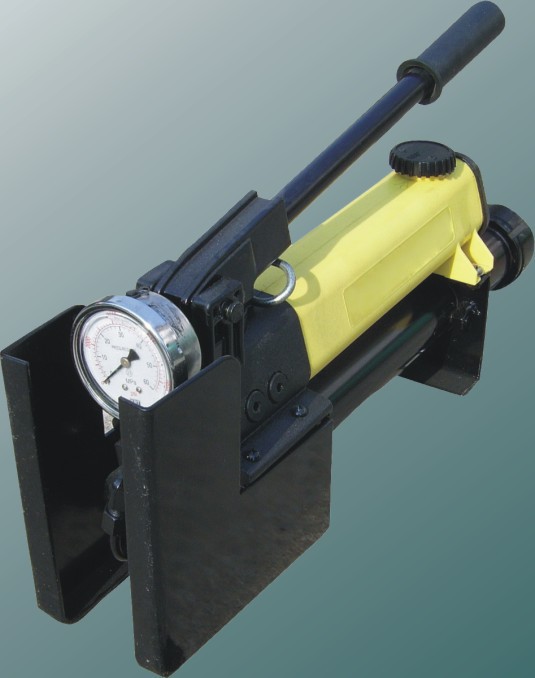
For procurement officers, specifying the right tool is as crucial as the sealant itself. Here’s a quick comparison to guide your next purchase order:
| Tool Type | Primary Use Case | Key Advantage | Typical Sealant Viscosity |
|---|---|---|---|
| Basic Skeleton Gun | DIY, Small Repairs | Low Cost | Low |
| Dripless Caulking Gun | Professional Construction, Glazing | Clean Application, No Drip | Low to Medium |
| Pneumatic Sealant Gun | Factory Assembly, Automotive | Consistent Pressure, Less User Fatigue | Medium to High |
| Bulk Air-Powered Dispenser | High-Volume Industrial Sealing | Maximum Speed & Efficiency | High |
Ningbo Kaxite Sealing Materials Co., Ltd. understands that the right tool unlocks a sealant's full potential. We don't just supply high-performance sealants; we provide application guidance to ensure our products deliver their promised durability and performance, saving you money on material waste and call-backs.
The High Cost of Manual Application on Production Lines
Now, imagine an electronics assembly line where a two-part epoxy must be dispensed onto circuit boards. A worker using an inconsistent manual gun applies too much here, too little there. This variation leads to bonding failures, electrical shorts, and a high rate of product rejects. The manual process is slow, fatiguing, and a major bottleneck. The pain point is scalability and precision in a manufacturing environment.
This is where specialized injectable sealant tools become a capital investment, not just a purchase. Metered, dual-cartridge dispensing guns mix two-part materials perfectly at the nozzle. Fixed-ratio pneumatic applicators ensure every bead is identical. Automated dispensing robots integrate with the production line for ultimate speed and accuracy. These tools transform sealing from a craft into a controlled, repeatable process.
The difference between caulking guns and these advanced systems is like comparing a hand brush to a paint sprayer. For procurement, the evaluation shifts from unit cost to total cost of ownership, factoring in labor savings, reduced rework, and increased throughput. Specifying the correct application system is a critical part of the sealing solution.
| Production Challenge | Basic Caulking Gun Limitation | Industrial Injectable Tool Solution | Impact on Bottom Line |
|---|---|---|---|
| Inconsistent Bead Size | Variable hand pressure | Pneumatic pressure regulation | Reduces material use by 15-25% |
| Mixing Two-Part Sealants | Nearly impossible manually | Dual-cartridge static mixer guns | Eliminates mixing errors & waste |
| Operator Fatigue & Slow Speed | High, limits output | Air-powered or battery-operated guns | Increases application speed by 50%+ |
| Precision in Tight Spaces | Poor control, messy | Angled nozzles & fine-tip dispensers | Improves first-pass yield, reduces clean-up |
Partnering with Ningbo Kaxite Sealing Materials Co., Ltd. means access to technical expertise for these complex applications. We help you match our advanced sealants—from silicones and polyurethanes to specialty epoxies—with the ideal dispensing technology for your production line, ensuring quality and efficiency.
Q&A: What is the difference between caulking guns and other injectable sealant tools?
Q: What is the fundamental difference between a standard caulking gun and other injectable sealant tools?
A: The core difference lies in precision, power source, and intended use. A standard caulking gun is a hand-powered, mechanical lever device designed for low to medium-viscosity sealants in cartridges, typically for construction and DIY. Other injectable sealant tools encompass a wider range, including dripless guns for cleaner application, and powered tools (pneumatic, battery, electric) that provide consistent pressure for higher-viscosity materials and reduce operator fatigue in industrial settings. The latter are engineered for control, repeatability, and volume.
Q&A: What is the difference between caulking guns and other injectable sealant tools in industrial settings?
Q: For factory procurement, what is the key operational difference between caulking guns and other injectable sealant tools?
A: In an industrial context, the key difference is integration and control. Basic caulking guns are standalone, manual tools. Other injectable sealant tools are often part of a system. This includes bulk-feed systems that reduce cartridge waste, dual-component dispensers that automatically mix two-part adhesives, and automated applicators that interface with production machinery. The operational benefit is the transformation of sealing from a variable manual task into a measured, consistent, and often faster process-critical operation, directly impacting product quality and line efficiency.
Partnering for Sealing Success
Choosing the right injectable sealant tool is a strategic decision that protects your projects and your budget. By understanding the spectrum from basic guns to advanced dispensing systems, you empower your teams with efficiency and guarantee the performance of the sealants you specify.
We want to hear from you! What's the biggest sealing challenge you face in your procurement role? Is it finding the right material for extreme temperatures, or matching a sealant to an automated application system? Share your thoughts as we build more resources to solve industry problems.
For expert guidance on sealants and their optimal application, consider Ningbo Kaxite Sealing Materials Co., Ltd.. As a specialist in high-performance sealing solutions, we provide not only quality materials like silicones, polyurethanes, and MS polymers but also the technical support to ensure they are applied correctly for lasting results. Reach out to our team at [email protected] to discuss your specific requirements.
Lewis, J. A., 2006, "Direct Ink Writing of 3D Functional Materials," Advanced Functional Materials, 16(17).
Messler, R. W., 2004, "Joining of Materials and Structures," Elsevier Butterworth-Heinemann.
Petrie, E. M., 2007, "Handbook of Adhesives and Sealants," McGraw-Hill Education, 2nd Edition.
Dillard, D. A., 2010, "Advances in Structural Adhesive Bonding," Woodhead Publishing.
Kinloch, A. J., 1987, "Adhesion and Adhesives: Science and Technology," Springer.
Pocius, A. V., 2012, "Adhesion and Adhesives Technology: An Introduction," Hanser Publications, 3rd Edition.
Adams, R. D., 2005, "Adhesive Bonding: Science, Technology and Applications," Woodhead Publishing.
Brockmann, W., et al., 2009, "Adhesive Bonding: Materials, Applications and Technology," Wiley-VCH.
Shields, J., 1984, "Adhesives Handbook," Butterworth-Heinemann, 3rd Edition.
Wake, W. C., 1982, "Adhesion and the Formulation of Adhesives," Springer, 2nd Edition.
Previous:Is PTFE tubing safe for food?