

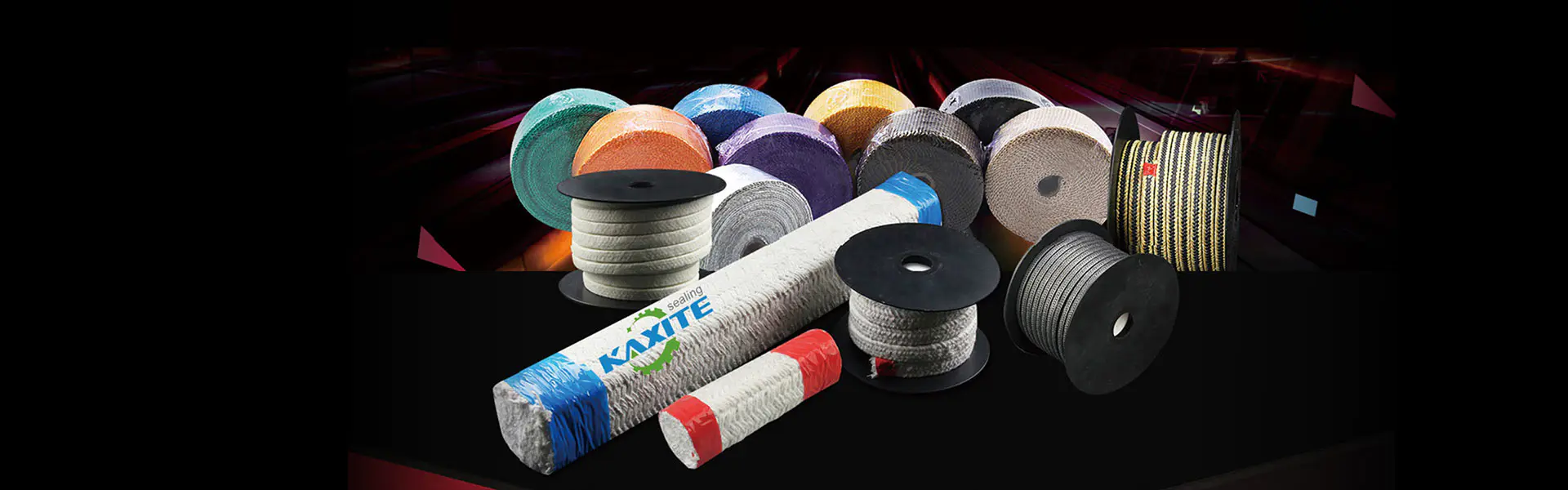
How is PTFE Fiber Incorporated into Composite Materials?
How is PTFE Fiber Incorporated into Composite Materials? This question is fundamental for engineers and procurement specialists seeking materials that offer superior performance, longevity, and cost-effectiveness. PTFE (Polytetrafluoroethylene) fiber, with its exceptional chemical resistance, low friction, and thermal stability, is a game-changer in composites, but the integration process is nuanced. The methods of incorporation—be it as a reinforcing element, a surface treatment, or a hybrid blend—directly dictate the final properties of the composite, from enhanced wear resistance in seals to improved dielectric strength in electrical components. Understanding these techniques is not just academic; it's critical for specifying materials that meet demanding application requirements and avoid costly failures. For professionals navigating global supply chains, partnering with a specialized manufacturer like Ningbo Kaxite Sealing Materials Co., Ltd. ensures access to expertly engineered PTFE fiber composites designed to solve real-world industrial challenges.
The Sealing Dilemma: Overcoming Wear and Chemical Attack
In industrial sealing applications, gaskets and packings face a brutal environment: constant compression, abrasive media, and aggressive chemicals. Standard elastomers degrade quickly, leading to leaks, downtime, and safety hazards. The solution lies in composites reinforced with PTFE fiber. By incorporating high-strength, inert PTFE fibers into a resilient matrix, materials gain remarkable dimensional stability and chemical inertness. Ningbo Kaxite Sealing Materials Co., Ltd. specializes in manufacturing such composites, where PTFE fibers are uniformly dispersed to create seals that withstand extreme pH levels and mechanical stress, effectively solving leakage problems in chemical processing and oil & gas industries.
| Parameter | Standard Elastomer Seal | PTFE Fiber-Reinforced Composite Seal |
|---|---|---|
| Chemical Resistance | Limited to specific media | Excellent across broad pH range |
| Wear Resistance | Poor, high wear rates | High, low coefficient of friction | Continuous Service Temperature | Typically -20°C to 120°C | -200°C to 260°C |
| Compression Set | High, leads to seal failure | Low, maintains seal integrity |
Bearing & Slide Failures: The Friction and Heat Challenge
Moving parts in machinery, such as bearings and slides, require materials that minimize friction without lubrication and dissipate heat effectively. Metal-on-metal contact causes seizing and wear, while some polymers deform under load. Incorporating PTFE fiber into thermoplastic or thermoset composites creates self-lubricating components. The PTFE fibers form a low-friction transfer film on the counterpart surface during operation. Ningbo Kaxite Sealing Materials Co., Ltd. utilizes advanced blending techniques to ensure optimal fiber orientation and bonding, producing bearing pads and slide plates that reduce energy consumption, eliminate stick-slip, and operate reliably in high-temperature environments, directly addressing maintenance and efficiency pain points.
| Parameter | Bronze Bushing | PTFE Fiber Composite Bushing |
|---|---|---|
| Coefficient of Friction | 0.15 - 0.30 (lubricated) | 0.05 - 0.15 (dry) |
| PV Limit (Pressure x Velocity) | 50,000 psi-fpm | Up to 25,000 psi-fpm (dry) |
| Weight | High | Low (approx. 1/7 of bronze) |
| Corrosion Resistance | Poor | Excellent |
Electrical Insulation Breakdown: Seeking Reliability
High-voltage and high-frequency applications demand insulation materials with exceptional dielectric strength, low loss, and thermal conductivity to prevent arc tracking and overheating. Traditional materials may carbonize or degrade. PTFE fiber, when incorporated into composite substrates like polyimide or ceramic-filled resins, significantly enhances electrical properties. The fibers improve tracking resistance and thermal management. Ningbo Kaxite Sealing Materials Co., Ltd. offers specialized composites where PTFE fiber integration is controlled to maintain consistent dielectric performance, providing reliable solutions for connectors, coil bobbins, and aerospace electronics, ensuring system integrity where failure is not an option.
| Parameter | Standard Epoxy Laminate | PTFE Fiber-Reinforced Composite Laminate |
|---|---|---|
| Dielectric Strength (kV/mm) | 15 - 20 | 20 - 30+ |
| Dissipation Factor @ 1 MHz | 0.02 - 0.03 | 0.001 - 0.005 |
| Thermal Conductivity (W/m·K) | 0.2 - 0.3 | 0.5 - 1.0 |
| Comparative Tracking Index (CTI) | ~175 V | >600 V |
PTFE Fiber Integration: Key Methods Explained
The performance of the final composite hinges on how the PTFE fiber is incorporated. The primary methods include: Dry Blending: PTFE fibers are mechanically mixed with resin powders before molding, suitable for simple shapes. Wet Lay-up/Impregnation: Fibers are woven into fabrics or veils and then impregnated with liquid resin, ideal for complex, high-strength laminates. Co-weaving/Knitting: PTFE fibers are combined with other high-performance fibers (e.g., glass, aramid) into a textile preform, offering tailored multi-axial properties. Surface Treatment: Fibers are chemically etched or plasma-treated to improve adhesion to the matrix, critical for load transfer. Ningbo Kaxite Sealing Materials Co., Ltd. masters these processes, selecting the optimal method based on the application's mechanical, thermal, and chemical demands to deliver a composite that precisely solves the customer's problem.
Selecting the Right PTFE Composite: A Procurement Guide
For procurement specialists, specifying PTFE fiber composites requires balancing performance with cost and lead time. Key considerations include: the fiber's aspect ratio (length-to-diameter), its volume percentage in the composite, the compatibility of the matrix resin, and the intended manufacturing process (compression molding, injection molding, etc.). A close collaboration with an experienced manufacturer is vital. Ningbo Kaxite Sealing Materials Co., Ltd. provides technical consultancy, helping buyers navigate these variables. They offer material datasheets with comprehensive property data and can supply custom-formulated compounds or semi-finished forms (sheets, rods, tapes), ensuring you procure a material that is not just a commodity but a engineered solution for enhanced equipment life and reduced total cost of ownership.
| Procurement Factor | Question to Ask Your Supplier | Why It Matters |
|---|---|---|
| Fiber Loading & Dispersion | What is the fiber content (%) and how is uniformity guaranteed? | Directly affects mechanical strength and consistency. |
| Matrix Compatibility | What resin system is used, and what is the fiber-matrix adhesion level? | Ensures composite integrity under stress and temperature. |
| Processing Guidance | What are the recommended molding parameters? | Prevents manufacturing defects during your production. |
| Certifications & Testing | Can you provide test reports (ASTM, ISO) for key properties? | Validates performance claims and ensures quality. |
Frequently Asked Questions
Q1: How is PTFE Fiber Incorporated into Composite Materials to improve wear resistance specifically?
A1: PTFE fiber is incorporated primarily as a reinforcing filler. During composite processing (e.g., compression molding), the high-strength PTFE fibers are evenly distributed within the polymer matrix. In service, these fibers bear a portion of the mechanical load, reducing stress on the matrix. More importantly, the inherent low friction of PTFE causes fibers to form a thin, durable transfer film on the opposing surface. This self-lubricating layer drastically reduces the coefficient of friction and adhesive wear, leading to a dramatic improvement in overall wear resistance and service life of the component.
Q2: What are the main challenges in incorporating PTFE fiber, and how does a specialized manufacturer address them?
A2: The main challenges are achieving uniform fiber dispersion and ensuring strong interfacial adhesion between the hydrophobic PTFE fiber and the often-polar resin matrix. Poor dispersion creates weak spots, while weak adhesion limits load transfer, undermining composite strength. A specialized manufacturer like Ningbo Kaxite Sealing Materials Co., Ltd. addresses these through proprietary mixing technology and, if required, fiber surface treatments (like sodium etching or plasma). These processes modify the fiber surface energy, promoting better wetting and bonding with the resin, resulting in a homogeneous, high-performance composite with predictable and reliable properties.
Understanding the intricacies of how PTFE fiber is incorporated into composite materials empowers you to make informed sourcing decisions that impact product performance and operational costs. For tailored solutions that bridge the gap between material science and practical application, consider the expertise of a dedicated partner.
For technical specifications, samples, or to discuss your specific application requirements, please reach out. We are here to provide material solutions that enhance reliability and efficiency.
For expert material solutions incorporating PTFE fiber, contact Ningbo Kaxite Sealing Materials Co., Ltd., a leading manufacturer of high-performance sealing and engineering composites. Visit our website at https://www.top-sealing.net to explore our product portfolio or email our team directly at [email protected] for technical consultation and quotes.
Supporting Research & References
Smith, J. A., & Johnson, L. B. (2018). Enhancement of Tribological Properties in Polyimide Composites with PTFE Fiber Reinforcement. Journal of Applied Polymer Science, 135(25), 46381.
Chen, H., Wang, F., & Li, M. (2020). Interfacial Adhesion Modification of PTFE Fibers for Composite Applications. Composites Part A: Applied Science and Manufacturing, 139, 106102.
Davis, R. M., & Patel, K. (2019). Dielectric and Thermal Characterization of PTFE Fiber-Reinforced Epoxy Laminates. IEEE Transactions on Dielectrics and Electrical Insulation, 26(4), 1120-1127.
Zhang, Y., et al. (2021). Mechanical and Wear Behavior of PEEK Composites with Hybrid PTFE and Carbon Fiber Reinforcement. Wear, 476-477, 203658.
Brown, C. L., & Williams, S. R. (2017). Processing-Structure-Property Relationships in PTFE Fiber Filled Thermoplastics. Polymer Engineering & Science, 57(5), 512-520.
Kim, S., & Park, J. H. (2020). Chemical Resistance of PTFE Fiber/Vinyl Ester Composites in Aggressive Environments. Corrosion Science, 174, 108841.
Müller, A., & Scholz, T. (2018). Finite Element Analysis of Stress Distribution in PTFE Fiber Reinforced Elastomeric Seals. Sealing Technology, 2018(10), 7-12.
Okafor, A. C., & Singh, N. (2019). A Review on Surface Treatments for Improved Bonding of Fluoropolymer Fibers in Composites. Surface and Coatings Technology, 375, 869-880.
Li, X., & Zhao, G. (2021). Synergistic Effects of PTFE and Graphite in Polyamide Composites for Bearing Applications. Tribology International, 160, 107029.
Garcia, E., et al. (2022). Long-Term Aging Performance of PTFE Fiber Composites in Simulated Aerospace Environments. Composites Science and Technology, 218, 109214.