

How does carbon fiber perform in extreme temperatures?
How does Carbon Fiber perform in extreme temperatures? This is a critical question for engineers, procurement specialists, and product designers across industries like aerospace, automotive, and industrial manufacturing, where material failure is not an option. While renowned for its high strength-to-weight ratio, carbon fiber's behavior under thermal stress is complex. Its performance hinges on the resin matrix and fiber orientation. In extreme cold, it can become brittle, while excessive heat can degrade the polymer binder, leading to a loss of structural integrity. Understanding these limits is essential for selecting the right composite material to ensure safety, durability, and cost-effectiveness in demanding applications.
Article Outline:
- Understanding the Limits: Heat and Cold Challenges
- Sealing Solutions for High-Temp Carbon Fiber Components
- Procurement Guide: Key Parameters for High-Temp CF Applications
- Frequently Asked Questions (FAQ)
Understanding the Limits: Heat and Cold Challenges
Imagine a carbon fiber reinforced polymer (CFRP) component in a jet engine nacelle or a high-performance brake system. The surrounding temperature can soar. The primary weakness isn't the carbon fiber itself, which can withstand intense heat, but the epoxy resin that binds the fibers. Standard epoxies begin to soften around 120-180°C (250-350°F), causing the composite to lose stiffness and strength. In extreme cold, such as in space applications, the matrix can become overly rigid and micro-crack under stress. This thermal cycling between extremes accelerates fatigue and can lead to catastrophic delamination. The solution lies in advanced material science: using high-temperature thermoset resins like bismaleimide (BMI) or polyimide, or even thermoplastic matrices, which push the operational ceiling to 250-315°C (480-600°F) or higher. For sealing and insulating these advanced composites in harsh environments, specialized materials are required. How does carbon fiber perform in extreme temperatures? It excels only when paired with compatible high-performance systems, including seals and gaskets that can match its thermal profile.
Key Parameters for High-Temperature Resin Systems:
| Resin Type | Max Continuous Use Temperature | Key Advantage |
|---|---|---|
| Standard Epoxy | 120-180°C (250-350°F) | Cost-effective, good processing |
| Bismaleimide (BMI) | 230-250°C (450-480°F) | Excellent hot/wet strength |
| Polyimide | 250-315°C (480-600°F) | Exceptional thermal stability |
| PEEK (Thermoplastic) | 250-310°C (480-590°F) | High toughness, chemical resistance |
Sealing Solutions for High-Temp Carbon Fiber Components
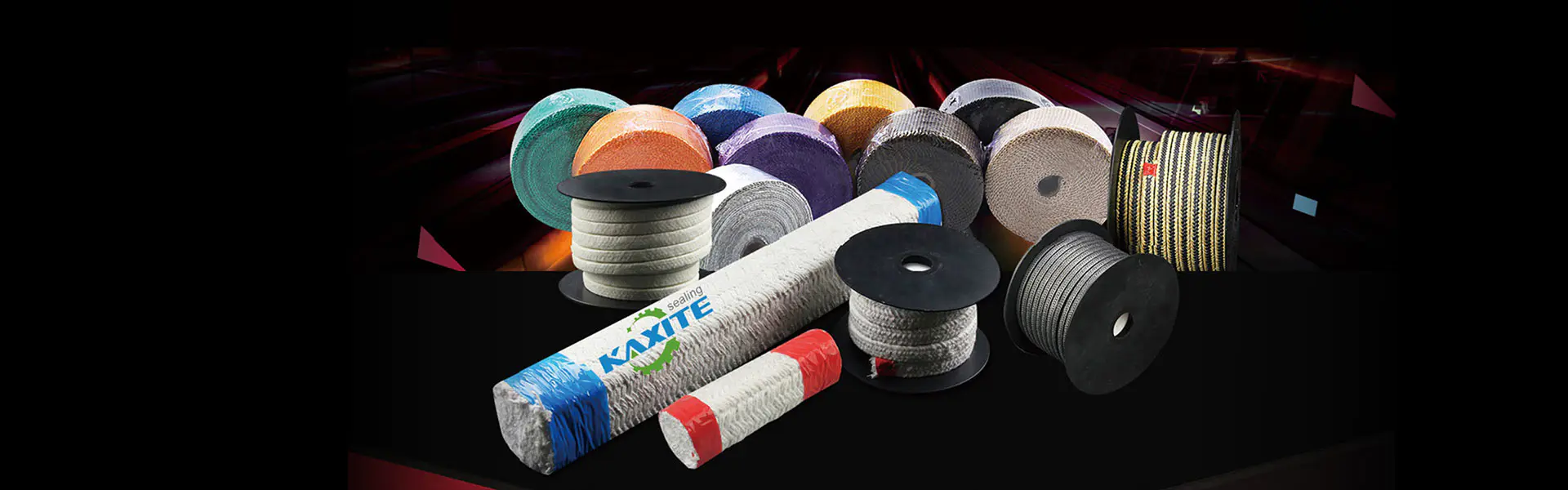
A procurement manager sourcing carbon fiber parts for an oil & gas pipeline sensor faces a sealing nightmare. The CFRP housing must protect electronics from corrosive fluids at high pressure and temperatures exceeding 200°C. A standard rubber gasket would fail rapidly. The solution involves integrating high-temperature, flexible graphite seals or carbon-fiber-reinforced sealing tapes. These materials maintain their sealing integrity across a vast temperature range, from cryogenic levels up to 3000°C (in inert atmospheres), and are chemically inert. They compensate for the different thermal expansion rates between carbon fiber composites and metal flanges, preventing leaks. This is where Ningbo Kaxite Sealing Materials Co., Ltd. provides critical value. We specialize in manufacturing high-performance sealing solutions like flexible graphite tapes and sheets that are perfectly suited to the challenges posed by carbon fiber in extreme environments. Our products ensure that the superior properties of your carbon fiber components are not compromised by sealing failures.
Performance Comparison of High-Temp Sealing Materials:
| Material | Temp Range (Continuous) | Compressibility | Best For |
|---|---|---|---|
| Flexible Graphite | -240°C to 3000°C (inert) | Excellent | Flanges, exhausts, furnaces |
| PTFE (Teflon) | -200°C to 260°C | Good | Chemical, food processing |
| Silicone Rubber | -60°C to 230°C | Very Good | Static seals, insulation |
| Metal Jacketed Gaskets | Up to 600°C+ | Fair | High-pressure steam, reactors |
Procurement Guide: Key Parameters for High-Temp CF Applications
When procuring carbon fiber parts or sealing systems for extreme temperatures, focusing on specifications is non-negotiable. Don't just ask for "carbon fiber"; define the operational envelope. What is the peak temperature, and is it continuous or cyclic? What is the chemical exposure? The answers dictate the resin system and, consequently, the compatible sealing materials. For instance, a BMI-based CFRP part requires a seal that can handle similar temperatures without outgassing or degrading. Always request certified test data for glass transition temperature (Tg), thermal conductivity, and coefficient of thermal expansion (CTE). Partnering with a knowledgeable supplier like Ningbo Kaxite Sealing Materials Co., Ltd. streamlines this process. Our technical team can help cross-reference your carbon fiber specs with our sealing product lines—such as graphite foil, carbon fiber braided rope, or PTFE-coated materials—to guarantee system compatibility and long-term reliability, reducing costly field failures and downtime.
Procurement Checklist for High-Temperature CF Assemblies:
| Parameter to Specify | Why It Matters | Question for Your Supplier |
|---|---|---|
| Max Operational Temperature | Determines resin & sealant choice | Is the Tg of the resin 30-50°C above my max temp? |
| Thermal Cycling Profile | Indicates fatigue resistance needed | How does the seal's recovery rate handle cycles? |
| Chemical Environment | Affects material degradation | Is the sealing material inert to these chemicals? |
| Pressure & Load | Defines seal compression needs | What is the seal's stress relaxation at temperature? |
| CTE Mismatch | Causes seal gap variation | Does the seal material have enough flexibility to bridge the gap change? |
Frequently Asked Questions (FAQ)
Q: How does carbon fiber perform in extreme temperatures compared to metals like aluminum or steel?
A: Carbon fiber composites have a distinct advantage in strength-to-weight ratio but are more temperature-sensitive due to the polymer matrix. Metals generally maintain mechanical properties over a wider temperature range but are heavier. For very high temperatures (e.g., above 500°C), specialized carbon-carbon composites (with a carbon matrix) or metals/ceramics are used. For applications between 150°C and 350°C, advanced resin-based CFRPs paired with high-temp seals from specialists like Ningbo Kaxite offer a superior lightweight solution.
Q: How does carbon fiber perform in extreme temperatures when used for sealing applications itself?
A: Carbon fiber in the form of braided rope or reinforced graphite tape is an excellent sealing material for extremes. It leverages carbon's innate thermal stability. For instance, carbon fiber reinforced graphite packing can seal valves and pumps in temperatures from cryogenic to over 1600°C in oxidizing atmospheres (with limitations). It's resilient, has low creep relaxation, and handles thermal shock well. This makes it a prime choice for sealing the very systems that might use structural CFRP components.
Selecting the right materials for extreme conditions is a complex challenge that directly impacts project safety and ROI. We hope this guide has provided actionable insights. For further discussion on your specific application or to request material samples, please reach out. Your reliable partner for high-temperature sealing challenges is Ningbo Kaxite Sealing Materials Co., Ltd..
For expert guidance and high-performance sealing solutions designed to match the demands of advanced composites in harsh environments, contact Ningbo Kaxite Sealing Materials Co., Ltd. Our team is ready to assist you. Email us at [email protected] for technical support and quotations.
Supporting Research Papers:
Gibson, R.F., 2010. A review of recent research on mechanics of multifunctional composite materials and structures. Composite Structures, 92(12), pp.2793-2810.
Mouritz, A.P., et al., 2001. Review of advanced composite structures for naval ships and submarines. Composite Structures, 53(1), pp.21-41.
Soutis, C., 2005. Carbon fiber reinforced plastics in aircraft construction. Materials Science and Engineering: A, 412(1-2), pp.171-176.
Tsai, S.W. and Hahn, H.T., 1980. Introduction to Composite Materials. Technomic Publishing Co., Lancaster, PA.
Vinson, J.R. and Sierakowski, R.L., 2002. The Behavior of Structures Composed of Composite Materials. 2nd ed. Kluwer Academic Publishers.
Kaw, A.K., 2005. Mechanics of Composite Materials. 2nd ed. CRC Press.
Daniel, I.M. and Ishai, O., 2006. Engineering Mechanics of Composite Materials. 2nd ed. Oxford University Press.
Baker, A.A., et al., 2004. Repair of offshore composite structures. Composites Part A: Applied Science and Manufacturing, 35(7-8), pp.901-909.
Pitchumani, R., et al., 2004. Thermal management of carbon-fiber composites in aerospace applications. Journal of Heat Transfer, 126(5), pp.702-710.
Chung, D.D.L., 1994. Carbon Fiber Composites. Butterworth-Heinemann, Boston.