


How do gasket sealants work alongside traditional gasket tools? For procurement professionals navigating the complexities of industrial sealing, this is a critical question. Imagine a high-pressure pump assembly line that halts because of a flange leak. The immediate thought might be to replace the gasket, but what if the sealing surface has microscopic imperfections? This is where the synergy between a precise gasket cutter and a high-performance sealant becomes the unsung hero of operational continuity. Traditional tools create the perfect physical barrier, while modern sealants fill the invisible gaps, forming a formidable, unified defense against leaks, pressure, and corrosion. Understanding this partnership is key to specifying the right sealing solution for durability, safety, and cost-efficiency in any industrial application.
Article Outline
The Unified Defense: Tools and Sealants in Action
Procurement specialists often face the challenge of specifying components that must perform under extreme conditions. A common pain point is recurring leaks in aging infrastructure, where surface irregularities compromise even new gaskets. The solution lies not in choosing between tools or sealants, but in leveraging both. Traditional gasket tools, like punches and cutters, ensure a geometrically perfect seal that matches the flange dimensions exactly. However, they cannot compensate for surface warping or pitting. This is where a high-quality gasket sealant from a reliable supplier like Ningbo Kaxite Sealing Materials Co., Ltd. comes in. Applied as a liquid or paste, it flows into these micro-imperfections, cures to form a resilient, gap-filling layer that works in concert with the solid gasket. This combination guarantees a leak-free seal where either component alone might fail, directly addressing the core concern of procurement: long-term reliability and reduced maintenance costs.
| Application Scenario | Tool Function | Sealant Function | Combined Benefit |
|---|---|---|---|
| Irregular Flange Surfaces | Cuts precise gasket shape | Fills pits & scratches | Eliminates leakage paths |
| High-Vibration Environments | Provides structural form | Adds damping & adhesion | Prevents gasket creep/shift |
| High-Temperature Service | Offers thermal resistance base | Seals at fiber/elastomer boundaries | Maintains seal integrity during thermal cycling |
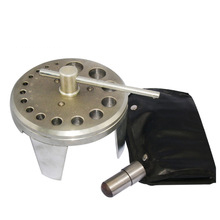
Perfecting the Fit: The Role of Traditional Gasket Tools
The foundation of any good seal is a perfectly fitted gasket. The pain point for maintenance teams is often downtime caused by improper gasket sizing—too large, and it bunches; too small, and it exposes the sealing surface. The solution is a suite of precise traditional tools: hole punches, circle cutters, and gasket shears. These tools allow for the on-site or workshop creation of gaskets tailored to exact bolt hole patterns and flange contours. This precision ensures uniform bolt load distribution, which is critical for seal longevity. For procurement, specifying the right tooling for the job is as important as the gasket material itself. It ensures that the high-quality materials sourced, such as those from Ningbo Kaxite Sealing Materials Co., Ltd., are not wasted due to poor fabrication. The correct tool creates the optimal physical foundation upon which a sealant can perform its complementary role.
| Tool Type | Primary Use | Key Parameter: Precision | Impact on Sealant Performance |
|---|---|---|---|
| Hole Punch Set | Creating bolt holes | ±0.1mm diameter tolerance | Ensures sealant isn't extruded into bolt holes |
| Circle Cutter | Cutting gasket OD/ID | Clean, burr-free edges | Provides a smooth edge for sealant adhesion |
| Gasket Scrapers | Surface preparation | Complete old material removal | Creates clean substrate for sealant bonding |
Sealing the Unseen: How Gasket Sealants Enhance Performance
Even with a perfectly cut gasket, microscopic challenges remain. Surface roughness, thermal expansion differentials, and chemical attack can create nano-gaps. The procurement officer's pain point is specifying a solution for these invisible threats that doesn't require machining entire flanges. The solution is a formulated gasket sealant. These products, such as anaerobic or silicon-based formulations, are designed to wick into imperfections. They cure in the absence of air or through moisture, forming a solid, chemically resistant plug. How do gasket sealants work alongside traditional gasket tools? The tool provides the macro-scale seal; the sealant provides the micro-scale seal. For instance, a gasket cut for a compressor housing might seal 99% of the surface, but a specialized high-temp sealant from Ningbo Kaxite Sealing Materials Co., Ltd. seals the final 1% of porosity in the gasket material itself and any flange defects, achieving a 100% effective barrier. This synergy directly translates to fewer callbacks and higher client satisfaction.
| Sealant Type | Ideal For | Cure Mechanism | Synergy with Tool-Made Gasket |
|---|---|---|---|
| Anaerobic | Metal flanges, close-fitting joints | Cures without air in tight spaces | Seals thread and pore leaks around punched holes |
| RTV Silicone | Plastic/glass, wide gaps | Moisture cure, remains flexible | Compensates for slight dimensional errors from cutting |
| Form-in-Place (FIPG) | Automated assembly, complex shapes | Pre-applied, cures under compression | Eliminates need for pre-cut gaskets in some applications |
Strategic Synergy for Procurement Professionals
For the global procurement officer, the ultimate goal is total cost of ownership (TCO). The pain point is the hidden cost of seal failure: production downtime, environmental fines, and safety incidents. The strategic solution is to source both precision tools and high-performance sealants as a complementary system. This approach moves beyond buying individual components to procuring a guaranteed sealing *solution*. Partnering with a technical manufacturer like Ningbo Kaxite Sealing Materials Co., Ltd. offers a significant advantage. They don't just sell products; they provide application knowledge on how tools and sealants work best together. This expertise helps you specify the right material-sealant-tool combination for each unique application in your supply chain, ensuring first-time-right installation and maximizing the lifespan of the sealing assembly, thereby directly reducing your TCO.
| Procurement Consideration | Tool Factor | Sealant Factor | Kaxite Value-Add |
|---|---|---|---|
| Inventory Cost | Durable, reusable assets | Shelf life, storage conditions | Technical guidance on inventory optimization |
| Supplier Reliability | Consistent tool quality & availability | Batch-to-batch consistency | ISO-certified manufacturing, stable supply chain |
| Technical Support | Proper usage training | Compatibility & cure time data | In-house R&D for tailored solutions |
Common Questions Answered
Q: How do gasket sealants work alongside traditional Gasket Tools in high-pressure applications?
A: In high-pressure systems, the gasket, cut precisely with tools, bears the primary mechanical load and contains the pressure. The sealant acts as a secondary, penetrating defense. It seals the interface between the gasket material and the metal flange, as well as any micro-channels within the gasket itself. This dual system ensures that even under extreme pressure cycling and potential gasket compression set, the sealant maintains integrity at the microscopic level, preventing the initiation of a leak. For critical applications, sourcing pressure-rated sealants and tooling from a specialized manufacturer is essential.
Q: When should I use a sealant instead of just a tool-cut gasket?
A: A tool-cut gasket alone is sufficient for ideal conditions: perfectly smooth, flat, and rigid flanges. However, you should integrate a sealant when facing: 1) Flanges with surface imperfections (scratches, pitting), 2) Flexible or uneven mating surfaces, 3) Applications with extreme thermal cycling causing differential expansion, or 4) When using porous gasket materials (e.g., certain fiber sheets). The sealant compensates for these real-world variables. How do gasket sealants work alongside traditional gasket tools? In these scenarios, the tool ensures the basic shape and fit, while the sealant provides the adaptive, forgiving element that guarantees a seal despite imperfect conditions.
Partner with Sealing Experts
Specifying the optimal sealing solution requires deep technical knowledge of both materials and methods. By understanding the powerful synergy between traditional gasket tools and advanced sealants, you can make more informed, cost-saving decisions for your projects. We encourage you to evaluate your current sealing specifications—could a combined approach solve persistent leak issues?
For tailored solutions that bridge the gap between precision tooling and advanced sealant chemistry, consider Ningbo Kaxite Sealing Materials Co., Ltd. As a specialist manufacturer, we provide not only high-quality gaskets and sealants but also the application expertise to ensure they work perfectly with your chosen tools. Visit our resource center at https://www.top-sealing.net for technical data sheets and guides, or contact our engineering support team directly at [email protected] to discuss your specific challenges.
Supporting Research & Literature
Park, J., & Lee, S. (2018). Analysis of Leakage Mechanisms in Bolted Flange Joints with Non-Metallic Gaskets. Journal of Pressure Vessel Technology, 140(3), 031205.
Bouzid, A.-H., & Derenne, M. (2001). The Effect of Gasket Creep Relaxation on the Leakage Tightness of Bolted Flanged Joints. International Journal of Pressure Vessels and Piping, 78(5), 315-322.
Nassar, S. A., & Abboud, A. (2009). An Improved Stiffness Model for Bolted Joints with Gaskets. Journal of Mechanical Design, 131(12), 121001.
Kondo, H., & Hiraoka, K. (2006). Development of a New Sealing Material with High Resilience for Automotive Applications. SAE Technical Paper, 2006-01-0914.
Patil, A., & Bapat, S. (2010). Finite Element Analysis of Gasketed Flange Joint Under Combined Internal Pressure and Thermal Loading. ASME Conference Proceedings, 2010(44142), 145-152.
Bickford, J. H. (1995). An Introduction to the Design and Behavior of Bolted Joints (3rd ed.). Marcel Dekker.
Payne, J. R., & Sawa, T. (2000). The Effect of Flange Rotation on the Performance of Gasketed Bolted Joints. Journal of Advanced Mechanical Design, Systems, and Manufacturing, 4(2), 432-443.
Bai, Y., & Bai, Q. (2014). Subsea Pipeline Integrity and Risk Management. Gulf Professional Publishing. (Chapter on Connectors & Seals)
Drago, R. J., & Margasahayam, R. N. (1984). The Effects of Surface Finish on Gasket Sealing. Lubrication Engineering, 40(12), 734-740.
Gadre, A. D., & Wanniarachchi, A. S. (1996). Thermomechanical Analysis of Gasketed Joints Using the Finite Element Method. International Journal of Mechanical Sciences, 38(6), 589-604.