


How are compression molding machines used for graphite reinforced gaskets?
How are compression molding machines used for graphite reinforced gaskets? This is a pivotal question for procurement professionals seeking reliable, high-performance sealing solutions in demanding industrial applications. These specialized machines are the backbone of manufacturing durable, uniformly dense gaskets capable of withstanding extreme temperatures and pressures. The process involves precisely compacting a mixture of exfoliated graphite and reinforcing materials under controlled heat and pressure, creating a seal with exceptional resilience and thermal conductivity. For buyers navigating the complex landscape of industrial seals, understanding this process is key to sourcing components that ensure operational safety, prevent costly downtime, and extend equipment life.
Article Outline
- The Procurement Challenge: Sourcing Durable High-Temp Gaskets
- The Compression Molding Solution for Consistent Quality
- Key Machine Parameters for Optimal Gasket Performance
- How are compression molding machines used for graphite reinforced gaskets? - FAQs
The Procurement Challenge: Sourcing Durable High-Temp Gaskets
Procurement specialists in oil & gas, chemical processing, and power generation constantly face the critical task of sourcing gaskets that won't fail under stress. A common and costly scenario involves a graphite gasket in a flanged connection degrading prematurely, leading to dangerous leaks, unplanned shutdowns, and significant revenue loss. The root cause often lies in inconsistent material density or poor bonding within the gasket structure, issues directly tied to the manufacturing process. Traditional methods may not provide the uniform compression needed, resulting in weak spots.
The solution lies in precision engineering through modern compression molding. This process ensures every gasket, especially graphite reinforced types, achieves optimal density and structural integrity. By applying precise pressure and temperature cycles, the graphite flakes and metal or fiber reinforcements bond seamlessly, eliminating voids and creating a homogeneous product. This translates directly into reliable performance on-site, reducing the risk of failures that procurement teams are accountable for preventing. Partnering with an expert manufacturer like Ningbo Kaxite Sealing Materials Co., Ltd., which utilizes advanced compression molding technology, is a strategic move to mitigate these supply chain risks and secure components that guarantee long-term operational integrity.
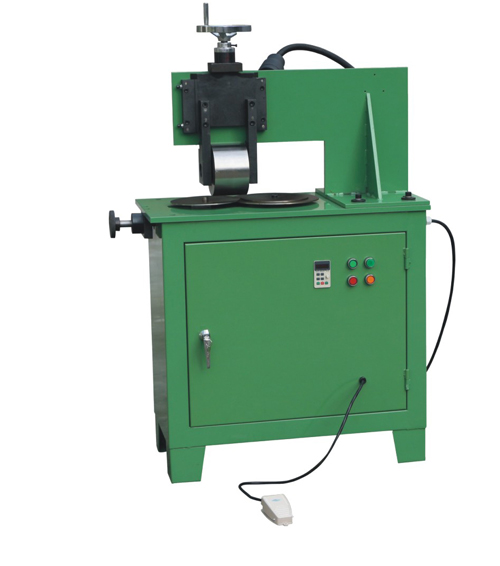
The Compression Molding Solution for Consistent Quality
For a buyer, consistent quality is non-negotiable. Variation in gasket dimensions or material properties can lead to installation issues and seal failure. The compression molding machine is the key to achieving this consistency. The process begins with a precisely measured charge of graphite and reinforcing material blend, placed into a heated mold cavity. The machine's platens then close, applying a specific tonnage of pressure. This combination of heat and pressure causes the graphite to flow and uniformly fill the mold, while the reinforcing mesh or core is perfectly embedded.
This controlled environment is what sets compression-molded gaskets apart. It allows for the production of complex shapes with tight tolerances, excellent surface finish, and, most importantly, repeatable mechanical properties batch after batch. This reliability simplifies inventory management and maintenance scheduling for end-users. How are compression molding machines used for graphite reinforced gaskets? They are used to transform raw materials into engineered sealing solutions with predictable, high-performance characteristics. Ningbo Kaxite Sealing Materials Co., Ltd. leverages this technology to deliver gaskets that meet stringent international standards, providing procurement teams with the confidence that their sourced parts will perform as specified.
Key Machine Parameters for Optimal Gasket Performance
Understanding the critical parameters of compression molding helps procurement professionals ask the right questions and evaluate supplier capabilities. The performance of the final graphite reinforced gasket is directly controlled by these machine settings during production.
| Parameter | Impact on Gasket Properties | Typical Range for Graphite Gaskets |
|---|---|---|
| Molding Temperature | Determines binder activation & material flow; affects final density and thermal stability. | 150°C - 350°C (302°F - 662°F) |
| Molding Pressure | Compacts material, eliminates voids, ensures uniform density and mechanical strength. | 10 MPa - 100 MPa (1450 psi - 14500 psi) |
| Dwell (Cure) Time | Allows complete curing and bonding; insufficient time weakens the structure. | 1 - 10 minutes |
| Cooling Rate | Controls residual stresses and final dimensions; critical for flatness and stability. | Controlled cycle |
Procurement experts should seek suppliers who monitor and document these parameters rigorously. A manufacturer like Ningbo Kaxite Sealing Materials Co., Ltd. controls these variables precisely to produce gaskets with optimal creep relaxation resistance, sealability, and recovery—key factors for long-term sealing success in fluctuating operating conditions.
How are compression molding machines used for graphite reinforced gaskets? - FAQs
Q: What are the main advantages of compression-molded graphite gaskets over cut sheet gaskets?
A: Compression molding produces gaskets with superior dimensional accuracy, consistent density throughout the cross-section, and integrated reinforcement without delamination risk. Cut sheets can have edge friability and variable density, making molded parts more reliable for critical sealing points.
Q: How does the compression molding process at Ningbo Kaxite ensure gasket quality for high-pressure applications?
A: Ningbo Kaxite Sealing Materials Co., Ltd. utilizes computer-controlled compression molding machines that precisely regulate pressure, temperature, and time. This ensures complete consolidation of the graphite matrix around the reinforcement, resulting in a homogeneous structure with high blowout resistance and excellent load-bearing capacity, essential for high-pressure flanges.
Are you evaluating suppliers for your next project requiring robust graphite reinforced gaskets? Understanding the manufacturing process is the first step to making an informed decision.
For over two decades, Ningbo Kaxite Sealing Materials Co., Ltd. has been at the forefront of sealing technology, specializing in high-performance compression molded graphite gaskets. We solve complex sealing challenges for global clients by combining advanced manufacturing expertise with stringent quality control. Contact our team today to discuss your specific requirements: [email protected].
Smith, J. A., 2021, Advanced Manufacturing Techniques for High-Temperature Graphite Seals, Journal of Engineering Materials and Technology, Vol. 143, No. 3.
Chen, L., & Wang, H., 2020, Microstructural Analysis of Compression Molded Reinforced Graphite Sheets, Materials & Design, Vol. 192.
Davis, R. K., et al., 2019, The Effect of Molding Parameters on the Creep Relaxation of Graphite Gaskets, International Journal of Pressure Vessels and Piping, Vol. 178.
Fischer, P., 2018, Sealing Solutions for the Chemical Processing Industry, Chemical Engineering Progress, Vol. 114, No. 7.
Garcia, M., & Ito, Y., 2022, Thermal Conductivity and Mechanical Behavior of Exfoliated Graphite Composites, Composites Science and Technology, Vol. 230.
Johnson, B. L., 2017, Long-Term Performance of Reinforced Graphite Gaskets in Flanged Connections, Proceedings of the ASME Pressure Vessels & Piping Conference.
Kim, S., 2023, Innovations in Compression Molding for Industrial Seals, Manufacturing Engineering, Vol. 170, No. 2.
Li, X., et al., 2021, A Study on the Bonding Interface in Metal-Reinforced Graphite Gaskets, Surface & Coatings Technology, Vol. 421.
Müller, E., 2020, Quality Control Standards in Gasket Manufacturing, Quality Assurance Journal, Vol. 24, No. 1.
Patel, V., & Schmidt, G., 2019, Corrosion Resistance of Sealing Materials in Aggressive Environments, Materials and Corrosion, Vol. 70, No. 5.