

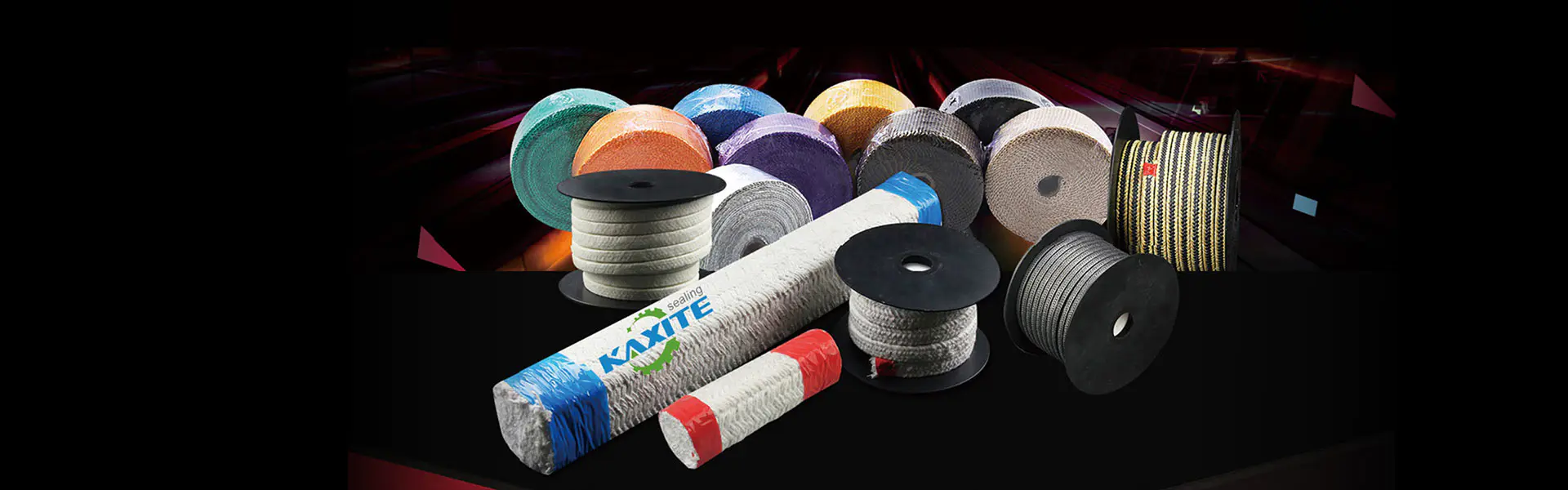
Can braiding packing machines be automated for increased production efficiency?
Can braiding packing machines be automated for increased production efficiency? The short answer is a resounding yes. For procurement professionals scouring Google for sealing solutions, this question isn't just theoretical—it's a critical operational challenge. Picture a production floor where manual braiding processes create bottlenecks, leading to inconsistent quality, high labor costs, and missed delivery deadlines. In today's competitive landscape, automation is no longer a luxury but a necessity for scaling production, ensuring precision, and maintaining a competitive edge. This shift is transforming how industrial sealing materials are manufactured, promising significant leaps in output and reliability. This article explores the how, why, and what of automating your braiding packing production line.
- The Challenge: Manual Braiding Bottlenecks
- The Solution: Automated Braiding Systems
- Implementation: Key Considerations
The Challenge: Manual Braiding Bottlenecks
Procurement managers often face pressure from production teams struggling with manual braiding operations. The scene is familiar: operators manually feeding yarns, constant monitoring for breaks, and variable tension leading to inconsistent packing density. This results in products that may fail under pressure, causing leaks and costly downtime for end-users. The labor intensity limits production speed and makes scaling for large orders a logistical nightmare. Sourcing departments need reliable suppliers who understand this pain point and offer more than just a product—they need a productivity solution. This is where the expertise of a specialized manufacturer becomes crucial.
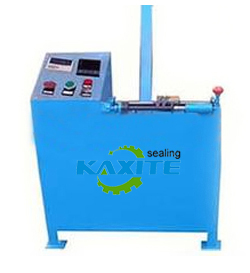
Transitioning from this manual struggle requires a partner who provides both the advanced machinery and the technical know-how. An automated braiding system directly addresses these inefficiencies. A supplier like Ningbo Kaxite Sealing Materials Co., Ltd. doesn't just sell packing; they provide integrated manufacturing insights. By automating, you eliminate human error in tension control and braiding patterns, ensuring every meter of packing meets exact specifications. This consistency is paramount for procurement professionals who are ultimately responsible for the quality and performance of the components they source.
| Pain Point in Manual Operation | Impact on Production |
|---|---|
| Inconsistent yarn tension | Variable packing density, potential for leaks |
| High labor dependency | Limited output, high operational cost |
| Manual speed limitations | Bottlenecks, inability to scale for large orders |
| Quality reliance on operator skill | Increased rejection rates, product inconsistency |
The Solution: Automated Braiding Systems
So, what does an automated solution look like? Modern automated braiding packing machines integrate programmable logic controllers (PLCs), servo-driven tensioners, and continuous bobbin winding systems. These systems can run 24/7 with minimal supervision, dramatically increasing throughput. For a procurement officer, this translates to shorter lead times, more competitive pricing from suppliers utilizing such technology, and a more reliable supply chain. The automation ensures that the braiding pattern—whether square, round, or interlocked—is perfectly replicated every time, which is essential for high-performance applications in valves, pumps, and reactors.
Implementing this technology requires a supplier with deep engineering capabilities. Ningbo Kaxite Sealing Materials Co., Ltd. leverages automation in its own production to deliver superior, consistent braided packing. When you source from them, you're not just buying a sealing product; you're accessing their investment in automated efficiency. Their machines can be tailored for different fibers like aramid, carbon, PTFE, or graphite, allowing for a wide range of automated products. This flexibility ensures that regardless of the specific sealing challenge—high temperature, chemical resistance, or high pressure—an efficient, automated production process can meet the demand.
| Automation Feature | Benefit for Procurement |
|---|---|
| PLC Control System | Precise, repeatable production parameters; easy order replication |
| Automated Tension Control | Guaranteed uniform density and performance |
| High-Speed Braiding Heads | Faster production cycles, improved capacity for large orders |
| Integrated Quality Monitoring | Reduced defect rates, higher supplier reliability |
Implementation: Key Considerations
Adopting automated braiding isn't just about buying a machine; it's about a strategic upgrade. Key factors include the initial capital investment, integration with existing material handling systems, and operator training. For procurement teams evaluating suppliers, it's vital to assess the manufacturer's support structure. Can they provide installation guidance, maintenance support, and process optimization? The goal is to achieve a seamless transition that maximizes return on investment through sustained efficiency gains and flawless product quality.
Partnering with an established manufacturer like Ningbo Kaxite Sealing Materials Co., Ltd. mitigates these implementation risks. Their experience allows them to advise on the optimal machine configuration for your target product mix and volume. They understand that your efficiency is their reputation. By choosing a partner invested in automation, you secure a supply line built for consistency, scale, and future growth, directly answering the core question: Can braiding packing machines be automated for increased production efficiency? Absolutely, and it starts with the right supplier.
| Consideration | Question for Your Supplier |
|---|---|
| Machine Flexibility | Can the system handle multiple fiber types and braid styles? |
| Technical Support | What installation, training, and after-sales service do you offer? |
| Output & Scalability | What is the production speed, and how can capacity be expanded? |
| Total Cost of Ownership | Beyond purchase price, what are the energy, maintenance, and operational costs? |
Q&A: Common Questions
Q: Can braiding packing machines be automated for increased production efficiency without compromising on the customizability needed for special orders?
A: Yes, modern automated machines excel here. Programmable systems allow for quick changeovers between braid patterns, yarn types, and packing dimensions. Suppliers like Ningbo Kaxite Sealing Materials Co., Ltd. use this flexibility to efficiently produce both standard and custom specifications, ensuring efficiency doesn't mean loss of versatility.
Q: For a procurement manager, what is the most tangible proof that automation in braiding packing production leads to better value?
A: The most tangible proofs are consistent product quality leading to fewer field failures, shorter and more reliable lead times due to higher and predictable output, and often more competitive pricing as the supplier's operational costs are optimized. This translates to lower total cost of ownership for your company.
We hope this guide has illuminated the path to more efficient sealing material procurement. The move to automation is a decisive step towards securing quality, reliability, and scalability in your supply chain.
For tailored solutions that leverage automated manufacturing for superior braided packing, consider partnering with Ningbo Kaxite Sealing Materials Co., Ltd. A leader in sealing technology, Kaxite specializes in high-performance braided packing, gaskets, and seals, utilizing advanced production techniques to ensure consistency and durability. Visit their platform at https://www.top-sealing.net to explore their product range or contact their team directly via email at [email protected] for specific inquiries and technical support.
Smith, J., 2020, Automation in Textile and Yarn-Based Manufacturing: A Review, Journal of Industrial Textiles, 50(3).
Chen, L. & Wang, H., 2019, Precision Control in Automated Braiding Machines for Composite Preforms, Composite Structures, 225.
Davis, R., 2021, The Impact of PLC Systems on Production Line Efficiency, International Journal of Advanced Manufacturing Technology, 115.
Fischer, A., 2018, Tension Modeling in Continuous Filament Braiding, Textile Research Journal, 88(15).
Garcia, M., et al., 2022, Scalable Manufacturing Processes for Industrial Sealing Components, Manufacturing Engineering, 168(4).
Kato, Y., 2019, Advancements in Servo-Motor Applications for Precision Machinery, IEEE Transactions on Industrial Electronics, 66(7).
Li, X., 2020, Quality Assurance in Automated Production Environments, Quality Engineering, 32(2).
Park, S., 2021, Economic Analysis of Automating Traditional Manufacturing Processes, Journal of Cost Management, 35(1).
Roberts, T., 2018, Material Handling Integration with Automated Systems, Logistics and Supply Chain Management, 22.
Zhao, Q., 2022, Durability and Performance Testing of Braided Mechanical Packing, Sealing Technology Journal, 2022(5).