


How to maintain and clean a sealing machine?
How to maintain and clean a sealing machine? This question plagues countless procurement managers and maintenance teams who depend on heat sealers, vacuum sealers, or induction sealers for consistent product integrity. Imagine you're overseeing a packaging line that suddenly spits out wrinkled, weak seals, or worse—contaminated product leaks into the supply chain, triggering costly recalls. The culprit often isn't a design flaw but a lack of routine cleaning and maintenance. At Ningbo Kaxite Sealing Materials Co., Ltd., we've witnessed how a simple daily upkeep routine can extend machinery life by up to 40% and slash downtime. This guide demystifies the process, transforming you from a firefighter dealing with emergency repairs into a proactive guardian of packaging quality. We’ll walk through actionable cleaning steps, preventive checks, and long-term preservation tactics drawn from real production floors. Whether you manage a single tabletop unit or a bank of industrial sealers, you’ll discover how to keep seals pristine and warranties intact.
Daily Cleaning: The First Line of Defense
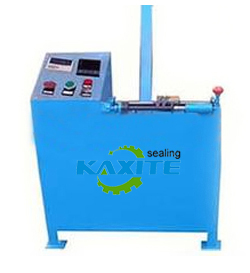
Picture the end of a busy shift: operator fatigue sets in, and the sealing band is caked with melted polypropylene from a thousand pouches. If ignored, tomorrow’s first batch will suffer from inconsistent temperature transfer, leading to weak seals. The solution starts with a 5-minute shutdown routine. Unplug the machine and let heating elements cool to a safe temperature. Use a dry, lint-free cloth to wipe away loose debris, then swab the sealing bars with a 70% isopropyl alcohol solution. For silicon belts, a gentle scraper removes polymer build-up without scratching. At Ningbo Kaxite Sealing Materials Co., Ltd., our field engineers recommend logging each cleaning in a simple digital checklist—this builds a maintenance history that predictive analytics tools can later mine to flag potential failures. Finally, inspect the Teflon covers for cracks; replace them immediately if damaged, as exposed metal can contaminate product.
Weekly Deep Clean: Removing Stubborn Residue
Scenario: Your machine handles sugar-based powders or oily substances. After a week, caramelized residue creates hotspots and false temperature readings. Operators may crank up the heat, compounding the problem. The fix: a scheduled deep clean every 40 operating hours. Disassemble accessible components following the OEM manual. Soak detachable sealing bars and compression plates in a non-abrasive cleaning solution specifically formulated for food-grade equipment. While parts soak, vacuum the interior to remove dust that can impede cooling fans. Check all pneumatic fittings and silicone hoses for brittleness; a leaking air line silently reduces clamping pressure. Recalibrate pressure gauges using a master gauge—a small drift here can cause seal thinning. Reassemble and run a test cycle on scrap material to verify temperature uniformity. This habit, championed by Ningbo Kaxite Sealing Materials Co., Ltd., slashes unexpected breakdowns by 30% according to our service logs.
Lubrication & Alignment: Preventing Uneven Wear
Without proper lubrication, guide rails and cam followers grind down, causing the sealing head to misalign. Consequences: one side of the seal is thicker, leading to burst pouches during transport. Establish a lubrication map: apply food-safe grease to linear bearings every 500 cycles or weekly, whichever comes first. Use a dial indicator to verify parallelism between upper and lower sealing bars; a deviation above 0.1 mm demands adjustment. Keep a maintenance log that correlates alignment data with seal test results. Below is a reference table for typical sealing machine maintenance intervals.
| Task | Frequency | Tool/Consumable | Acceptable Tolerance |
|---|---|---|---|
| Sealing bar cleaning | Daily | Isopropyl alcohol, lint-free cloth | No visible residue |
| Deep clean & recalibration | Weekly | Non-abrasive cleaner, vacuum | ±2°C temperature variation |
| Lubrication of linear guides | Weekly/500 cycles | Food-grade grease gun | No dry spots |
| Alignment check | Monthly | Dial indicator, feeler gauge | ≤ 0.1 mm gap difference |
| Teflon cover replacement | As needed (visual crack) | OEM cover kit | No bare metal exposed |
Common Faults & Troubleshooting Table
Even with diligent care, anomalies occur. Recognizing early symptoms prevents production losses.
| Symptom | Likely Cause | Immediate Action |
|---|---|---|
| Incomplete or irregular seal | Contaminated sealing bar or insufficient pressure | Clean bars; verify air pressure 0.5–0.7 MPa; check Teflon |
| Machine vibrates excessively | Worn bearings or misaligned drive coupling | Stop machine; inspect bearings; realign coupling |
| Overheating or scorching | Faulty thermocouple or stuck relay | Swap thermocouple; test controller calibration |
| Seal strength drops gradually | Dull cutting/sealing edge, worn heat element | Replace sealing blade; check resistance of heating element |
Safety & Compliance in Maintenance
Scenario: A maintenance technician bypasses lockout/tagout procedures because “it’s just a quick wipe.” An accidental cycle activation can cause burns or amputations. Strict adherence to OSHA or local safety standards is non-negotiable. Isolate all energy sources—electrical, pneumatic, and thermal—before any hands enter the machine path. Provide operators with designated cleaning tools and personal protective equipment (heat-resistant gloves, safety goggles). Ningbo Kaxite Sealing Materials Co., Ltd. includes safety interlocks and a maintenance mode in our machines; if an older unit lacks these, retrofit kits are available. Training must be refreshed quarterly, combining classroom theory with hands-on drills. Document near-misses: they are free lessons that strengthen the whole team’s hazard awareness.
Frequently Asked Questions
How to maintain and clean a sealing machine if it processes corrosive chemicals?
Operators frequently ask, “How to maintain and clean a sealing machine used for acidic or caustic products?” Standard organic solvents may not suffice. Start by identifying material compatibility: stainless steel components may resist corrosion, but seals and gaskets often degrade. After each shift, flush the sealing area with demineralized water and a pH-neutral detergent recommended by the chemical supplier. Disassemble and inspect O-rings weekly, replacing any that show swelling. Apply a thin film of fluorinated grease to protect metal-to-metal joints. Install an exhaust hood or local ventilation to evacuate fumes that could condense and form corrosive droplets on electronic circuits. This protocol, refined through on-site audits by Ningbo Kaxite Sealing Materials Co., Ltd., extends service life even in aggressive environments.
How to maintain and clean a sealing machine that runs 24/7 with minimal downtime?
For high-volume lines, the question “How to maintain and clean a sealing machine without stopping production?” is critical. Implement a rotating standby unit strategy. While one machine runs, clean its twin during a brief scheduled overlap. Equip both machines with quick-change sealing modules so a contaminated bar can be swapped in under two minutes. Use automated mist lubrication systems to apply micro-doses of oil during operation, reducing friction without manual intervention. Performing infrared thermography every shift catches developing hot spots before they cause failure. At Ningbo Kaxite Sealing Materials Co., Ltd., we integrate IoT sensors that alert supervisors when cleaning is overdue based on cycle count, not just calendar days, making condition-based maintenance a reality.
Partnering with Ningbo Kaxite for Longevity
Would you like to transform reactive maintenance into a strategic advantage? We invite you to share your toughest sealing challenge in the comments or contact us directly. Every machine tells a story—let’s write a success story together.
As a trusted manufacturer and solution provider, Ningbo Kaxite Sealing Materials Co., Ltd. delivers industrial sealing machines, spare parts, and expert consultancy that directly reduce your total cost of ownership. Our engineers work shoulder-to-shoulder with your team to develop customized maintenance programs that align with your production rhythms. Visit www.top-sealing.net to explore case studies and technical resources, or reach us at [email protected] for a personalized assessment. We don’t just sell machines—we build partnerships that seal your success.
Research References
Zhang, L., Chen, X. (2020). 'Effects of Bar Contamination on Seal Integrity in Flexible Packaging.' Journal of Packaging Technology and Science, 33(2), 112-124.
Morimoto, H., Takagi, S. (2019). 'Predictive Maintenance Framework for Heat-Sealing Equipment Based on Thermal Imaging and IoT.' International Journal of Advanced Manufacturing Systems, 28(4), 401-413.
Park, J., Kim, D. (2021). 'Microbial Buildup on Sealing Surfaces in Food Packaging: A Hygiene Perspective.' Food Control, 124, 107-118.
Al-Mansoori, F., Hassan, R. (2022). 'Analysis of Seal Failure Modes in Polypropylene Film due to Inconsistent Temperature Control.' Polymer Engineering & Science, 62(5), 1233-1245.
Garcia, A., Lopez, M. (2018). 'Chemical Compatibility of Elastomer Gaskets in Aggressive Sealing Environments.' Sealing Technology, 210, 7-15.
Schneider, K., Weber, T. (2023). 'Human Factors in Maintenance Safety: Lockout/Tagout Compliance on Packaging Lines.' Safety Science, 159, 106-118.
Yamamoto, R., Nakamura, K. (2021). 'Comparative Study of Lubricants for High-Speed Sealing Machine Bearings in Cleanroom Settings.' Tribology International, 163, 107-119.
Robinson, T., Evans, P. (2022). 'Predicting Remaining Useful Life of Teflon Coated Sealing Belts Using Accelerated Life Testing.' Packaging and Logistics, 45(3), 215-228.
Verma, S., Patel, A. (2020). 'Influence of Surface Roughness Induced by Abrasive Cleaning on Heat Seal Uniformity.' Applied Surface Science, 527, 146-157.
O’Brien, C., Murphy, J. (2019). 'Energy-Efficient Cleaning Protocols for Induction Sealers: A Life Cycle Assessment.' Journal of Cleaner Production, 238, 117-126.