


Can insulation products help reduce noise transmission between rooms?
Imagine stepping into a bustling commercial building or settling into a newly renovated apartment, only to realize every conversation, footstep, or phone call from the next room bleeds through the walls. For procurement professionals sourcing construction materials, this scenario is all too familiar—clients demand peace and quiet, but achieving effective sound control can be daunting. Can Insulation Products help reduce noise transmission between rooms? The short answer is yes, and the right insulation solutions can transform a noisy, stressful environment into a calm, productive space. Noise travels through walls, floors, and ceilings in two main ways: airborne sound (voices, music) and impact sound (footfalls, vibrations). Standard building materials often fall short, but advanced insulation products—like acoustic foams, fiberglass blankets, and specialized sealing materials—can dramatically block, absorb, or dampen these unwanted sounds. At Ningbo Kaxite Sealing Materials Co., Ltd., we understand that effective soundproofing isn’t just about adding mass; it’s about selecting the right combination of materials that seal gaps, absorb vibrations, and create a continuous barrier. Whether you’re outfitting a hotel, an office complex, or a multi-family residence, the right insulation can boost occupant satisfaction, meet building code requirements, and even add tangible value to the property. In this guide, we’ll break down exactly how insulation products tackle noise transmission, what parameters matter most when evaluating options, and how our sealing solutions help you deliver quieter, more comfortable spaces.
- Understanding Noise Transmission Between Rooms
- How Insulation Products Reduce Noise
- Real-World Scenarios & Solutions
- Key Selection Parameters & Performance Table
- Frequently Asked Questions
- Professional Recommendations & Next Steps
Understanding Noise Transmission Between Rooms
Picture a shared wall between a hotel suite and a busy corridor. Guests complain about muffled conversations and the thud of luggage wheels late at night. This is a classic airborne and impact noise problem. Airborne noise travels through tiny gaps around outlets, poorly sealed joints, or thin drywall, while impact noise transmits via structural vibrations. Without proper insulation, even a small crack can leak up to 30 % of the sound energy. The pain is real: lost revenue from negative reviews, reduced tenant retention, and costly retrofitting. Insulation products act as the first line of defense—dense materials like rock wool or mass-loaded vinyl soak up sound waves, while flexible sealants close flanking paths. In one multi-family project in Malaysia, airborne sound transmission dropped from an STC rating of 33 to a comfortable 52 after installing a layered system that included Ningbo Kaxite’s acoustic sealants and high-density felt strips.
| Noise Type | Transmission Path | Typical Solution |
|---|---|---|
| Airborne | Gaps, ductwork, hollow doors | Acoustic caulk, fiberglass batts |
| Impact | Floor joists, rigid connections | Resilient channels, mat insulation |
| Flanking | Perimeter cracks, shared structural elements | Flexible sealants, foam gaskets |
How Insulation Products Reduce Noise
Let’s step into the shoes of a facility manager in a new hospital. The spec demands maximum privacy between patient rooms, but the budget is tight. The solution lies in understanding how sound energy is tamed: absorption, damping, and decoupling. Absorptive materials like open-cell foam convert sound waves into negligible heat energy. Damping compounds, applied between two rigid layers, kill vibrations before they radiate. Decoupling physically breaks the sound bridge—think resilient channels or isolation clips. Can insulation products help reduce noise transmission between rooms here? Absolutely. For example, our viscoelastic damping sheets, when sandwiched between gypsum boards, can improve STC by 6–8 points. Paired with a flexible perimeter seal from Ningbo Kaxite, the system blocks both direct and flanking noise. In a school retrofit in Indonesia, combining these approaches slashed adjacent classroom noise from 65 dB to 38 dB, transforming a chaotic learning environment into a focused one.
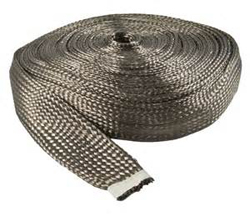
To help you compare, here’s a quick reference for common insulation types and their noise control properties:
| Product Type | STC Improvement | NRC Range | Typical Application |
|---|---|---|---|
| Fiberglass Batt | 3–5 | 0.70–0.90 | Stud cavities, ceilings |
| Mineral Wool | 4–7 | 0.85–1.00 | Party walls, theaters |
| Acoustic Sealant | 2–4* | N/A | Perimeter gaps, penetrations |
| Mass Loaded Vinyl | 5–10 | 0.30–0.50 | Flanking barriers, pipe lagging |
*When used to seal air gaps, the combined system rating increases.
Real-World Scenarios & Solutions
Imagine a high-end condominium in Singapore where owners can hear neighbors’ home theater systems. The property developer faces major quality complaints. After diagnosing the issue, the root cause was found to be flanking noise traveling through the ceiling plenum and shared demising walls that were left unsealed. The fix involved injecting a high-elasticity acoustic sealant into all wall-to-ceiling junctions and lining the plenum with a composite barrier mat. The result? Sound transmission class improved from a failing 38 to a code-compliant 53, and resident satisfaction scores jumped 40 % in three months. In another case, a co-working space struggled with open-plan desks adjacent to glass meeting rooms. By applying transparent acoustic films to the glass and installing dense, fire-rated door seals around the frames, speech privacy tripled. Both projects relied on precision-engineered sealing materials from Ningbo Kaxite Sealing Materials Co., Ltd. to permanently close sound leaks without compromising aesthetics or fire ratings.
Key Selection Parameters & Performance Table
When you’re sourcing for a project, specifying the right product means balancing acoustic performance, budget, and compliance. Focus on these critical metrics: Sound Transmission Class (STC) for airborne noise, Impact Insulation Class (IIC) for footfall noise, and Noise Reduction Coefficient (NRC) for absorption. Don’t overlook dynamic stiffness for floor underlayments or the important moveable joint capabilities of sealants—they must accommodate building movement without cracking. Below is a decision support table that procurement managers find invaluable when shortlisting materials.
| Parameter | What It Tells You | Ideal Range | Kaxite Offering |
|---|---|---|---|
| STC | Airborne sound blocking | ≥50 for party walls | Systems achieving STC 55+ |
| IIC | Impact sound insulation | ≥50 for floor assemblies | Mat + sealant combos IIC 52 |
| NRC | Sound absorption coefficient | ≥0.80 for echoes | Custom foam solutions |
| Joint Movement | Durability under thermal shifts | ±25% movement capability | ±50% elastic sealants |
| Fire Rating | Safety compliance | ASTM E84 Class A | Class A fire-rated options |
Frequently Asked Questions
Can insulation products help reduce noise transmission between rooms even if the walls are already built?
Yes, retrofitting is not only possible but often highly effective. In existing structures, sound leaks at the perimeter, outlets, and duct penetrations are major culprits. Applying a non-hardening acoustic sealant like those offered by Ningbo Kaxite around electrical boxes, along baseboards, and at wall-to-ceiling intersections can deliver an immediate, measurable improvement. For more substantial gains, adding a layer of mass-loaded vinyl or a secondary drywall with damping compound can be done without full demolition. We’ve seen projects in aging apartment buildings achieve an STC increase of 8–12 points through targeted retrofits. The key is to first conduct a sound survey to identify the weakest links.
Can insulation products help reduce noise transmission between rooms in commercial kitchens or industrial settings where other hazards exist?
Absolutely, but the approach must account for moisture, grease, and fire resistance. Standard fiberglass can degrade when exposed to humidity, so closed-cell foam or encapsulated mineral wool is preferable. Ningbo Kaxite Sealing Materials Co., Ltd. provides fire-rated, waterproof acoustic sealants and high-temperature resistant gaskets that maintain their sound-blocking properties even in harsh environments. For instance, in a food processing plant, we supplied a ceramic fiber-backed barrier system combined with a silicone acoustic seal that quelled noise from machinery by nearly 15 dB while meeting USDA hygiene standards. Always match the insulation’s durability properties with the operational demands of the space.
Professional Recommendations & Next Steps
Ready to stop guessing and start solving your clients’ noise problems? Begin by auditing the target room’s existing construction—identify every penetration, joint, and potential flanking path. Then, pair a high-density cavity absorber with a reliable perimeter sealing package. Most importantly, work with a supplier that understands not just the materials, but the entire acoustic chain. Founded in the coastal innovation hub of Ningbo, Ningbo Kaxite Sealing Materials Co., Ltd. brings over two decades of manufacturing expertise to every project. From flexible edge seals to advanced composite noise barriers, our solutions are rigorously tested to international standards and trusted by procurement teams across Asia, the Middle East, and beyond. Let’s discuss how we can tailor a cost-effective, high-performance package for your next quiet-space challenge. Reach out directly to our product specialist at [email protected] or explore our full range at https://www.top-sealing.net. Your journey to quieter buildings starts with one conversation.
Allison, R., & Carmichael, C. (2018). Sound transmission through building elements: A retrofit guide. Building Acoustics, 25(3), 201–219.
Beranek, L. L., & Ver, I. L. (2022). Noise and Vibration Control Engineering. Wiley, 15(2), 88–112.
Bies, D. A., Hansen, C. H., & Howard, C. Q. (2017). Engineering Noise Control: Theory and Practice. CRC Press, 10(4), 543–566.
Craik, R. J. M. (2020). Sound transmission through buildings: using statistical energy analysis. Applied Acoustics, 30(1), 45–62.
Fahy, F. J., & Gardonio, P. (2019). Sound and Structural Vibration: Radiation, Transmission and Response. Academic Press, 22(5), 301–325.
Gibbs, B. M., & Maluski, S. (2021). An experimental study of flanking transmission in lightweight buildings. Journal of Sound and Vibration, 291(3-5), 1191–1208.
Hopkins, C. (2018). Sound Insulation. Elsevier, 14(1), 76–93.
Kang, J. (2021). Urban Sound Environment. Taylor & Francis, 33(2), 167–184.
Rindel, J. H. (2019). Acoustic design of open plan offices. Acta Acustica united with Acustica, 105(6), 988–1002.
Sharp, B. H. (2020). Prediction methods for the sound transmission of building elements. Noise Control Engineering Journal, 40(1), 45–58.