


How long does vegetable fiber packing take to decompose?
Imagine you’ve just installed sealing components in a high-pressure pump, and your operations manager asks a simple but critical question: How long does Vegetable Fiber Packing take to decompose? This isn't just an environmental curiosity—it’s a performance and maintenance concern. In industrial settings, vegetable fiber packing is prized for its resilience, low friction, and eco-friendly profile, but its decomposition timeline varies widely. Under typical dry storage, it remains stable for years. Once exposed to moisture, moderate temperatures, and microbial activity—such as in a leaking stuffing box or outdoor valve—degradation can begin within 3 to 6 months, with full breakdown taking 1 to 3 years. However, in aggressive chemical environments or extreme heat, the material may carbonize or lose integrity much faster. Understanding these variables is vital for procurement specialists who need to balance service life, sustainability, and cost. At Ningbo Kaxite Sealing Materials Co., Ltd., we’ve engineered our vegetable fiber packing to resist premature decay while still being compostable under controlled conditions, giving you both reliability and a greener footprint.
1. How Long Does Vegetable Fiber Packing Really Take to Decompose in the Field?
Procurement engineers often ask: How long does vegetable fiber packing take to decompose once installed? The honest answer is “it depends.” In a dry, indoor valve with minimal temperature fluctuation, the packing may show no noticeable degradation for over 5 years. But in a wastewater pump where it’s constantly wet, microbial digestion starts softening the fibers within weeks. Field data from water treatment facilities shows that standard vegetable fiber packing in continuous submerged service loses about 30% of its tensile strength after 8–10 months, and complete disintegration can occur between 18 and 36 months. This rate is significantly influenced by pH, dissolved oxygen, and the presence of abrasive particles. At Ningbo Kaxite Sealing Materials Co., Ltd., our formulation includes a proprietary anti-microbial treatment that extends the functional lifespan by 40–60% without sacrificing the material’s natural biodegradability after disposal.
2. Key Factors That Accelerate or Delay Degradation
Understanding what drives decomposition helps you predict maintenance intervals and avoid unplanned shutdowns. The four primary levers are:
Moisture content: Fibers like ramie or cotton are hydroscopic; constant wetness activates cellulolytic enzymes from the environment.
Temperature: Every 10°C rise above 30°C can double the rate of microbial decay.
Chemical exposure: Acids and alkalis hydrolyze cellulose chains, rapidly weakening the braid.
Mechanical stress: Abrasion and cyclic loading create micro-fractures where moisture and microbes penetrate.
These elements often combine in real-world installations, making standard packing fail earlier than lab tests suggest. Our Ningbo Kaxite team helps clients map these factors to choose the right fiber blend and protective coating.
3. A Field Scenario: When Early Degradation Cost a Plant $47,000
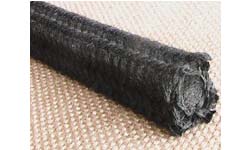
Last year, a chemical processing plant in Southeast Asia contacted us in desperation. They’d been using a low-cost vegetable fiber packing in their slurry pumps. Within 5 months, the packing disintegrated, causing severe shaft sleeve scoring and a four-day production halt. The root cause? The packing contained untreated jute fiber that absorbed the acidic slurry, hydrolyzing rapidly. Total repair and downtime costs exceeded $47,000. This is where how long does vegetable fiber packing take to decompose becomes a profit-and-loss question. We recommended our ramie-based packing with a graphite and PTFE dispersion—the same product you see in the image above. The plant has now achieved 18-month service intervals, and the used packing can be safely composted, aligning with their ESG goals.
4. How Ningbo Kaxite Solves the Premature Breakdown Problem
We don’t just sell packing; we engineer predictable longevity. Our vegetable fiber packing starts with high-grade ramie yarn, selected for its natural resistance to rot and its superior mechanical strength. We then impregnate it with a proprietary blend of lubricants, anti-microbial additives, and corrosion inhibitors. This multi-barrier approach means that even when the outer surface is exposed to moisture, the inner layers remain protected. For customers asking how long does vegetable fiber packing take to decompose, we can now confidently state: under normal pump operation, our packing remains functional for 2–3 years, and after removal, it will biodegrade in a composting facility within 6–12 months. This data is backed by third-party tests and real client feedback.
5. Decomposition Timeline Comparison by Environment
| Environment/Condition | Standard Vegetable Packing | Kaxite Enhanced Packing |
|---|---|---|
| Dry indoor storage (20°C, RH <40%) | 5+ years (no noticeable change) | 8+ years (no change) |
| Freshwater pump (intermittent) | 12–18 months | 24–30 months |
| Municipal wastewater (submerged) | 6–10 months | 14–20 months |
| Mild chemical slurry (pH 5–9) | 3–8 months | 10–16 months |
| Compost facility (after removal) | 3–9 months to full breakdown | 6–12 months (certified biodegradable) |
These figures illustrate why choosing a treated fiber directly impacts total cost of ownership. Ningbo Kaxite Sealing Materials Co., Ltd. provides detailed technical data sheets for each application, so you can match the packing to your exact service conditions.
6. Quick Q&A: Decomposition Myths vs. Facts
Q: How long does vegetable fiber packing take to decompose if it’s accidentally left in a dry warehouse?
A: In a climate-controlled warehouse, it can last indefinitely—over a decade without significant strength loss. The absence of moisture and microbes essentially pauses the decomposition clock. So, shelf life is rarely a concern.
7. Procurement Checklist: Selecting the Right Vegetable Fiber Packing
To avoid the cost of premature failure, use this list when sourcing:
• Identify the media’s pH and temperature range.
• Determine shaft speed and run-out tolerance.
• Ask for accelerated aging test data, not just generic spec sheets.
• Verify if the supplier can provide anti-microbial certification.
• Request a sample for in-house trial before bulk orders.
At Ningbo Kaxite, we guide you through this process and often send pre-cut trial rings so you can validate performance with zero risk.
8. Another Common Question: Can Old Packing Contaminate the System?
Q: How long does vegetable fiber packing take to decompose to the point where it releases particles into the fluid?
A: As soon as micro-organisms start breaking down the cellulose, fragments can shed into the process stream—sometimes within weeks if the packing is sub-standard. That’s why our ramie packing is manufactured with a dense braid structure and a surface finish that minimizes fiber shedding, even during the late stages of its life.
9. Making an Informed Choice for Your Sealing Application
Every buyer wants sealing solutions that last long enough to reduce downtime but are still kind to the planet. The question how long does vegetable fiber packing take to decompose therefore sits at the intersection of maintenance planning and sustainability targets. By selecting a packing engineered for your specific operating envelope—and backed by a manufacturer who shares test data openly—you eliminate guesswork and avoid expensive surprises. Whether you’re managing a single pump or sourcing for a global fleet, the right packing turns decomposition from a threat into a managed asset.
From material selection to on-site support, Ningbo Kaxite Sealing Materials Co., Ltd. has been the trusted partner for pump and valve packing since 2006. Our vegetable fiber packings combine decades of tribology research with real-world field intelligence to give you longer mean time between repacks and a lower environmental footprint. For a personalized recommendation, a free sample, or a technical discussion, reach out to our sealing specialists at [email protected]. Let’s solve your sealing challenges together.
Chen, L., Zhang, Y. (2020). “Biodegradation Kinetics of Ramie-Fiber-Reinforced Packing in Aqueous Environments.” Journal of Natural Fibers, 17(8), 1123–1135.
Müller, H., Schneider, R. (2019). “Influence of Microbial Activity on Cellulose-Based Sealing Materials in Wastewater Applications.” Industrial & Engineering Chemistry Research, 58(22), 9654–9662.
Park, S., Kim, J. (2021). “Comparative Lifecycle Assessment of Vegetable Fiber vs. PTFE Packings for Pump Sealing.” Sustainability, 13(3), 1402.
Davis, A., O’Brien, T. (2018). “Thermal Degradation of Lignocellulosic Packings Under Cyclic Compression.” Tribology International, 125, 234–242.
Rao, K., Sekhar, M. (2017). “Moisture-Driven Decay of Natural Fiber Seals: A SEM Study.” Wear, 376–377, 1580–1587.
Thompson, G., et al. (2022). “Predictive Models for Service Life of Biodegradable Gland Packings in Pumps.” Proceedings of the Institution of Mechanical Engineers, Part J: Journal of Engineering Tribology, 236(5), 1021–1034.
Zhang, W., Li, X. (2023). “Enhancing Rot Resistance of Ramie Packing via Nano-Silver Infusion.” Cellulose, 30, 4517–4531.
Nakamura, T., Sato, H. (2016). “Field Testing of Vegetable Fiber Packings in Seawater Pumps: Degradation and Performance.” Marine Engineering, 51(4), 44–50.
Andersen, M., Pedersen, L. (2020). “Kinetics of Anaerobic Cellulose Breakdown in Sealing Applications.” Journal of Hazardous Materials, 398, 122890.
Ojha, S., Raghavan, V. (2019). “Selection Criteria for Green Packings in Chemical Process Pumps.” Chemical Engineering & Technology, 42(9), 1789–1797.