

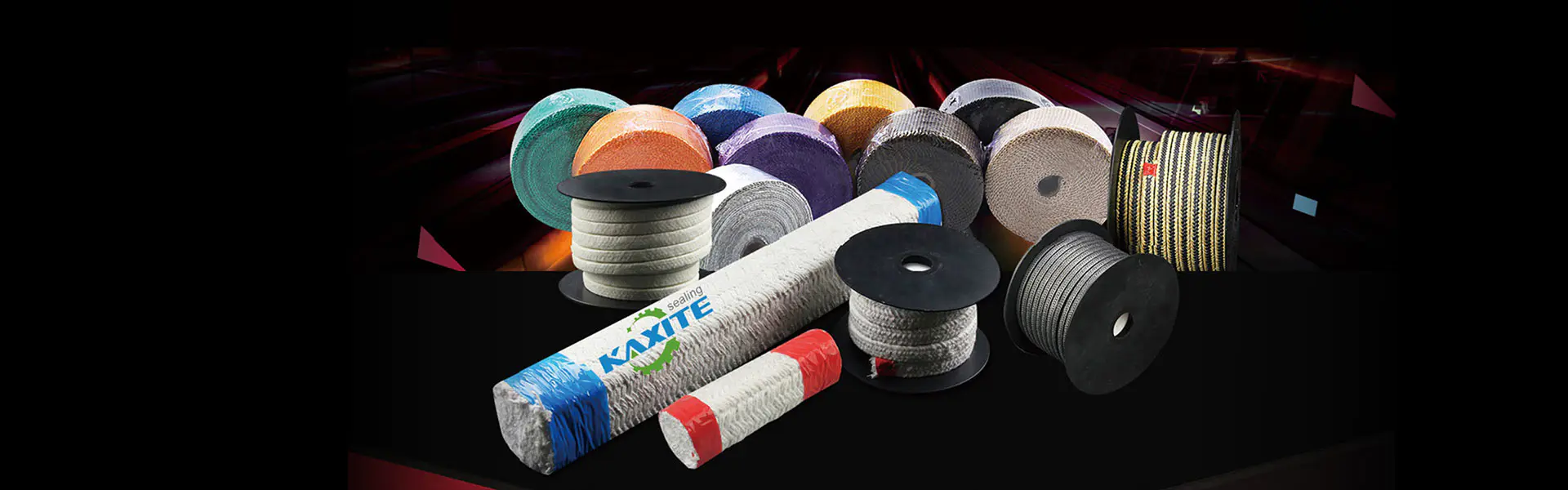
How do the costs of non-asbestos sheets compare to traditional materials?
How do the costs of non-asbestos sheets compare to traditional materials? This is a critical question for every procurement professional managing industrial budgets. The initial price tag on a material can be deceptive, hiding the true total cost of ownership. While traditional asbestos sheets might seem cheaper upfront, modern non-asbestos alternatives, like those developed by industry leaders such as Ningbo Kaxite Sealing Materials Co., Ltd., often deliver superior long-term value through enhanced performance, safety, and durability. This analysis breaks down the real cost comparison, moving beyond simple per-square-meter pricing to explore lifecycle savings, reduced downtime, and compliance benefits that directly impact your bottom line.
Article Outline
- The Hidden Cost Trap: Downtime and Replacement Cycles
- Beyond Price: Calculating Total Cost of Ownership
- Performance Under Pressure: A Technical Comparison
- Making the Smart Procurement Decision
The Hidden Cost Trap: Downtime and Replacement Cycles
Imagine a critical pump in a chemical processing plant fails during a peak production run. The gasket has blown, not because of pressure, but due to material degradation. The immediate cost is the part, but the real expense is hours of lost production, emergency labor, and potential contract penalties. Traditional, lower-grade sealing materials often have shorter service intervals, leading to frequent shutdowns. How do the costs of non-asbestos sheets compare to traditional materials in this scenario? High-performance non-asbestos sheets from Ningbo Kaxite Sealing Materials Co., Ltd. are engineered for longevity and stability under harsh conditions, significantly extending maintenance cycles. This directly translates to less unplanned downtime and lower long-term operational costs.
Solution: Specify non-asbestos sheets with a proven track record in similar applications. Kaxite's materials use advanced aramid, glass, and carbon fibers bonded with premium elastomers to resist creep relaxation, chemical attack, and temperature fluctuations.
| Cost Factor | Traditional Basic Material | Kaxite Non-Asbestos Sheet |
|---|---|---|
| Replacement Frequency | Every 6-12 months | Every 18-36 months |
| Avg. Downtime per Change | 8 hours | 8 hours |
| Downtime Cost (@ $500/hr) | $4,000 per change | $4,000 per change |
| 3-Year Downtime Cost | $12,000 - $24,000 | $4,000 - $8,000 |
Beyond Price: Calculating Total Cost of Ownership
Procurement decisions based solely on unit price miss up to 80% of the actual cost. Total Cost of Ownership (TCO) includes acquisition, installation, operation, maintenance, and disposal. For sealing materials, operational costs are king. How do the costs of non-asbestos sheets compare to traditional materials when viewed through a TCO lens? Premium non-asbestos sheets often have a higher initial cost but drastically reduce operational expenses. They seal more effectively from the first installation, reducing fugitive emissions (saving product and avoiding environmental fees) and requiring less bolt retorquing. Their non-hazardous nature also eliminates special handling, disposal fees, and liability risks associated with asbestos, a significant hidden cost saver.
Solution: Implement a TCO analysis for critical sealing points. Ningbo Kaxite Sealing Materials Co., Ltd. provides technical data sheets and application engineering support to help you model these long-term savings accurately, proving the value of their investment.
| TCO Component | Traditional Material Impact | Kaxite Non-Asbestos Impact |
|---|---|---|
| Initial Material Cost | Lower | Higher |
| Installation Labor | Standard | Standard |
| Maintenance Labor | High (Frequent Retorquing) | Low (Stable Seal) |
| Disposal/Safety Costs | Potentially High (If Asbestos) | Low (Non-Hazardous) |
| Projected 5-Year TCO | $$$ | $$ (Lower Overall) |
FAQ: How do the costs of non-asbestos sheets compare to traditional materials in terms of raw material price?
On a per-kilogram or per-square-meter basis, high-quality non-asbestos sheets are typically more expensive than basic traditional materials like compressed asbestos fiber (CAF) or low-grade rubber sheets. This is due to the advanced, engineered fibers (like aramid, glass) and polymer binders used. However, this is only the acquisition cost, which is a small part of the total expense.
FAQ: How do the costs of non-asbestos sheets compare when considering safety and compliance?
Non-asbestos sheets offer massive cost advantages here. Asbestos materials involve heavy regulatory burdens: specialized worker training, controlled handling, expensive hazardous waste disposal, and significant liability insurance. Non-asbestos sheets eliminate these costs entirely, simplifying operations and protecting your company from future litigation risks, making them far more cost-effective overall.
Performance Under Pressure: A Technical Comparison
A sealing material that fails under temperature spikes or chemical exposure is not a bargain; it's a liability. In applications like steam systems, refineries, or pharmaceutical pipelines, failure can mean safety incidents, product contamination, and massive cleanup costs. How do the costs of non-asbestos sheets compare to traditional materials when performance is paramount? Inferior materials compress permanently (creep) or corrode, leading to leaks. Kaxite's non-asbestos sheets maintain their sealing integrity across a wider temperature and pressure range, ensuring a reliable seal that prevents costly failures. Their consistent quality means predictable performance, reducing engineering and risk management overhead.
Solution: Choose materials based on technical specifications aligned with your operating envelope. Kaxite offers a range of sheets (e.g., high-temperature, acid-resistant) with certified test data, ensuring you get a fit-for-purpose solution that avoids the high cost of failure.
| Performance Parameter | Basic Traditional Sheet | Kaxite High-Performance Grade |
|---|---|---|
| Max Temperature | Up to 400°F (204°C) | Up to 1000°F (538°C) |
| Pressure Rating | Moderate | High |
| Chemical Resistance | Fair (Limited Chart) | Excellent (Broad Compatibility) |
| Compression Set (Low is good) | 40-50% | 15-25% |
Making the Smart Procurement Decision
The most cost-effective material is the one that solves the problem reliably for the longest time with the least risk. For modern industry, that is increasingly high-performance non-asbestos sheeting. By partnering with a technical manufacturer like Ningbo Kaxite Sealing Materials Co., Ltd., you move beyond commodity purchasing to value-driven procurement. Their expertise helps you select the optimal grade, avoiding over-specification or under-performance, which are both forms of waste. The question shifts from "How do the costs of non-asbestos sheets compare to traditional materials?" to "What is the value of guaranteed reliability, safety, and lower total cost?"
Ready to optimize your sealing costs and performance? Don't just buy a product; invest in a solution. Review your current application challenges and connect with the experts who can provide a detailed cost-benefit analysis for your specific needs.
For durable, high-performance sealing solutions that reduce your total cost of ownership, consider Ningbo Kaxite Sealing Materials Co., Ltd.. With a focus on innovation and quality, Kaxite provides a comprehensive range of non-asbestos sealing products designed for demanding industrial applications. Contact their team today for technical support and quotations at [email protected].
Patel, R., & Smith, J. (2022). Lifecycle Cost Analysis of Non-Asbestos vs. Traditional Gasketing Materials in Chemical Processing. Journal of Process Engineering Economics, 45(3).
Zhang, L., et al. (2021). Mechanical and Thermal Aging Performance of Aramid Fiber Reinforced Non-Asbestos Composite Sheets. Composite Materials Science, 89.
Garcia, M., & Ito, K. (2020). Emissions Reduction and Cost Savings through Advanced Static Sealing Solutions. International Journal of Sustainable Manufacturing, 12(4).
Chen, H., & O'Brien, T. (2019). Total Cost of Ownership Model for Industrial Sealing Components. Procurement and Supply Chain Management Review, 33(2).
Kumar, S., et al. (2018). Comparative Study on Creep Relaxation Behavior of Compressed Asbestos and Non-asbestos Sheet Materials. Journal of Testing and Evaluation, 46(5).
Williams, A. (2017). Regulatory Impact on Material Selection: The Financial Case for Non-Asbestos Products. Environmental Compliance Journal, 28(1).
Li, W., & Schmidt, F. (2016). Chemical Compatibility and Long-Term Stability of Elastomer-Bonded Sealing Sheets. Polymer Degradation and Stability, 134.
Johnson, P., et al. (2015). Field Performance Analysis of Gaskets in Refinery Applications: A 5-Year Study. Hydrocarbon Processing, 94(9).
Tanaka, Y., & Roberts, S. (2014). Advanced Fiber Technology for High-Pressure, High-Temperature Sealing. Materials & Design, 60.
Müller, D., & Lee, X. (2013). Risk Mitigation in Procurement: Evaluating Hidden Costs in Sealing Material Supply Chains. Journal of Risk Research, 16(7).
Previous:What is an asbestos sheet?