


What Are FEP Special Parts and What Are They Used For? If you are a procurement engineer staring at a drawing that says “FEP encapsulated” or “FEP lined”, you already know the feeling: the specification looks simple, the RFQ deadline is Friday, and three suppliers have given you three different answers. FEP special parts are custom or semi-custom components made from fluorinated ethylene propylene, a melt-processable fluoropolymer, and they are used wherever a seal, tube, liner, coating, insulator or machined part must survive aggressive chemistry, high purity requirements and temperatures that would destroy ordinary rubber or plastic. In real plants, that means FEP encapsulated O-rings in chemical dosing pumps, FEP tubing in semiconductor wet benches, FEP liners in pharmaceutical reactors, FEP-coated fasteners in plating lines and FEP machined parts inside analytical instruments. Buyers care about FEP because it delivers a rare combination: continuous service around 200 °C, near-universal chemical resistance, very low surface energy, good electrical insulation and low extractables. Get the grade, the filler, the wall thickness or the tolerance wrong, however, and the same part that looked perfect on paper will leak, crack or contaminate your process within weeks. This guide is written for people who buy rather than for polymer chemists, so it focuses on the decisions that actually change a quotation: material selection, dimensions, quality checks, failure modes and sourcing. It also shows where a specialist supplier such as Ningbo Kaxite Sealing Materials Co., Ltd. fits into that process, and how a technical review before the purchase order can save months of rework.
In This Guide
- What Exactly Are FEP Special Parts?
- Where Are FEP Special Parts Used?
- How to Select Grade, Filler and Wall Thickness
- Tolerances and Quality Checks That Protect Your Line
- Failure Modes: Leaks, Cracks and Contamination
- Sourcing, Lead Time and Cost Control
- FEP Special Parts: Buyer Questions Answered
- Talk to Ningbo Kaxite Sealing Materials Co., Ltd.
What Exactly Are FEP Special Parts?
The pain shows up on the receiving dock. A maintenance team orders “FEP seals” for a hydrochloric acid pump, the supplier ships ordinary PTFE jackets, and three weeks later the jackets crack at the sealing lip because nobody compared melt processability, creep behaviour or surface finish. The same thing happens with tubing: a buyer receives thin-wall FEP that kinks on a 90-degree bend, and the whole wet bench is down for two days of rework.
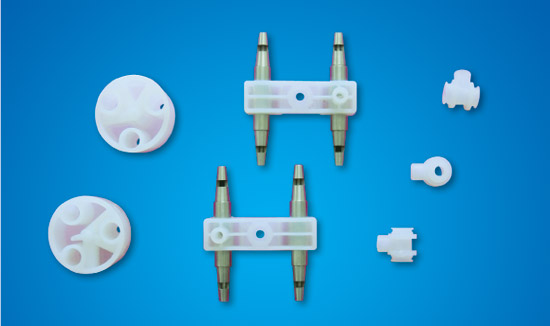
The solution is to define FEP special parts by function, not by material name alone. FEP special parts are finished components produced from FEP resin through encapsulation, extrusion, compression or injection moulding, machining, heat shrinking or coating, then inspected against a drawing or a recognised standard such as AS568, ISO 3601 or a customer-specific specification. They exist because FEP melts and flows, which allows designers to create complex shapes, thin walls and smooth non-porous surfaces that PTFE cannot easily match.
| Property | FEP | PTFE | PFA |
|---|---|---|---|
| Melt processable | Yes | No | Yes |
| Continuous service temperature | 200 °C | 260 °C | 260 °C |
| Melting point | 260–280 °C | 327 °C | 305–310 °C |
| Transparency | High | Opaque | Partial |
| Surface smoothness | Very high | Medium | High |
| Chemical resistance | Near universal | Near universal | Near universal |
| Typical components | Encapsulated O-rings, tubing, liners, coatings | Gaskets, tapes, seals | Liners, tubing, fittings |
Where Are FEP Special Parts Used?
The scenario is familiar: an engineer moves a process from pilot scale to full production, the solvent list changes, and the existing elastomer seals swell, harden or leach. Procurement is asked to find a drop-in replacement that does not change the groove dimensions, does not add tooling cost and does not delay the start-up date.
The solution is to match the component to the duty rather than to the catalogue page. FEP encapsulated O-rings combine a chemical-resistant FEP shell with a silicone or fluoroelastomer core, giving the sealing force of rubber with the wetted surface of a fluoropolymer. FEP tubing handles ultrapure water, acids and solvents where metal tubing would release ions. FEP liners and coatings protect vessels, valves and fasteners in plating and chemical handling. Melt-processed FEP machined parts serve instrument bodies, manifolds and analytical cells.
| Industry | Typical FEP Part | Key Requirement |
|---|---|---|
| Chemical processing | Encapsulated O-rings, lined valves | Chemical resistance, low swelling |
| Semiconductor | Wet bench tubing, fittings, machined parts | Low extractables, particle control |
| Pharmaceutical | Reactor liners, transfer tubing | Purity, cleanability |
| Food and beverage | Gaskets, dispensing lines | Non-toxicity, non-stick surface |
| Electrical and electronics | Insulation, heat-shrink sleeves | Dielectric strength, heat resistance |
| Plating and surface finishing | Coated fasteners, racks, seals | Acid resistance, long service life |
How to Select Grade, Filler and Wall Thickness
Most over-costly or short-lived FEP parts start with a vague specification. A buyer writes “FEP tube, 6 mm”, and the supplier chooses a wall thickness that collapses under vacuum or a resin grade that cannot hold pressure at 150 °C. The result is a part that meets the drawing and still fails in service.
The solution is a short technical checklist before the RFQ goes out: media and concentration, maximum and minimum temperature, pressure, vacuum, flexing, abrasion, purity level and the sealing method. From there, wall thickness and filler selection follow a logical path. Unfilled FEP suits electrical and high-purity duties. Glass-filled and carbon-filled grades add creep resistance and dimensional stability at elevated temperature, at some cost in chemical purity and elongation. For encapsulated O-rings, the core material selection matters as much as the FEP jacket, because the core controls compression set.
| Parameter | Typical FEP Value | Selection Note |
|---|---|---|
| Density | 2.12–2.17 g/cm³ | Confirm grade certificate |
| Tensile strength | 20–25 MPa | Drops with filler and heat ageing |
| Elongation at break | 300–350 % | Key for flexing and sleeves |
| Coefficient of friction | 0.2–0.3 | Useful for non-stick surfaces |
| Dielectric constant | 2.1 | Stable across frequency |
| Water absorption | < 0.01 % | Supports purity claims |
| Recommended wall thickness | 0.5–3.0 mm | Thicker wall for vacuum and pressure |
Tolerances and Quality Checks That Protect Your Line
The pain is a batch of parts that pass incoming inspection and still leak. The cause is rarely the material; it is usually an unstated tolerance on cross-section, concentricity or surface finish, or a cure and annealing step that was skipped to shorten lead time. On encapsulated O-rings, jacket thickness variation changes the squeeze, and squeeze controls leakage.
The solution is to put measurable acceptance criteria on the purchase order and to agree on the inspection method before production. A competent supplier will provide dimensional reports, material certificates, hardness data and, where required, cleanliness or extractables documentation. Sampling plans should reference a recognised standard rather than “supplier visual check”.
| Feature | Typical Tolerance | Inspection Method |
|---|---|---|
| Machined FEP part | ± 0.05 mm | Optical comparator, CMM |
| Moulded FEP part | ± 0.10 mm | Gauge, calliper, CMM |
| Encapsulated O-ring cross-section | ± 0.08 mm | Cross-section check, optical |
| Tube outside diameter | ± 0.10 mm | Laser micrometer |
| Surface finish | Ra < 0.8 µm | Profilometer, visual |
| Hardness of core | ± 5 Shore A | Durometer |
Failure Modes: Leaks, Cracks and Contamination
Field failures with FEP parts are predictable, and that is good news. Leaks usually trace back to insufficient squeeze, wrong groove fill, thermal expansion mismatch or a damaged sealing lip during installation. Cracks in FEP liners and tubes usually come from stress concentration at flanges, sharp bends or over-tightened fittings. Contamination complaints usually come from machining residue, inadequate purging or an unverified resin source.
The solution is to treat each failure mode as a design and inspection item. Specify radii instead of sharp corners, use bend supports, define torque values, and require a clean-room compatible cleaning and packing route for semiconductor and pharmaceutical parts. A supplier who can trace resin lots and machining parameters will resolve a complaint in days rather than months.
| Failure Mode | Likely Cause | Practical Fix |
|---|---|---|
| Leak at gland | Low squeeze, wrong groove fill | Recalculate squeeze, verify cross-section |
| Crack at flange | Sharp corner, over-torque | Add radius, define torque |
| Kinked tube | Thin wall, tight bend radius | Increase wall, use bend support |
| Particle contamination | Machining residue, poor cleaning | Specify cleaning and packing protocol |
| Colour or surface change | Chemical attack or overheating | Check media compatibility and temperature |
Sourcing, Lead Time and Cost Control
The commercial pain is real: a single-source FEP part with a twelve-week lead time creates a stock-out risk, while a cheap alternative creates a warranty risk. Buyers are often asked to choose between delivery and quality, when the real lever is specification discipline.
The solution is to buy from a supplier who can combine material stock, in-house tooling, machining and inspection under one roof, and who will quote two routes, for example a moulded part for volume and a machined prototype for validation. Ningbo Kaxite Sealing Materials Co., Ltd. works this way for FEP encapsulated O-rings, tubing, liners, coatings and custom machined fluoropolymer parts. Clear drawings, agreed tolerances and a documented inspection plan shorten lead time more than pressure on price does.
| Buying Stage | What to Request | Why It Matters |
|---|---|---|
| RFQ | Drawing, media list, temperature, pressure | Prevents grade mismatch |
| Sample | Dimensional report, material certificate | Confirms fit and compliance |
| Pilot order | Inspection plan and AQL level | Aligns expectations early |
| Series supply | Batch traceability and packing spec | Supports audits and claims |
| Repeat order | Frozen specification and change notice | Avoids silent substitution |
FEP Special Parts: Buyer Questions Answered
What are FEP special parts and what are they used for in practice? They are custom or semi-custom components made from fluorinated ethylene propylene, including encapsulated O-rings, tubing, liners, coatings, heat-shrink sleeves and machined parts. They are used to seal, transport, insulate or protect in chemical dosing systems, semiconductor wet processes, pharmaceutical reactors, plating lines, food equipment and electrical assemblies. The common thread is a wetted or exposed surface that must resist aggressive media, stay clean and keep working at temperatures up to about 200 °C continuously.
How do I choose between FEP, PTFE and PFA for a special part? Start with process temperature and shape complexity. Choose FEP when you need melt-processed shapes, transparency, a very smooth surface and service around 200 °C. Choose PTFE when the highest temperature resistance and lowest cost per gram matter more than dimensional precision. Choose PFA when you need FEP-like smoothness but higher continuous temperature and better resistance to stress cracking. Then confirm the choice with an immersion test or a supplier compatibility review, because concentration, pressure and flexing can change the answer.
Talk to Ningbo Kaxite Sealing Materials Co., Ltd.
Send the drawing, the media list and the operating temperature, and let the technical team check the grade, the wall thickness and the tolerance class before the purchase order is issued. Ningbo Kaxite Sealing Materials Co., Ltd. manufactures FEP encapsulated O-rings, FEP tubing, FEP liners, FEP-coated components and custom fluoropolymer seals for chemical, semiconductor, pharmaceutical, food and electrical customers worldwide, and supports every order with material certificates, dimensional reports and responsive engineering feedback. Browse the product range at https://www.top-sealing.net or email your specification to [email protected] for a technical review and quotation within one working day.
Teng, H., 2012. Overview of the Development of the Fluoropolymer Industry. Applied Sciences, 2(2).
Drobny, J.G., 2006. Fluoroplastics: Properties and Applications. Rapra Review Reports, 16(2).
Ameduri, B., Boutevin, B. and Kostov, G., 2001. Fluoroelastomers: Synthesis, Properties and Applications. Progress in Polymer Science, 26(1).
Scheirs, J., 1997. Modern Fluoropolymers: High Performance Polymers for Diverse Applications. Wiley Polymer Science Series, 14(3).
Drohmann, C., 2005. Fluoropolymer Seals in Aggressive Chemical Service. Sealing Technology, 2005(9).
Ebnesajjad, S. and Khaladkar, P.R., 2004. Fluoropolymer Applications in the Chemical Processing Industries. Plastics Design Library, 1(2).
Liu, Y., Zhang, H. and Chen, W., 2018. Chemical Resistance and Permeation Behaviour of FEP Tubing in Wet Chemical Lines. Journal of Fluorine Chemistry, 212(1).
Wang, L. and Kim, S., 2020. Contamination Control of Fluoropolymer Wetted Parts in Semiconductor Ultrapure Water Systems. Microelectronic Engineering, 225(1).
Park, J. and Lee, H., 2017. Thermal Ageing and Mechanical Reliability of FEP Encapsulated O-Rings. Polymer Testing, 61(1).
Rossi, M. and Bianchi, G., 2021. Particle Shedding and Extractables of Fluoropolymer Components in Pharmaceutical Processing. Journal of Pharmaceutical Sciences, 110(5).